 Histamine Tracker
Cassava Flatbread

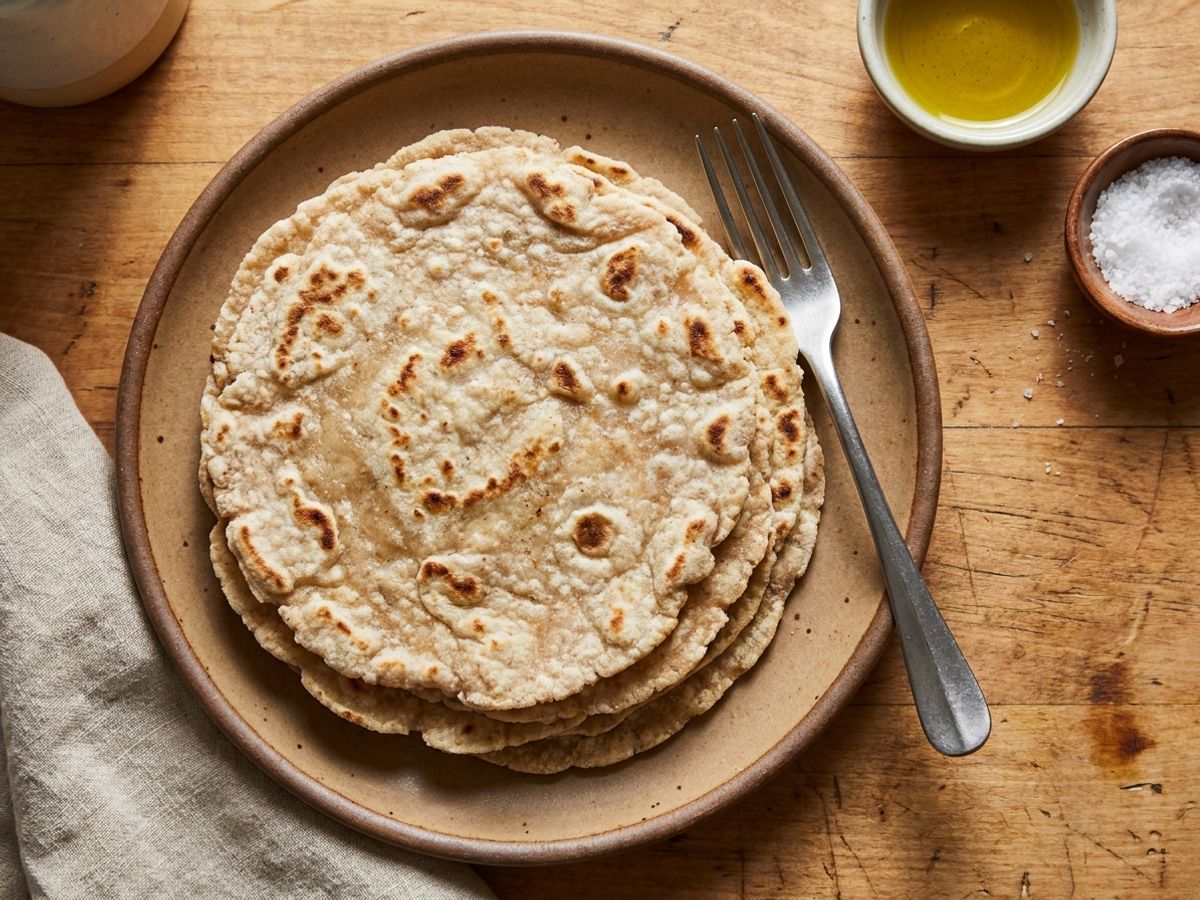
A low histamine grain-free flatbread made with cassava flour, olive oil, baking powder, and water.
Ingredients
- 2 cups cassava flour, plus more as needed
- 1 teaspoon baking powder
- 3/4 teaspoon sea salt
- 3 tablespoons olive oil, plus more for the skillet
- 1 1/4 to 1 1/2 cups warm water (adjust as needed)
Instructions
Dough
- In a large bowl, whisk together the cassava flour, baking powder, and salt.
- Add the olive oil and stir until the flour looks crumbly.
- Pour in the warm water gradually, stirring as you go, until a soft dough forms. It should be smooth and hold together, slightly tacky but not sticky.
- If the dough feels dry or crumbly, add water 1 tablespoon at a time. If it sticks to your hands, work in a little more flour.
- Cover the bowl and let the dough rest for 10 to 15 minutes so the flour fully hydrates.
Cook
- Divide the dough into 6 equal portions and roll each into a smooth ball.
- Place a ball between two sheets of parchment paper. Press or roll to about 1/4 inch thick and 5 to 6 inches across. This is thicker than a tortilla, which keeps the flatbread soft and foldable.
- Heat a skillet over medium heat and add a thin film of olive oil.
- Peel the flatbread from the parchment and place it in the skillet. Cook for 2 to 3 minutes until the underside has golden-brown spots and the top looks set.
- Flip and cook another 2 to 3 minutes on the other side.
- Transfer to a plate and cover with a clean towel to keep the flatbread soft and warm while you cook the rest. Serve warm.
Tips & Substitutions
- Roll thicker than a tortilla. Aim for about 1/4 inch so the flatbread stays soft and easy to fold. For a thin, crisp version, see the cassava flour tortillas.
- Adjust the water for your kitchen. Cassava flour absorbs differently by brand and by humidity, so add the water gradually until the dough is soft and smooth rather than measuring rigidly.
- Swap the oil. Olive oil gives a mild savory flavor. Use coconut oil for a more neutral taste, or avocado oil if you tolerate it.
- Pick a clean baking powder. Look for an aluminum-free baking powder. Most brands use cornstarch as a filler, so choose a corn-free one if you are sensitive to corn.
- Serve it as a base. Tear it into warm cauliflower hummus, use it to scoop up carrot ginger soup, or fold it around cooked vegetables and protein for a soft wrap.
- Keep them soft. Stack the cooked flatbreads under a clean towel so the trapped steam keeps them pliable until serving.
 Get the Histamine Recipes app
250+ low histamine recipes, every ingredient rated.


Why This Works
Cassava flour. A grain-free flour milled from the yuca root. It is gluten-free and generally considered low in histamine, and it forms a soft, pliable dough that suits people who are also sensitive to gluten. Unfermented brands tend to be the best tolerated.
Olive oil. Extra virgin olive oil is commonly tolerated on a low histamine diet. It adds a mild richness and helps keep the flatbread flexible after cooking.
No yeast. This flatbread uses a little baking powder for a slight lift instead of yeast, which can be a trigger for some people. With just flour, oil, salt, water, and baking powder, there are few ingredients that could cause a reaction.
Storage
Best eaten fresh and warm right off the skillet, when the flatbread is softest. If you are storing them, cool them quickly and store leftovers in an airtight container at room temperature for up to 1 day, then reheat briefly in a dry skillet to bring back some softness. To keep them longer, freeze the cooled flatbreads the same day they are made, between sheets of parchment paper, for up to 2 weeks. Histamine buildup is lower risk with a simple plant-based bread than with meat or fish, but sensitive individuals may still prefer eating them fresh.
Not sure about an ingredient?
Histamine tolerance is personal, and most of working it out comes down to knowing where individual foods stand. Our low histamine food list rates 4,500+ foods and explains the reasoning behind each rating, including the foods whose level depends on how fresh they are or how they were stored. It is worth a look before you swap anything in this recipe.
Before you eat
A lot of people with histamine intolerance take a DAO enzyme supplement 15 to 30 minutes before a meal. DAO is the enzyme your body uses to break down the histamine in food, and taking it with meals supports that natural process. Curious how it works? See do DAO supplements actually work.
Affiliate link: if you buy through it, we may earn a commission at no extra cost to you. These statements have not been evaluated by the Food and Drug Administration. This product is not intended to diagnose, treat, cure, or prevent any disease.
For educational purposes only. Not medical advice. Consult a healthcare professional for personal guidance.
References
- Low Histamine Herbed Olive Oil and Cassava Flatbread — Mast Cell 360
- Low Histamine Flours — Low Histamine Eats
- Low Histamine Diet Foods List — Through The Fibro Fog
- Histamine and histamine intolerance — Maintz & Novak (2007)
- Histamine Intolerance: The Current State of the Art — Comas-Basté et al. (2020)
- Biogenic Amines in Plant-Origin Foods: Are They Frequently Underestimated in Low-Histamine Diets? — Sánchez-Pérez et al. (2021)
- Diamine Oxidase Supplementation Improves Symptoms in Patients with Histamine Intolerance — Schnedl et al. (2019)
- Histamine Intolerance — A Comprehensive Review — Jochum (2024)