 Histamine Tracker
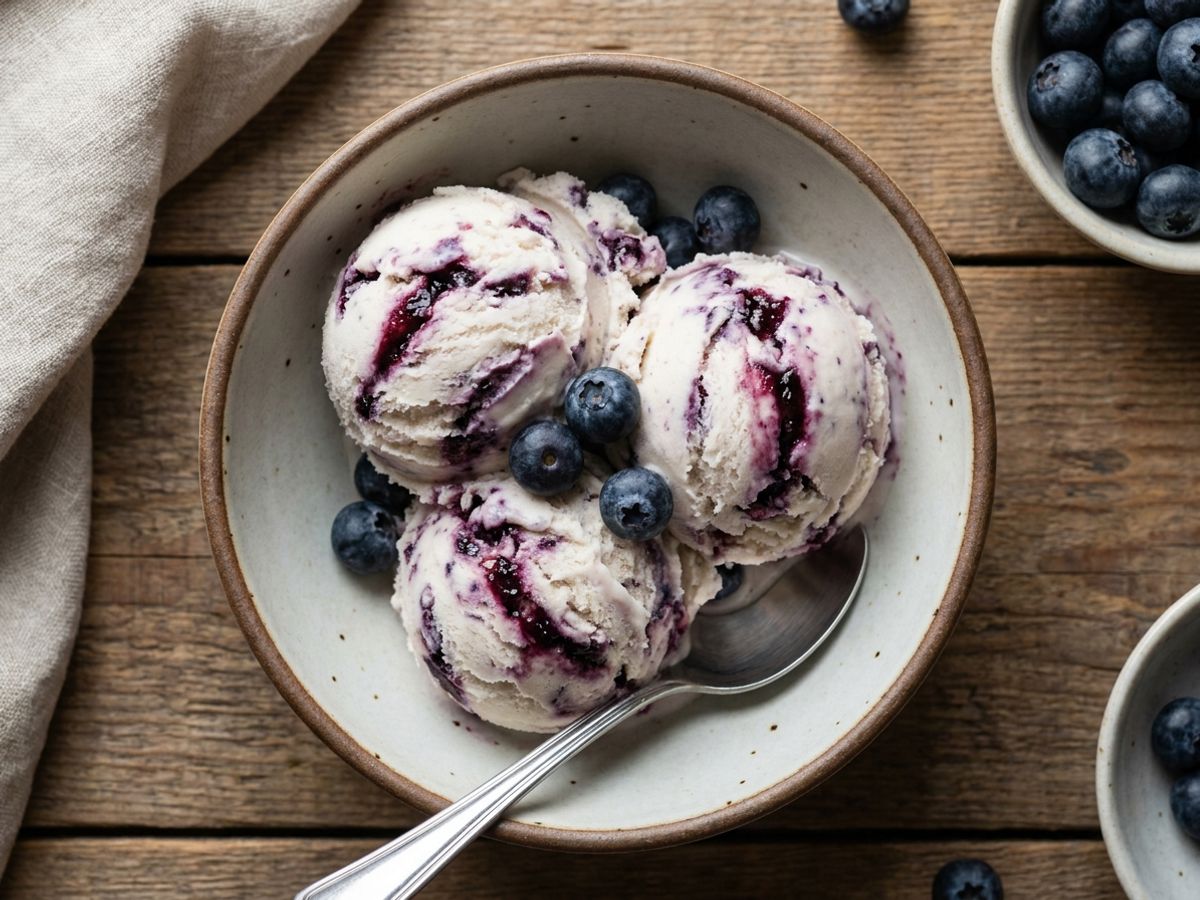
Blueberry Swirl Ice Cream

A low histamine coconut milk ice cream with a fresh blueberry swirl, sweetened with maple syrup and vanilla.
Ingredients
Base
- 2 (13.5 oz) cans full-fat coconut milk, refrigerated overnight
- 1/3 cup pure maple syrup
- 2 teaspoons vanilla powder
- 1/4 teaspoon sea salt
Blueberry Swirl
- 1 1/2 cups fresh blueberries
- 2 tablespoons pure maple syrup
Instructions
Base
- The night before, place both cans of coconut milk in the refrigerator. Chilling helps the cream firm up and gives the ice cream a richer texture.
- If your ice cream maker uses a freezer bowl, put the bowl in the freezer at least 24 hours ahead.
- Open the chilled cans and scrape everything (cream and liquid) into a large bowl.
- Whisk for about a minute until the cream and water combine into a smooth mixture.
- Add the maple syrup, vanilla powder, and salt. Whisk again until fully blended and the salt has dissolved.
Blueberry Swirl
- Wash the fresh blueberries and add them to a small saucepan with the maple syrup.
- Cook over medium heat, stirring often, for 8 to 10 minutes until the berries burst and the mixture thickens to a loose jam.
- Mash about half the berries with the back of a spoon and leave the rest whole for texture.
- Take the pan off the heat and let the swirl cool completely, then chill it in the refrigerator. It must be cold before it meets the base, or it will melt the ice cream.
Churn & Freeze
- Pour the base into your ice cream maker and churn for 25 to 30 minutes, following the manufacturer's instructions, until it thickens to soft-serve consistency.
- Spoon a third of the churned ice cream into a freezer-safe container, drizzle over some of the cold blueberry swirl, and repeat in layers.
- Run a knife or skewer through the layers two or three times to ripple the swirl. Do not overmix, or the whole batch turns purple instead of streaked.
- Freeze for 2 to 4 hours for a firmer scoopable texture, or eat right away as soft-serve.
- No ice cream maker? Pour the plain base into a metal loaf pan and freeze. Every 30 minutes for 3 to 4 hours, whisk vigorously (a hand mixer works best) to break up ice crystals. Layer in the cold swirl and ripple it through during the final stir.
Tips & Substitutions
- Full-fat coconut milk only. Light coconut milk and coconut beverages have too much water and not enough fat, so the ice cream comes out icy instead of creamy. Look for a brand without guar gum, carrageenan, or natural flavors, since the simplest ingredient list is easiest on a sensitive system.
- Blend the base if it stays lumpy. Chilled full-fat coconut milk sometimes holds firm chunks of coconut cream that a whisk cannot smooth out. If that happens, run the base through a blender for a few seconds before churning so it freezes evenly.
- Freeze fresh blueberries yourself. If you want to keep blueberries on hand for the swirl, buy them fresh and freeze them yourself in a single layer, then cook them straight from frozen. This gives you more control over freshness than store-bought frozen berries.
- Churn or no-churn. The ice cream maker gives the smoothest result. The no-churn freezer method works too and is a little denser, as long as you whisk every 30 minutes to break up the crystals.
- Maple vs cane sugar. Maple syrup keeps this vegan and adds a deeper flavor. Pure cane sugar tastes more neutral and lets the blueberries lead. Both work in the base at this ratio.
- Change the fruit. A cooked-down swirl of fresh peaches or pitted fresh cherries works with the same method. For a plain version, see the vanilla ice cream this recipe is built on.
 Get the Histamine Recipes app
250+ low histamine recipes, every ingredient rated.


Why This Works
Blueberries. Generally considered low in histamine and well tolerated. They are also one of the higher-antioxidant fruits, which is part of why they come up often in histamine-friendly recipes, though individual response varies. Use fresh, unbruised berries rather than overripe ones, since tolerance tends to be best with fresh fruit.
Full-fat coconut milk. A high-fat dairy-free base that scoops creamy when churned. Coconut is generally well tolerated on a low histamine diet, though some people react to coconut itself or to additives like guar gum and carrageenan, so check labels and test your own tolerance. Skipping dairy helps people who react to milk proteins or to aged dairy products like cheese and yogurt.
Maple syrup. A simple sweetener with no preservatives. It sweetens both the base and the swirl and keeps the recipe vegan.
Vanilla powder. Pure ground vanilla bean adds warmth without the alcohol used in vanilla extract, which some people with histamine intolerance prefer to avoid.
Storage
Best the same day it is churned, while still soft. A coconut milk base has no stabilizers, so once it freezes solid for more than a day it firms up considerably. Let it sit on the counter for 10 to 15 minutes before scooping. It keeps in a sealed container in the freezer for up to a week, though the texture is best in the first few days. Portion into small containers if possible to limit thaw and refreeze cycles, which hurt texture and are less reliable for sensitive people.
Not sure about an ingredient?
Histamine tolerance is personal, and most of working it out comes down to knowing where individual foods stand. Our low histamine food list rates 4,500+ foods and explains the reasoning behind each rating, including the foods whose level depends on how fresh they are or how they were stored. It is worth a look before you swap anything in this recipe.
Before you eat
A lot of people with histamine intolerance take a DAO enzyme supplement 15 to 30 minutes before a meal. DAO is the enzyme your body uses to break down the histamine in food, and taking it with meals supports that natural process. Curious how it works? See do DAO supplements actually work.
Affiliate link: if you buy through it, we may earn a commission at no extra cost to you. These statements have not been evaluated by the Food and Drug Administration. This product is not intended to diagnose, treat, cure, or prevent any disease.
For educational purposes only. Not medical advice. Consult a healthcare professional for personal guidance.
References
- 20 Low Histamine Fruits and Berries (With Recipes) — Through The Fibro Fog
- Low FODMAP Ice Cream (Also Low Histamine) — Mast Cell 360
- Blueberry Pie Ice Cream (AIP, Keto, Vegan, Low Histamine) — The Well Rooted Life
- Histamine and histamine intolerance — Maintz & Novak (2007)
- Histamine Intolerance: The Current State of the Art — Comas-Basté et al. (2020)
- Biogenic Amines in Plant-Origin Foods: Are They Frequently Underestimated in Low-Histamine Diets? — Sánchez-Pérez et al. (2021)
- Diamine Oxidase Supplementation Improves Symptoms in Patients with Histamine Intolerance — Schnedl et al. (2019)
- Histamine Intolerance — A Comprehensive Review — Jochum (2024)