 Histamine Tracker
Vegetable Broth

A simple broth made with fresh vegetables. Keep this in the freezer for soups, sauces, or cooking grains.
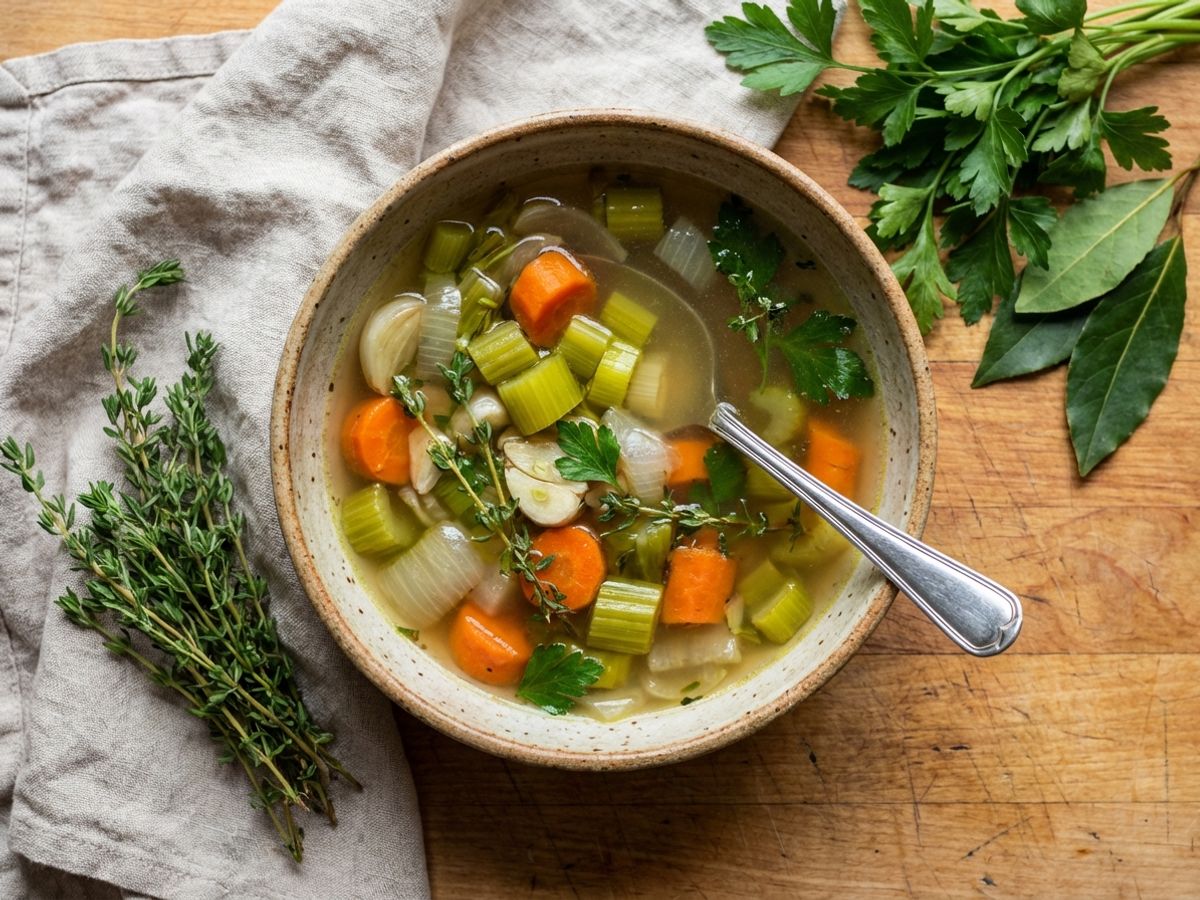
Ingredients
- 2 medium carrots, roughly chopped
- 2 stalks celery, roughly chopped
- 1 medium leek, cleaned and sliced
- 1/2 medium onion, quartered (optional)
- 2 cloves garlic, smashed (optional)
- 1 tablespoon olive oil
- 8 cups water
- 4 sprigs fresh thyme
- Small bunch fresh parsley (about 10 stems)
- 2 bay leaves
- 1 teaspoon salt
Instructions
Prep the Vegetables
- Wash all vegetables thoroughly.
- Roughly chop the carrots and celery into 1-2 inch pieces.
- Clean the leek by slicing it lengthwise and rinsing between layers to remove dirt.
- Quarter the onion and smash the garlic cloves with the flat side of a knife.
Build the Broth
- Heat olive oil in a large pot over medium heat.
- Add the carrots, celery, leek, onion, and garlic.
- Sauté for 5 minutes, stirring occasionally, until slightly softened.
- Add water, thyme, parsley, bay leaves, and salt.
- Bring to a boil, then reduce heat to medium-low.
- Simmer uncovered for 30 minutes.
Strain and Store
- Remove from heat and let cool slightly.
- Strain through a fine-mesh sieve or cheesecloth into a large bowl.
- Discard the vegetables and herbs.
- Taste and adjust salt if needed.
Tips & Substitutions
- Skip the onion and garlic if they bother you. The leek, carrots, and celery provide plenty of flavor on their own.
- Keep the simmer to 30 minutes. Longer cooking times can increase histamine levels, so a shorter simmer is deliberate.
- Avoid tomatoes, spinach, and mushrooms. All three are commonly problematic for people with histamine intolerance and should not be added to the broth.
- Swap the leek for an extra stalk of celery if leeks are hard to find or you prefer a milder flavor.
- Add a small piece of fresh turmeric or ginger during cooking for extra flavor, if tolerated.
Why This Works
Carrots and celery. Both are naturally low in histamine and generally well tolerated. They form the flavor foundation of the broth.
Leek. Milder than onion and generally well tolerated. It adds a gentle allium flavor without the intensity of raw onion.
Fresh herbs. Thyme, parsley, and bay leaves are commonly tolerated and add depth. Using fresh herbs rather than dried may improve tolerance for some people.
Short simmer time. Cooking for just 30 minutes keeps histamine levels lower than traditional stocks that simmer for hours. This is one of the key differences in low histamine cooking.
Onion and garlic (optional). Both contain quercetin, a compound sometimes discussed in mast cell research. However, they can also act as histamine liberators for some people, so they are optional.
Storage
Use immediately or freeze right away in individual portions for best results. Vegetable broth is often better tolerated than long-simmered meat stocks, but rapid cooling and prompt freezing are still key for histamine management. Frozen broth keeps well for up to 3 months. Avoid refrigerating for more than 2 days.
Not sure if an ingredient is safe? Histamine Tracker includes a database of 1,000+ foods with histamine ratings to help you cook with confidence.


For educational purposes only. Not medical advice. Consult a healthcare professional for personal guidance.
References
- Low Histamine Vegetable Broth (From Scraps) — Low Histamine Eats
- 43+ Low Histamine Vegetables to Add to Your Diet — Low Histamine Eats
- 19 Low Histamine Spices & Herbs (and How To Use Them) — Low Histamine Eats
- Histamine and histamine intolerance — Maintz & Novak (2007)
- Histamine Intolerance: The Current State of the Art — Comas-Basté et al. (2020)
- Biogenic Amines in Plant-Origin Foods: Are They Frequently Underestimated in Low-Histamine Diets? — Sánchez-Pérez et al. (2021)
- Diamine Oxidase Supplementation Improves Symptoms in Patients with Histamine Intolerance — Schnedl et al. (2019)
- Histamine Intolerance — A Comprehensive Review — Jochum (2024)