 Histamine Tracker
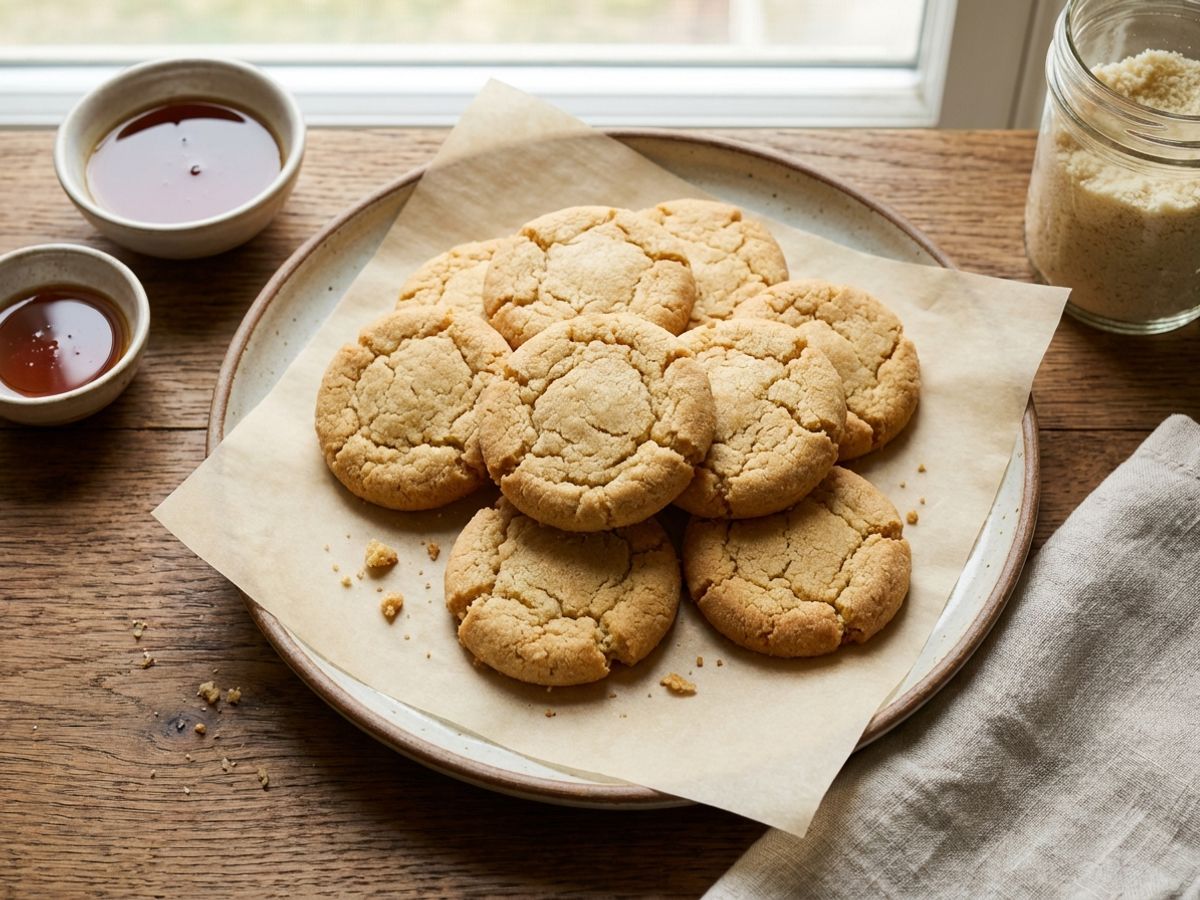
Vanilla Cookies

Simple cookies with a soft vanilla flavor.
Ingredients
- 1 1/2 cups almond flour (finely ground)
- 3 tablespoons pure maple syrup
- 2 tablespoons coconut oil, melted
- 1 large egg
- 1/2 teaspoon vanilla powder
- 1/4 teaspoon baking soda
- 1/4 teaspoon sea salt
Instructions
Mix the Dough
- Preheat your oven to 350°F (175°C).
- Line a baking sheet with parchment paper.
- In a medium bowl, whisk together the almond flour, baking soda, and salt.
- In a small bowl, whisk together the maple syrup, melted coconut oil, egg, and vanilla powder.
- Pour the wet ingredients into the dry ingredients and stir until a soft dough forms.
Shape and Bake
- Scoop rounded tablespoons of dough onto the prepared baking sheet, spacing about 2 inches apart.
- Gently flatten each cookie with your palm or the back of a spoon.
- Bake for 10-12 minutes until the edges are lightly golden.
- Let cool on the baking sheet for 5 minutes before transferring to a wire rack.
- Cookies will firm up as they cool.
Tips & Substitutions
- Almond flour matters. Use finely ground blanched almond flour for the best texture. Almond meal is coarser and will make grainier cookies.
- Vanilla powder vs extract. Vanilla powder avoids the alcohol in vanilla extract, which some people with histamine intolerance prefer to avoid. If you tolerate extract, use 1 teaspoon instead.
- Nut-free option. Substitute the almond flour with 1 cup cassava flour plus 1/4 cup tapioca starch for a nut-free version. The texture will be slightly different but still good.
- Egg sensitivity. Some people react to egg whites more than yolks. If you're sensitive, try using just 2 egg yolks instead of 1 whole egg. Add 1 tablespoon water to compensate for lost moisture.
- Less sweet. Reduce maple syrup to 2 tablespoons if you prefer cookies that are barely sweet.
- Freshness matters. For best tolerance, use very fresh almond flour and freeze cookies soon after cooling if you won't eat them the same day.
Why This Works
Almond flour. Gluten-free and creates a tender texture. Almonds are often tolerated on low histamine diets when very fresh, but nuts can be an individual trigger. Choose fresh, well-stored almond flour and test your response.
Maple syrup. Provides natural sweetness without additives. Used in small amounts here for a lightly sweet cookie.
Vanilla powder. Adds warm vanilla flavor without the alcohol found in vanilla extract. Vanilla extract is made with alcohol as a solvent, which some people with histamine intolerance prefer to avoid.
Coconut oil. Creates a tender cookie and keeps the recipe dairy-free. Coconut is generally well tolerated on a low histamine diet.
Simple ingredients. Just 7 ingredients, all fresh and easy to find. No complicated steps or unusual additions.
Storage
Cookies are best eaten fresh. Store at room temperature in an airtight container for up to 2 days, or freeze for longer storage. Freezing helps preserve freshness and can reduce further buildup in foods prone to it.
For best results, bake only what you'll eat within a day or two and freeze the remaining dough. Bake frozen dough balls directly, adding 2-3 minutes to the bake time.
Not sure if an ingredient is safe? Histamine Tracker includes a database of 1,000+ foods with histamine ratings to help you cook with confidence.


For educational purposes only. Not medical advice. Consult a healthcare professional for personal guidance.
References
- Simple Vanilla Almond Cookies Recipe (Low Histamine) — Low Histamine Eats
- Are Almonds High in Histamine? — Low Histamine Eats
- Is Coconut High Histamine? — Low Histamine Eats
- Histamine and histamine intolerance — Maintz & Novak (2007)
- Histamine Intolerance: The Current State of the Art — Comas-Basté et al. (2020)
- Biogenic Amines in Plant-Origin Foods: Are They Frequently Underestimated in Low-Histamine Diets? — Sánchez-Pérez et al. (2021)
- Diamine Oxidase Supplementation Improves Symptoms in Patients with Histamine Intolerance — Schnedl et al. (2019)
- Histamine Intolerance — A Comprehensive Review — Jochum (2024)