 Histamine Tracker
Teriyaki Sauce

A simple soy-free teriyaki sauce that comes together in minutes.
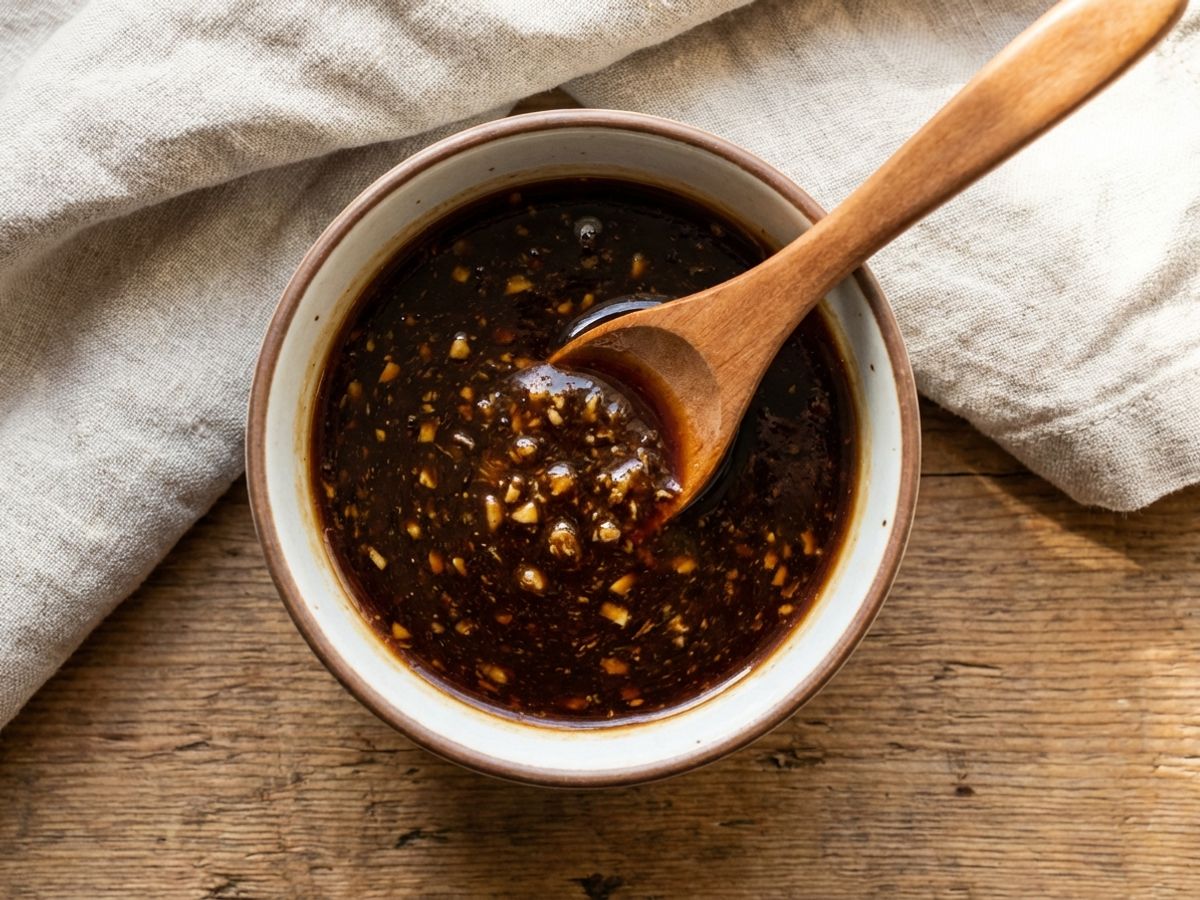
Ingredients
- 1/4 cup coconut aminos
- 2 tablespoons maple syrup (or honey, which is not vegan)
- 1 teaspoon fresh ginger, finely grated
- 1 clove garlic, minced
- 1/2 teaspoon arrowroot starch (optional, for thickening)
- 2 tablespoons water
- 1 teaspoon sesame oil (optional)
Instructions
Make the Sauce
- If using arrowroot starch, whisk it into the water in a small bowl until smooth. Set aside.
- In a small saucepan, combine the coconut aminos, honey, ginger, and garlic.
- Heat over medium heat, stirring frequently, until it begins to simmer.
- If you want a thicker sauce, stir in the arrowroot slurry and cook for 1-2 minutes until the sauce thickens.
- Remove from heat and stir in the sesame oil if using.
Use or Store
Use immediately as a stir-fry sauce, marinade, or glaze. For stir-fries, add the sauce in the last few minutes of cooking.
Tips & Substitutions
- Coconut aminos replace soy sauce, which is fermented and high in histamine. Look for brands with minimal ingredients.
- Skip the sesame oil if you are very sensitive. It adds a nice nutty flavor but is not essential.
- Use fresh ginger, not dried. Fresh ginger has a brighter flavor and may be better tolerated than the dried version.
- Skip the garlic if it bothers you. The ginger and coconut aminos provide plenty of flavor without it.
- Use arrowroot for a thicker glaze consistency. Without it, the sauce will be thinner and work better as a marinade.
Why This Works
Coconut aminos. A common soy-free alternative to soy sauce that many people tolerate better. Traditional soy sauce is fermented and high in histamine, making coconut aminos one of the most important swaps in low histamine cooking. Choose a brand with minimal ingredients, as some may involve fermentation or aging.
Fresh ginger. Generally well tolerated and may help support digestion for some people. It adds warmth and depth to the sauce.
Maple syrup. A natural sweetener that is generally well tolerated. It replaces refined sugars or honey while adding a mild caramel flavor.
Garlic (optional). Contains quercetin, a compound sometimes discussed in mast cell research, but can also act as a histamine liberator for some people. Use it if you tolerate it.
Freshness matters. Making teriyaki sauce from scratch avoids the soy sauce, preservatives, and additives found in store-bought versions.
Storage
Best used immediately for lowest histamine levels. If needed, refrigerate in a sealed glass jar for up to 2-3 days. The sauce thickens when cold, so warm it gently before using. Histamine buildup is lower risk than with meat or fish leftovers, but the fresh ginger and garlic lose their brightness over time.
Not sure if an ingredient is safe? Histamine Tracker includes a database of 1,000+ foods with histamine ratings to help you cook with confidence.


For educational purposes only. Not medical advice. Consult a healthcare professional for personal guidance.
References
- Stir Fry Sauce Without Soy Sauce — Low Histamine Eats
- Are Coconut Aminos High In Histamine — Casa de Sante
- Adding Flavor to your Low Histamine Recipes — Through The Fibro Fog
- Histamine and histamine intolerance — Maintz & Novak (2007)
- Histamine Intolerance: The Current State of the Art — Comas-Basté et al. (2020)
- Biogenic Amines in Plant-Origin Foods: Are They Frequently Underestimated in Low-Histamine Diets? — Sánchez-Pérez et al. (2021)
- Diamine Oxidase Supplementation Improves Symptoms in Patients with Histamine Intolerance — Schnedl et al. (2019)
- Histamine Intolerance — A Comprehensive Review — Jochum (2024)