 Histamine Tracker
Stir-Fry Sauce

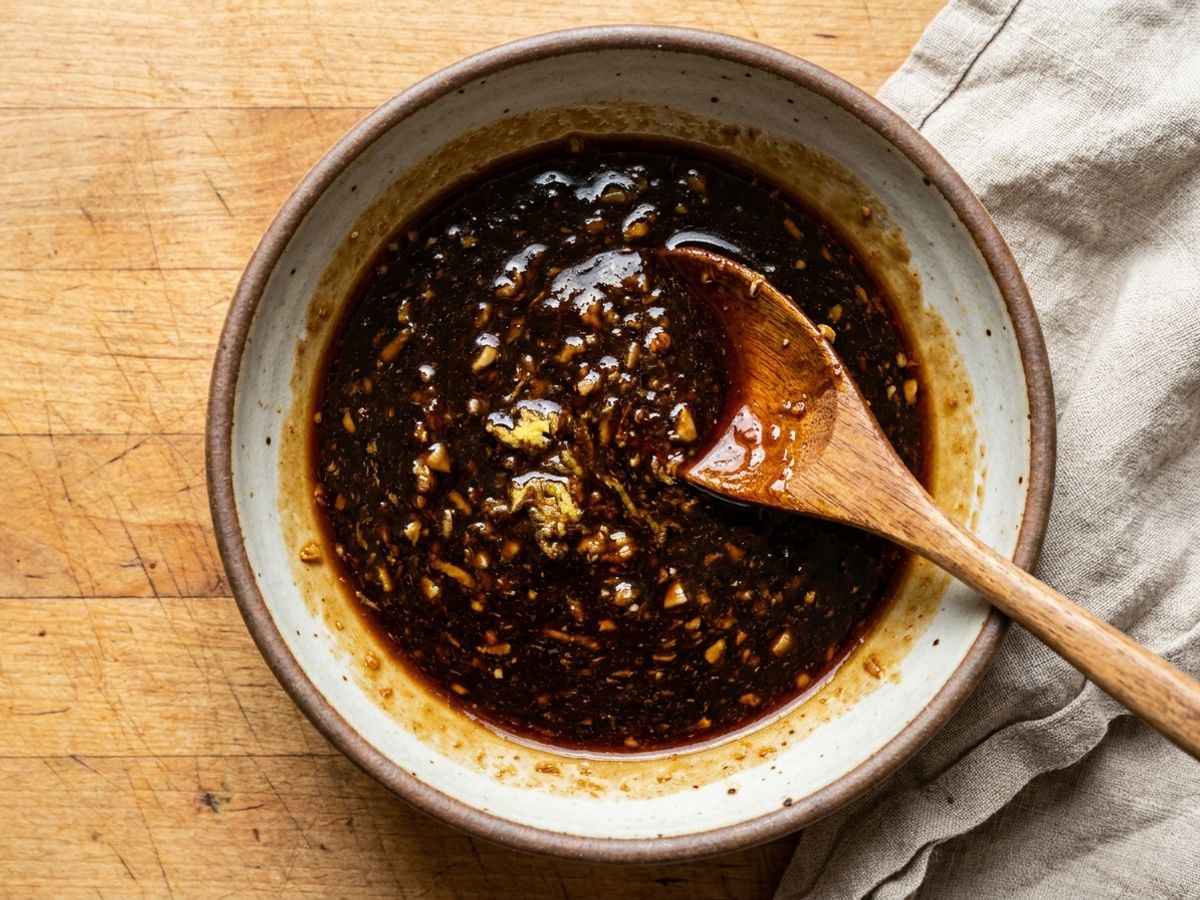
A low histamine soy-free stir-fry sauce made with coconut aminos, honey, fresh ginger, garlic, and sesame oil.
Ingredients
- 3 tablespoons coconut aminos
- 2 tablespoons water (or fresh chicken or vegetable broth)
- 1 tablespoon honey
- 1 teaspoon fresh ginger, finely grated
- 1 clove fresh garlic, minced
- 1 teaspoon sesame oil
- 1 teaspoon arrowroot starch
- 1 tablespoon cold water (for the slurry)
- Pinch of salt (optional, to taste)
Instructions
Make the Slurry
- In a small bowl, whisk the arrowroot starch into the cold water until completely smooth. Set aside.
Build the Sauce
- In a small saucepan, combine the coconut aminos, water (or broth), honey, ginger, and garlic.
- Heat over medium heat, stirring frequently, until the mixture begins to bubble gently. This takes about 2-3 minutes.
- Stir the arrowroot slurry once more, then pour it into the saucepan while whisking. Cook for another 1-2 minutes until the sauce thickens and turns glossy.
- Remove from heat and stir in the sesame oil. Taste and add a pinch of salt if needed.
Use the Sauce
- Pour over a finished stir-fry in the last minute of cooking, tossing to coat the vegetables and protein. Works well with simple stir-fry or ground beef stir-fry.
- For best results, use the sauce while it is still warm.
Tips & Substitutions
- Mix arrowroot with cold water, not hot. Hot water can cause the starch to clump or seize on contact. Whisk it cold, then stir again right before adding to the pan.
- Water is the safest default liquid. Boxed broths and bouillon cubes are often aged or contain yeast extract. Only use broth if it is freshly made and quickly cooled.
- Coconut aminos vary by brand. Some are aged longer than others, and not every brand is well tolerated. Choose one that works for you and start with a small amount the first time.
- Skip the garlic if it bothers you. The ginger and coconut aminos provide plenty of flavor on their own.
- Double the recipe for a saucier stir-fry. This amount lightly coats vegetables and protein for 2-3 servings. For a wetter, more glazed finish, double everything.
 Get the Histamine Recipes app
250+ low histamine recipes, every ingredient rated.


Why This Works
Coconut aminos. A common soy-free alternative to soy sauce that many people tolerate better. Traditional soy sauce is fermented and high in histamine, making coconut aminos one of the most useful swaps in low histamine cooking. Brands vary in how they are processed, so individual tolerance varies. Look for one with minimal ingredients.
Fresh ginger. Generally well tolerated and adds warmth and brightness. Fresh root has a sharper, cleaner flavor than dried.
Fresh garlic. Contains small amounts of quercetin, a compound sometimes discussed in mast cell research, though individual response varies. Garlic can also act as a histamine liberator for some people, so use the amount that works for you.
Arrowroot starch. A neutral thickener that gives the sauce a glossy, restaurant-style finish. It is generally well tolerated and works as a low histamine alternative to cornstarch.
Freshness matters. Making this sauce from scratch avoids the soy sauce, oyster sauce, fermented flavor enhancers, and preservatives in store-bought stir-fry sauces.
Storage
Best used immediately while warm for lowest histamine levels. If needed, refrigerate in a sealed glass jar for up to 1-2 days. The sauce thickens when cold, so warm it gently in a saucepan with a splash of water to loosen before using. Histamine buildup is lower risk than with meat or fish leftovers, but the fresh ginger and garlic lose their brightness over time.
Not sure about an ingredient?
Histamine tolerance is personal, and most of working it out comes down to knowing where individual foods stand. Our low histamine food list rates 4,500+ foods and explains the reasoning behind each rating, including the foods whose level depends on how fresh they are or how they were stored. It is worth a look before you swap anything in this recipe.
Before you eat
A lot of people with histamine intolerance take a DAO enzyme supplement 15 to 30 minutes before a meal. DAO is the enzyme your body uses to break down the histamine in food, and taking it with meals supports that natural process. Curious how it works? See do DAO supplements actually work.
Affiliate link: if you buy through it, we may earn a commission at no extra cost to you. These statements have not been evaluated by the Food and Drug Administration. This product is not intended to diagnose, treat, cure, or prevent any disease.
For educational purposes only. Not medical advice. Consult a healthcare professional for personal guidance.
References
- Stir Fry Sauce Without Soy Sauce (Vegan Option) — Low Histamine Eats
- Low Histamine Asian Sauce — Savory Sides
- Are Coconut Aminos High In Histamine — Casa de Sante
- Histamine and histamine intolerance — Maintz & Novak (2007)
- Histamine Intolerance: The Current State of the Art — Comas-Basté et al. (2020)
- Biogenic Amines in Plant-Origin Foods: Are They Frequently Underestimated in Low-Histamine Diets? — Sánchez-Pérez et al. (2021)
- Diamine Oxidase Supplementation Improves Symptoms in Patients with Histamine Intolerance — Schnedl et al. (2019)
- Histamine Intolerance — A Comprehensive Review — Jochum (2024)