 Histamine Tracker
Steak and Potatoes

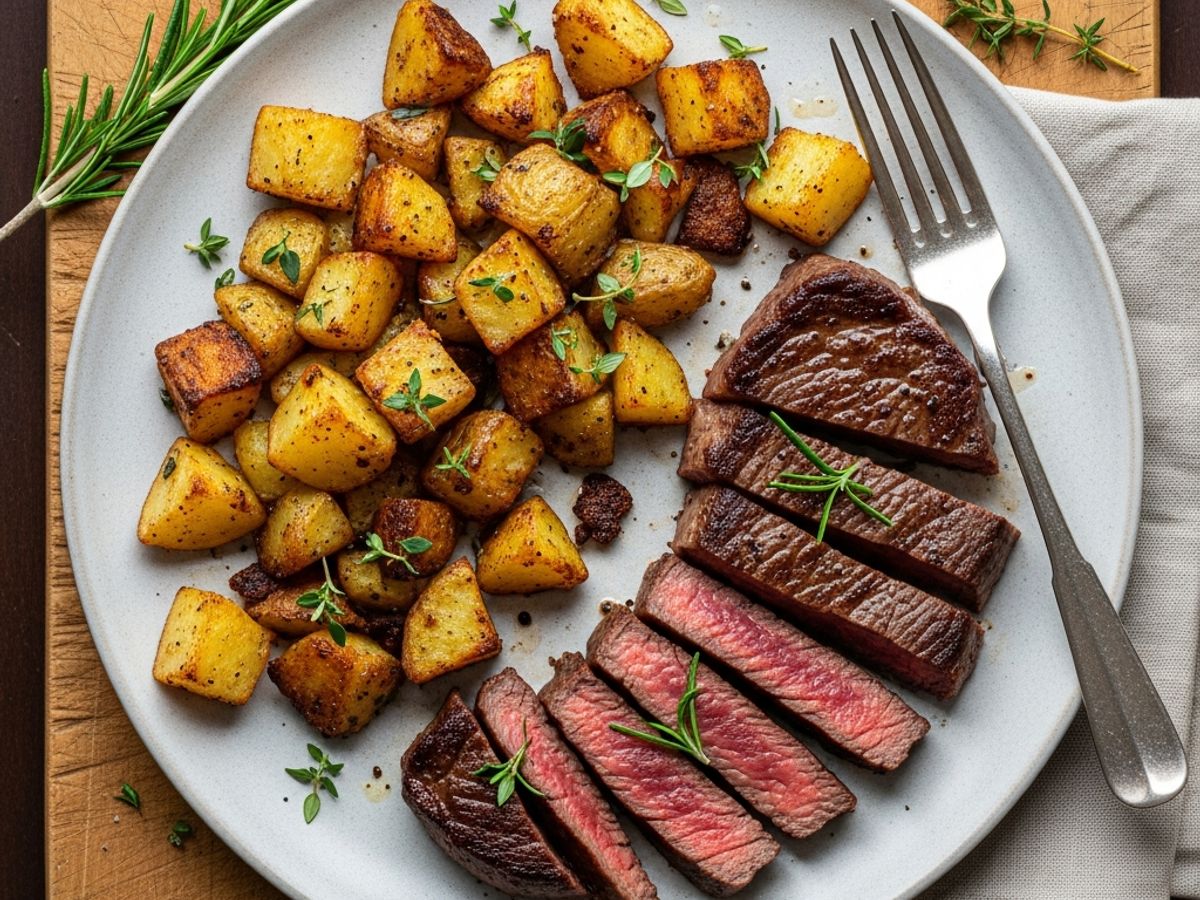
Pan-seared steak with roasted potatoes.
Ingredients
Steak
- 2 steaks (ribeye, strip, or sirloin, about 8 ounces each)
- 1 tablespoon olive oil
- 1/2 teaspoon sea salt
- 1/4 teaspoon black pepper (optional)
- 1 tablespoon butter (optional)
- Fresh thyme or rosemary
Potatoes
- 1 pound potatoes, cubed
- 2 tablespoons olive oil
- 1/2 teaspoon sea salt
- Fresh rosemary (optional)
Instructions
Roast the Potatoes
- Preheat oven to 425°F (218°C).
- Toss potato cubes with olive oil, salt, and rosemary if using.
- Spread in a single layer on a baking sheet.
- Roast 30-35 minutes, stirring once, until golden and crispy.
Cook the Steak
- Remove steaks from refrigerator 15-20 minutes before cooking to take the chill off.
- Pat dry and season with salt and pepper if using.
- Heat olive oil in a cast iron skillet over high heat until smoking.
- Add steaks and cook without moving for 3-4 minutes until a crust forms.
- Flip and cook another 3-4 minutes for medium-rare (130°F / 54°C) or to desired doneness.
- Add butter and herbs in the last minute, basting the steaks.
- Let rest 5 minutes before serving.
Serve
- Divide potatoes between plates.
- Slice steaks if desired and place alongside.
- Drizzle with any resting juices. Serve immediately.
Tips & Substitutions
- Use fresh steaks. Beef is often aged, which increases histamine. Ask your butcher about freshness and choose non-aged cuts when possible.
- Use a meat thermometer. 130°F (54°C) for medium-rare, 140°F (60°C) for medium. Let the steak rest 5 minutes before cutting.
- Skip the butter baste for dairy-free. The olive oil and herbs still create a flavorful crust.
- Swap ribeye for sirloin or strip. Sirloin tends to be less aged and more affordable. Ask your butcher what is freshest.
- Add steamed broccoli or a simple salad to round out the meal with more vegetables.
Why This Works
Fresh beef. The key with beef is freshness. Non-aged, freshly cut steaks are generally well tolerated. Aged beef accumulates histamine over time, so always ask your butcher about aging.
Potatoes. Naturally low in histamine and well tolerated by most people. Roasting at high heat creates crispy edges without needing any coatings or sauces.
Rosemary and thyme. Fresh herbs are naturally low in histamine. They add classic steak-house flavor without relying on premade seasoning blends.
Olive oil. A well-tolerated cooking fat that handles the high heat needed for searing. It forms the base of flavor alongside the herbs.
Storage
Best eaten immediately. Steak is at its best straight from the pan. If you have leftovers, refrigerate in an airtight container and eat within 24 hours. Beef accumulates histamine during storage, so prompt refrigeration and reheating are important.
Not sure if an ingredient is safe? Histamine Tracker includes a database of 1,000+ foods with histamine ratings to help you cook with confidence.


For educational purposes only. Not medical advice. Consult a healthcare professional for personal guidance.
References
- Low Histamine Meat Tips & Common Mistakes — Mast Cell 360
- Are Potatoes High in Histamine? — Histamine Doctor
- Low Histamine Diet: Foods to Eat and Avoid — Wyndly
- Histamine and histamine intolerance — Maintz & Novak (2007)
- Histamine Intolerance: The Current State of the Art — Comas-Basté et al. (2020)
- Biogenic Amines in Plant-Origin Foods: Are They Frequently Underestimated in Low-Histamine Diets? — Sánchez-Pérez et al. (2021)
- Diamine Oxidase Supplementation Improves Symptoms in Patients with Histamine Intolerance — Schnedl et al. (2019)
- Histamine Intolerance — A Comprehensive Review — Jochum (2024)