 Histamine Tracker
Smashed Sweet Potatoes

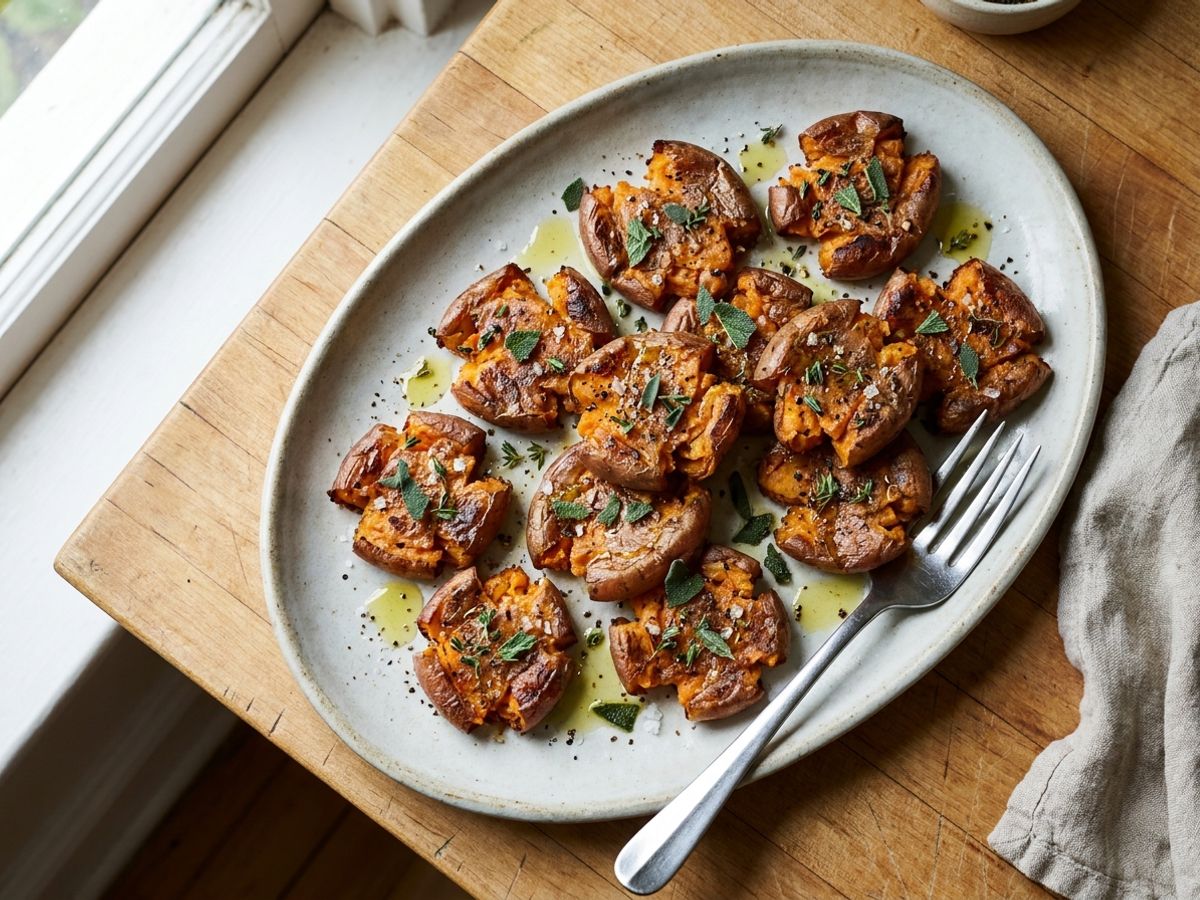
Low histamine smashed sweet potatoes roasted with olive oil, fresh sage or thyme, and sea salt.
Ingredients
- 1.5 pounds small sweet potatoes (about 2 inches across)
- 3 tablespoons olive oil, divided
- 1 tablespoon fresh sage or thyme leaves, roughly chopped
- 1/2 teaspoon sea salt, plus more for the boiling water
- Black pepper (optional)
Instructions
Boil
- Scrub the sweet potatoes clean. Leave the skins on.
- Place them in a large pot and cover with cold water by an inch. Add a generous pinch of salt.
- Bring to a boil, then reduce to a simmer. Cook for 20 to 25 minutes, until a knife slides in easily.
- Drain and let the sweet potatoes steam dry in the colander for 5 minutes.
Smash and roast
- Preheat your oven to 425°F (220°C). Drizzle 1 tablespoon of olive oil onto a baking sheet.
- Place the sweet potatoes on the sheet, spaced apart. Use the bottom of a sturdy glass or a potato masher to press each one flat to about 1/2-inch thick. They will spread and crack at the edges. That is what you want.
- Drizzle the remaining 2 tablespoons of olive oil over the tops. Sprinkle with sea salt, fresh herbs, and pepper if using.
- Roast for 20 to 25 minutes, until the edges are crispy and deeply golden.
Serve
- Serve right away while the edges are still crisp.
Tips & Substitutions
- Use small sweet potatoes. They cook faster and smash more evenly. If yours are larger, halve them before boiling.
- Steam-drying matters. Letting the boiled sweet potatoes sit in the colander gets rid of surface moisture, which is what lets the edges crisp up in the oven.
- Sage or thyme both work. Fresh sage gives a bolder, savory flavor. Fresh thyme is more delicate and herbaceous. Fresh rosemary is another option if you prefer it.
- Sage can brown quickly at 425°F (220°C). If you find finely chopped sage burning, add it in the last 5 to 8 minutes of roasting instead, or use larger leaves tucked partly under the potatoes.
- Don't crowd the pan. Leave space between each smashed potato so the edges crisp instead of steaming. Use two baking sheets if needed.
- Add herbs before roasting, not after. The heat brings out their flavor. Raw herbs sprinkled on top after cooking can taste sharp.
 Get the Histamine Recipes app
250+ low histamine recipes, every ingredient rated.


Why This Works
Sweet potatoes. Naturally low in histamine and generally well tolerated. They provide fiber and micronutrients that support overall gut health.
Olive oil. Cold-pressed olive oil is commonly tolerated and helps the sweet potatoes crisp up without introducing problematic ingredients.
Fresh sage and thyme. Both are commonly listed as low histamine herbs. Fresh herbs are generally better tolerated than older dried blends, though individual response varies.
Sea salt. Plain sea salt is free from additives that could be a concern.
Storage
Best served fresh, when the edges are at their crispiest. If you have leftovers, cool them quickly and refrigerate promptly in an airtight container, ideally eating within 24 hours. Reheat in a hot oven at 425°F (220°C) for 5 to 10 minutes to bring back some of the crispness rather than microwaving. If you are very sensitive, freeze leftovers the same day and reheat from frozen.
Not sure about an ingredient?
Histamine tolerance is personal, and most of working it out comes down to knowing where individual foods stand. Our low histamine food list rates 4,500+ foods and explains the reasoning behind each rating, including the foods whose level depends on how fresh they are or how they were stored. It is worth a look before you swap anything in this recipe.
Before you eat
A lot of people with histamine intolerance take a DAO enzyme supplement 15 to 30 minutes before a meal. DAO is the enzyme your body uses to break down the histamine in food, and taking it with meals supports that natural process. Curious how it works? See do DAO supplements actually work.
Affiliate link: if you buy through it, we may earn a commission at no extra cost to you. These statements have not been evaluated by the Food and Drug Administration. This product is not intended to diagnose, treat, cure, or prevent any disease.
For educational purposes only. Not medical advice. Consult a healthcare professional for personal guidance.
References
- Are Sweet Potatoes Low Histamine? — Histamine Doctor
- Simple Oven-Roasted Sweet Potatoes — Low Histamine Eats
- Low Histamine Herbs and Spices (and Recipes to Enjoy!) — Through The Fibro Fog
- Histamine and histamine intolerance — Maintz & Novak (2007)
- Histamine Intolerance: The Current State of the Art — Comas-Basté et al. (2020)
- Biogenic Amines in Plant-Origin Foods: Are They Frequently Underestimated in Low-Histamine Diets? — Sánchez-Pérez et al. (2021)
- Diamine Oxidase Supplementation Improves Symptoms in Patients with Histamine Intolerance — Schnedl et al. (2019)
- Histamine Intolerance — A Comprehensive Review — Jochum (2024)