 Histamine Tracker
Roasted Beets

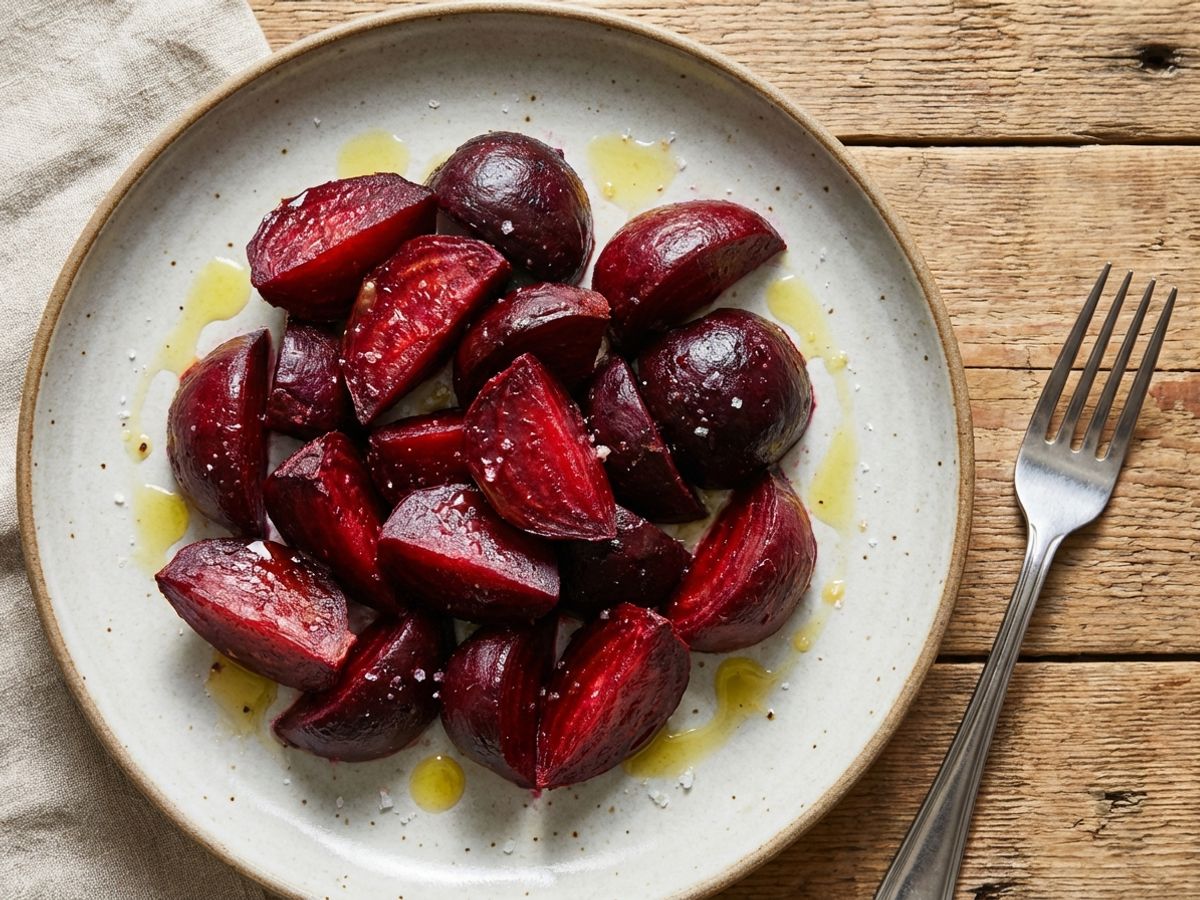
Whole beets roasted in foil.
Ingredients
- 4 medium beets (about 1 pound)
- 1 tablespoon olive oil
- 1/4 teaspoon sea salt
Instructions
Prepare
- Preheat oven to 400°F (200°C).
- Scrub beets clean. Trim the tops and roots.
- Drizzle with olive oil and sprinkle with salt.
Roast
- Wrap each beet individually in aluminum foil.
- Place on a baking sheet.
- Roast for 50-60 minutes until a knife slides easily through the center.
- Cooking time varies with beet size. Larger beets may need 75 minutes.
Peel and Serve
- Let cool until you can handle them.
- Rub off the skins with a paper towel. They should slip off easily.
- Slice or cube as desired.
- Serve warm or at room temperature.
Tips & Substitutions
- Choose similar-sized beets so they cook evenly. Larger beets may need up to 75 minutes.
- Wear gloves when handling. Beet juice stains hands and cutting boards.
- Golden beets are a great swap if you want a milder flavor and no staining.
- Save the greens. Beet greens can be sauteed with olive oil and salt, just like other leafy greens. Add garlic only if you tolerate it.
- Butter instead of olive oil works well if you tolerate dairy. Toss with cubed beets after roasting.
Why This Works
Beets. Naturally low in histamine and generally well tolerated. Their natural sweetness means you don't need sauces or seasonings that could be problematic.
Olive oil. A fresh, unfermented fat that's commonly used in low histamine cooking. It adds richness without introducing histamine concerns.
Minimal ingredients. Simple roasting with salt and oil keeps the ingredient list short, which makes it easier to identify triggers if a reaction occurs.
Freshness. Cooking fresh beets yourself is often better tolerated than buying pre-cooked or long-stored versions. While vegetables are less likely than proteins to accumulate histamine, many people with histamine intolerance do best with freshly prepared foods. Freshness matters more than food lists when managing histamine intolerance.
Storage
Best served fresh from the oven or at room temperature the same day. If you have leftovers, refrigerate in an airtight container and eat within 24 hours. Since this is a vegetable dish without protein, histamine buildup is less of a concern than with meat, but freshness is still ideal.
Not sure if an ingredient is safe? Histamine Tracker includes a database of 1,000+ foods with histamine ratings to help you cook with confidence.


For educational purposes only. Not medical advice. Consult a healthcare professional for personal guidance.
References
- Are Beets Low Histamine? — Casa de Sante
- 8 Low Histamine Root Vegetables: Safe Choices for Your Diet — Histamine Doctor
- Is Olive Oil High Histamine? — Histamine Doctor
- Histamine and histamine intolerance — Maintz & Novak (2007)
- Histamine Intolerance: The Current State of the Art — Comas-Basté et al. (2020)
- Biogenic Amines in Plant-Origin Foods: Are They Frequently Underestimated in Low-Histamine Diets? — Sánchez-Pérez et al. (2021)
- Diamine Oxidase Supplementation Improves Symptoms in Patients with Histamine Intolerance — Schnedl et al. (2019)
- Histamine Intolerance — A Comprehensive Review — Jochum (2024)