 Histamine Tracker
Pulled Pork

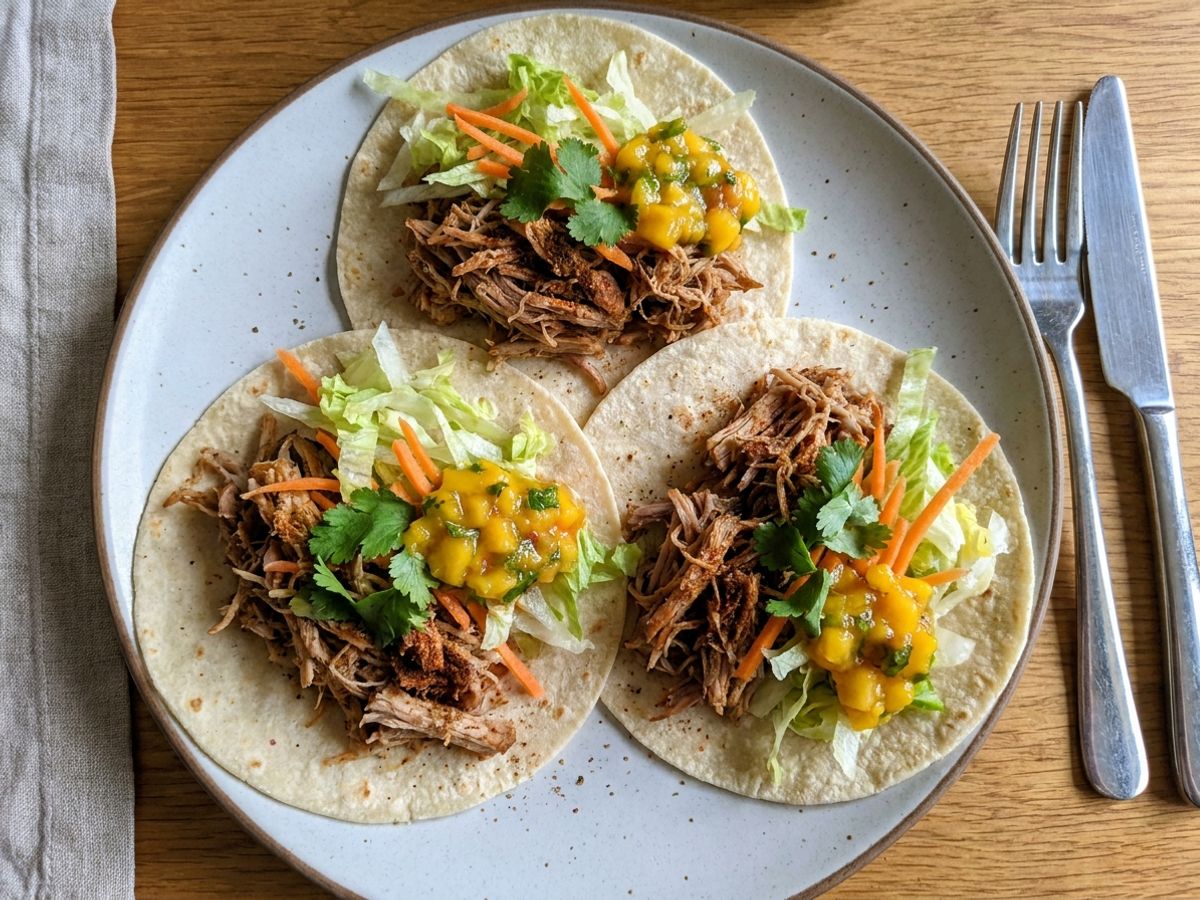
Low histamine oven-roasted pulled pork with a cumin, oregano, and paprika rub, for tacos or rice bowls.
Ingredients
For the Rub
- 1 teaspoon ground cumin
- 1 teaspoon dried oregano
- 1 teaspoon sweet paprika (not smoked, not hot)
- 1.5 teaspoons sea salt
- 1 tablespoon olive oil
For the Pork
- 3 pounds fresh boneless pork shoulder (also called pork butt)
- 1 cup water
To Serve (optional)
- Cassava flour tortillas or cooked white rice
- Shredded lettuce, shredded carrots, fresh cilantro
- Mango Salsa
Instructions
Prepare the Pork
- Take pork out of the refrigerator 20 minutes before cooking to take the chill off.
- Preheat the oven to 325°F (165°C).
- Pat the pork dry with paper towels and trim any large pieces of surface fat.
- In a small bowl, mix the cumin, oregano, sweet paprika, and salt.
- Rub the pork all over with olive oil, then coat evenly with the spice mix.
Roast
- Place the pork in a Dutch oven or heavy roasting pan with a tight-fitting lid.
- Pour the water into the bottom of the pan around (not over) the pork.
- Cover with the lid and roast for 3 to 4 hours (start checking at 2.5 hours). It's done when a skewer slides in with little resistance, the meat shreds easily with a fork, and the internal temperature reads 195 to 205°F (90 to 96°C).
- If the pot looks dry at any point during cooking, add a splash of hot water.
- Remove from the oven and let rest, covered, for 15 minutes.
Shred and Serve
- Transfer the pork to a cutting board or large bowl.
- Use two forks to pull the meat apart into bite-sized shreds. Discard any large fat pieces.
- Spoon a few tablespoons of the pan juices over the shredded meat to keep it moist.
- Serve right away in warm tortillas or over rice with fresh toppings.
Tips & Substitutions
- Buy fresh pork. Ask the butcher for the latest-packaged option (or a same-day cut) and cook it the day you buy it. Avoid pre-marinated, brined, or "enhanced" cuts (check labels for "contains up to X% solution," "natural flavors," or smoke flavoring).
- Toppings are optional. Mango, herbs, and salsa work well for many people, but skip them if you're in a flare or still figuring out your individual triggers.
- No smoked paprika. Smoked, aged, and cured ingredients tend to be triggers. Stick with plain sweet paprika.
- Pressure cooker option. A pressure cooker (Instant Pot) cooks pork shoulder faster, which keeps cook time short. Cube the seasoned pork, add 1 cup water, and cook on high pressure for about 60 minutes with a natural release. Many in the low-histamine community prefer this method for that reason.
- Skip a spice if it bothers you. Cumin and oregano are commonly tolerated, but everyone's threshold is different. Salt and paprika alone still make a flavorful rub.
- Use it for tacos or bowls. Pile into warm cassava tortillas with lettuce, carrots, and mango salsa, or serve over white rice with fresh herbs.
 Get the Histamine Recipes app
250+ low histamine recipes, every ingredient rated.


Why This Works
Fresh pork shoulder. Pork is generally well tolerated when it's very fresh. Like other meats, pork can accumulate histamine as it sits (time and temperature both matter), so same-day cooking matters more than the cut itself.
Plain sweet paprika, cumin, and oregano. These are commonly tolerated dried spices when bought fresh from a trusted source. Smoked paprika and most pre-mixed BBQ rubs include smoke flavoring, sugar, and other additives that are common triggers.
No marinade, no BBQ sauce. Standard pulled pork relies on vinegar, tomato, smoked spices, and long marinades, all common histamine triggers. A simple dry rub keeps the recipe clean.
Covered roasting with a little water. Steam-roasting in a covered pot keeps the meat moist without needing the long, low cook of traditional pulled pork.
Storage
Best eaten the same day it's cooked. Pulled pork is one of the higher-risk recipes for histamine accumulation. Shredded meat has a lot of surface area, and how it cools and gets stored matters more than the cooking itself.
If you're cooking for one or two, portion the rest into single shallow containers right after shredding and get them into the freezer within 30 to 60 minutes. Don't let the pot sit on the counter cooling for hours. Reheat only what you'll eat at one sitting, and avoid repeated warm-cool cycles. Refrigerated leftovers of long-cooked pork are a common trigger, and even frozen leftovers bother some people.
Not sure about an ingredient?
Histamine tolerance is personal, and most of working it out comes down to knowing where individual foods stand. Our low histamine food list rates 4,500+ foods and explains the reasoning behind each rating, including the foods whose level depends on how fresh they are or how they were stored. It is worth a look before you swap anything in this recipe.
Before you eat
A lot of people with histamine intolerance take a DAO enzyme supplement 15 to 30 minutes before a meal. DAO is the enzyme your body uses to break down the histamine in food, and taking it with meals supports that natural process. Curious how it works? See do DAO supplements actually work.
Affiliate link: if you buy through it, we may earn a commission at no extra cost to you. These statements have not been evaluated by the Food and Drug Administration. This product is not intended to diagnose, treat, cure, or prevent any disease.
For educational purposes only. Not medical advice. Consult a healthcare professional for personal guidance.
References
- Low Histamine Pork Recipe — MastCell360 (Beth O'Hara)
- Guide to Low-Histamine Cooking and Food Preparation — Creative in My Kitchen
- Is Pork High in Histamine? — Casa de Sante
- Histamine and histamine intolerance — Maintz & Novak (2007)
- Histamine Intolerance: The Current State of the Art — Comas-Basté et al. (2020)
- Biogenic Amines in Plant-Origin Foods: Are They Frequently Underestimated in Low-Histamine Diets? — Sánchez-Pérez et al. (2021)
- Diamine Oxidase Supplementation Improves Symptoms in Patients with Histamine Intolerance — Schnedl et al. (2019)
- Histamine Intolerance — A Comprehensive Review — Jochum (2024)