 Histamine Tracker
Pork Tenderloin with Apples

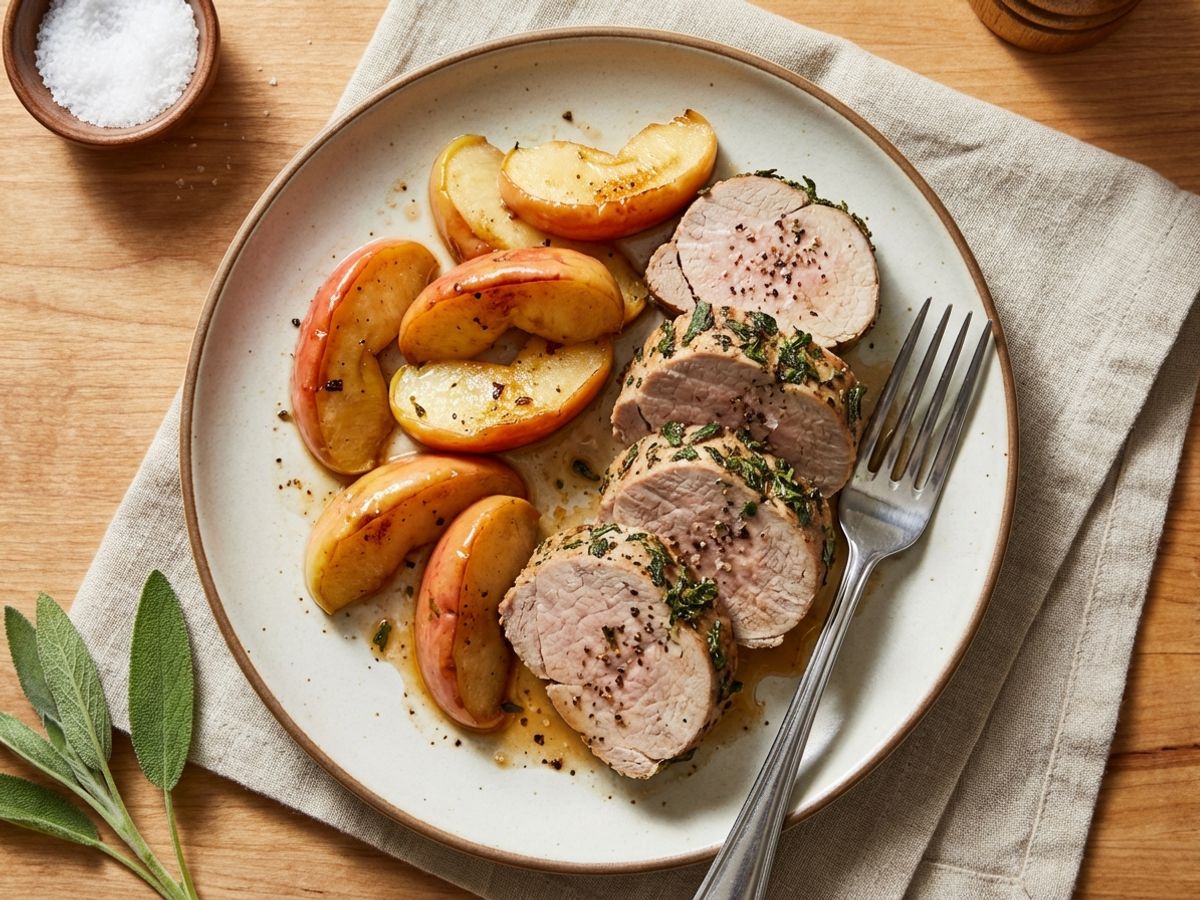
Roasted pork tenderloin with apples and sage.
Ingredients
Pork Tenderloin
- 1 1/2 pounds fresh pork tenderloin
- 2 tablespoons olive oil
- 1 tablespoon fresh sage, finely chopped
- 1 teaspoon fresh thyme leaves
- 1/2 teaspoon sea salt
- 1/4 teaspoon black pepper (optional)
Apples
- 2 large apples (Gala, Fuji, or Honeycrisp), cored and cut into 1/2-inch wedges
- 1 tablespoon olive oil
- 1/4 teaspoon sea salt
- 1/2 teaspoon fresh thyme leaves
Instructions
Prep
- Preheat your oven to 400°F (200°C).
- Pat the pork tenderloin dry with paper towels.
- In a small bowl, mix 2 tablespoons olive oil with sage, thyme, salt, and pepper if using.
- Rub the herb mixture over the entire tenderloin.
Prepare the Apples
- Toss the apple slices with 1 tablespoon olive oil, salt, and thyme.
- Arrange in a single layer on a rimmed baking sheet.
Roast
- Heat an oven-safe skillet over medium-high heat.
- Sear the tenderloin for 2-3 minutes per side until browned on all sides.
- Place the skillet in the oven alongside the baking sheet of apples.
- Roast for 12-20 minutes, starting to check at 12 minutes, until the pork reaches 140-145°F (60-63°C) internal temperature.
- Stir the apples halfway through roasting for even browning.
- The apples should be tender and lightly caramelized.
Serve
- Transfer the pork to a cutting board and let rest for 5-10 minutes.
- Slice the tenderloin into 1/2-inch medallions.
- Arrange the pork on plates with the roasted apples alongside.
- Serve immediately.
Tips & Substitutions
- Use fresh pork tenderloin that is not cured, smoked, or pre-marinated. These processed versions are high in histamine.
- Gala, Fuji, and Honeycrisp apples hold their shape well during roasting. Avoid softer varieties like McIntosh, which can turn mushy.
- For fewer dishes, roast everything together. Arrange the apple slices around the tenderloin in the skillet after searing.
- Swap sage for fresh basil or parsley if you prefer a milder herb flavor.
- Use a meat thermometer. Pull the tenderloin at 140-145°F (60-63°C). It will rise a few more degrees while resting.
Why This Works
Pork tenderloin. Fresh, uncured pork is generally well tolerated. The most important factor is freshness. Buy it fresh, cook promptly, and cool leftovers quickly to minimize histamine buildup.
Apples. Fresh apples are naturally low in histamine and well tolerated by most people. They add natural sweetness without needing high-histamine sauces or condiments.
Sage and thyme. Fresh herbs are a safe, flavorful way to season food. They replace the need for premade rubs or marinades that may contain hidden additives.
Olive oil. A stable cooking fat that is generally well tolerated and works well for both searing and roasting.
Storage
Best served fresh right after slicing. If you have leftovers, refrigerate in an airtight container and eat within 24 hours. Pork accumulates histamine over time, so prompt storage and reheating are important.
Not sure if an ingredient is safe? Histamine Tracker includes a database of 1,000+ foods with histamine ratings to help you cook with confidence.


For educational purposes only. Not medical advice. Consult a healthcare professional for personal guidance.
References
- Is Pork High in Histamine? — Casa de Sante
- Low Histamine Diet: Foods to Eat and Avoid — Wyndly
- Guide to Low-Histamine Cooking and Food Preparation — Creative in My Kitchen
- Histamine and histamine intolerance — Maintz & Novak (2007)
- Histamine Intolerance: The Current State of the Art — Comas-Basté et al. (2020)
- Biogenic Amines in Plant-Origin Foods: Are They Frequently Underestimated in Low-Histamine Diets? — Sánchez-Pérez et al. (2021)
- Diamine Oxidase Supplementation Improves Symptoms in Patients with Histamine Intolerance — Schnedl et al. (2019)
- Histamine Intolerance — A Comprehensive Review — Jochum (2024)