 Histamine Tracker
Pork Tenderloin

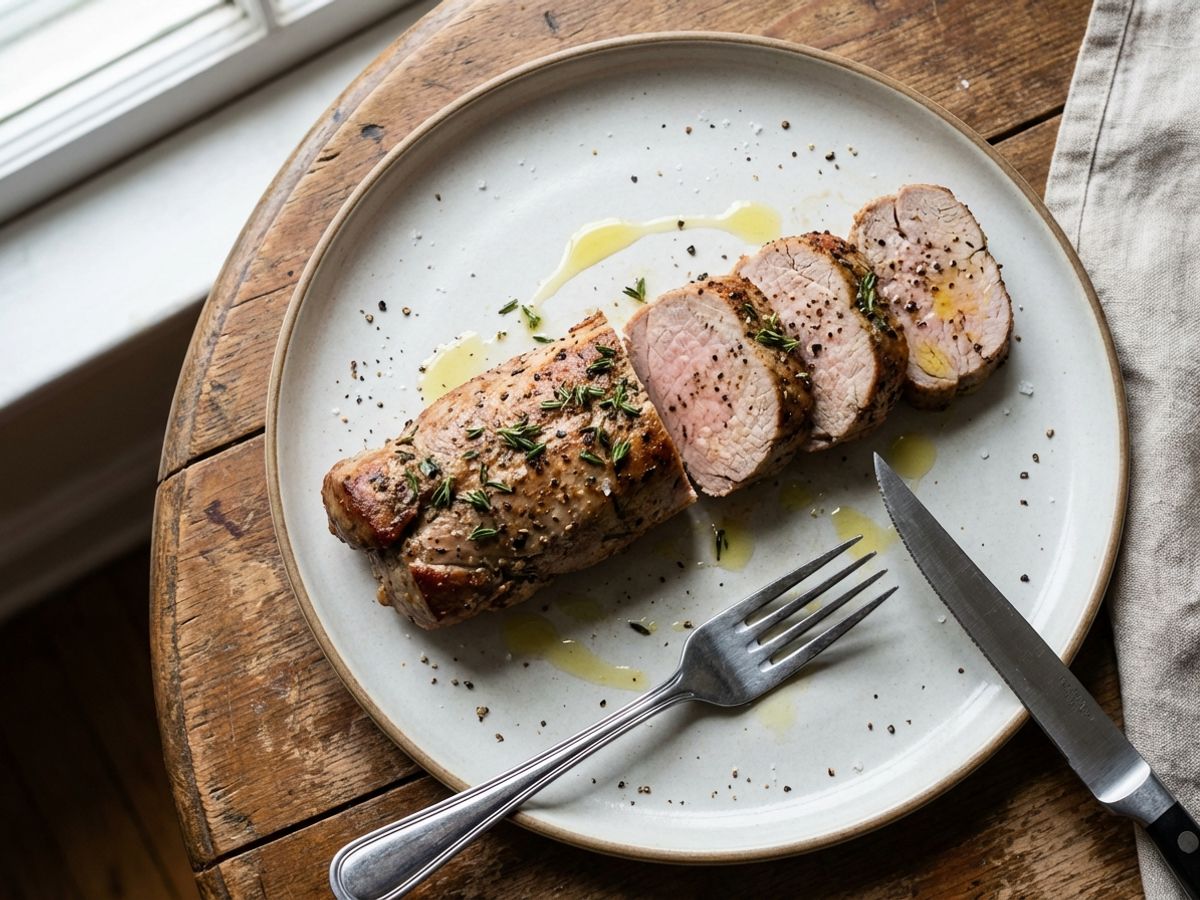
Roasted pork tenderloin with thyme.
Ingredients
- 1 pork tenderloin (about 1 pound)
- 2 tablespoons olive oil
- 1 teaspoon fresh thyme leaves (or 1/2 teaspoon dried)
- 1/2 teaspoon sea salt
- Black pepper (optional)
Instructions
Prepare the Pork
- Remove pork from refrigerator 20 minutes before cooking to bring to room temperature.
- Preheat oven to 400°F (200°C).
- Pat the tenderloin dry with paper towels.
- Rub with olive oil and season with thyme, salt, and pepper if using.
Roast
- Heat an oven-safe skillet over medium-high heat.
- Sear the tenderloin for 2-3 minutes per side until browned.
- Transfer skillet to the oven and roast for 15-20 minutes until internal temperature reaches 145°F (63°C).
- Remove from oven and let rest for 5 minutes before slicing.
Serve
- Slice into medallions and serve immediately.
Tips & Substitutions
- Buy fresh pork. Get it same-day from a trusted butcher. Freshness is critical for keeping histamine levels low in protein.
- Use a meat thermometer. 145°F (63°C) is the target. This keeps the meat tender and juicy. Let it rest 5 minutes before slicing so the juices redistribute.
- Swap the herbs. Rosemary, sage, or oregano all work well instead of thyme. Use whatever fresh herbs you have on hand.
- Avocado oil for higher heat. If your olive oil smokes during searing, try avocado oil, which has a higher smoke point.
- Slice against the grain. This makes each medallion more tender and easier to chew.
Why This Works
Fresh pork tenderloin. Pork tenderloin is a lean, mild cut that is generally well tolerated when purchased and cooked fresh. Avoid pre-marinated, brined, or enhanced cuts (check labels for "contains up to X% solution" or "natural flavors"). Buy with the freshest pack date available, keep it cold, and cook or freeze promptly.
Olive oil. A safe, commonly tolerated cooking fat with no fermented or aged components.
Fresh thyme. Fresh herbs are generally well tolerated and add flavor without relying on spice blends that may contain additives or preservatives.
Simple preparation. No marinades, no sauces, no vinegar. Just salt, oil, herbs, and heat. This keeps the recipe clean and minimizes potential triggers.
Storage
Best eaten immediately after cooking. Like all protein dishes, cooked pork is prone to histamine accumulation as it sits. If you must store leftovers, refrigerate within 30 minutes and eat within 24 hours. Freezing cooked portions promptly is another option, though eating fresh is always preferred.
Not sure if an ingredient is safe? Histamine Tracker includes a database of 1,000+ foods with histamine ratings to help you cook with confidence.


For educational purposes only. Not medical advice. Consult a healthcare professional for personal guidance.
References
- Is Pork High in Histamine? — Casa de Sante
- Is Olive Oil High Histamine? — Histamine Doctor
- Guide to Low-Histamine Cooking and Food Preparation — Creative in My Kitchen
- Histamine and histamine intolerance — Maintz & Novak (2007)
- Histamine Intolerance: The Current State of the Art — Comas-Basté et al. (2020)
- Biogenic Amines in Plant-Origin Foods: Are They Frequently Underestimated in Low-Histamine Diets? — Sánchez-Pérez et al. (2021)
- Diamine Oxidase Supplementation Improves Symptoms in Patients with Histamine Intolerance — Schnedl et al. (2019)
- Histamine Intolerance — A Comprehensive Review — Jochum (2024)