 Histamine Tracker
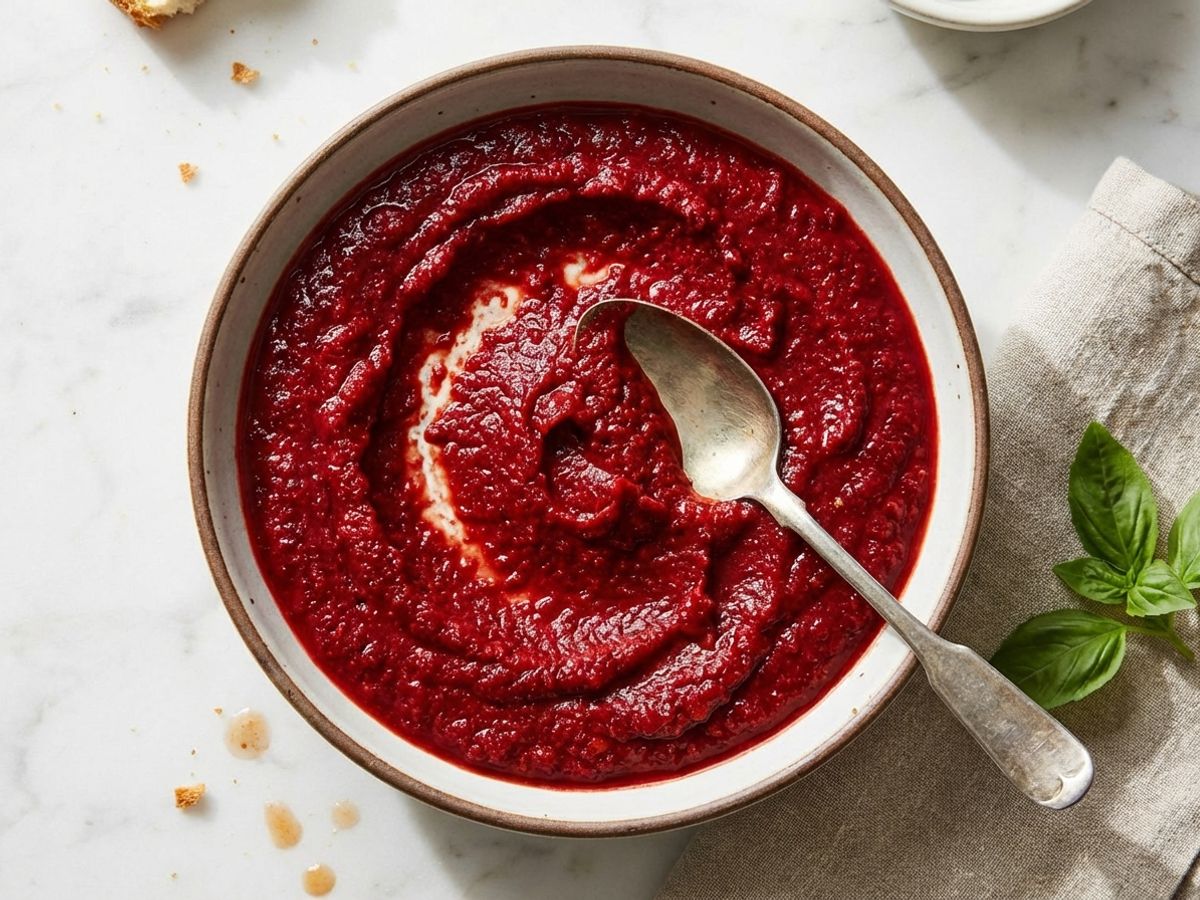
No-Tomato Pasta Sauce

A tomato-free sauce I like to use with gluten-free pasta for dinner.
Ingredients
- 2 medium beets, peeled and diced (about 300g)
- 2 medium carrots, peeled and chopped
- 1 cup butternut squash, cubed
- 1 stalk celery, chopped (optional)
- 1/2 onion, chopped (optional)
- 2 cloves garlic, minced (optional)
- 2 tablespoons olive oil
- 2 cups water or homemade vegetable broth
- 1 teaspoon dried oregano
- 1/2 teaspoon dried basil
- 1/2 teaspoon salt
- Fresh basil for serving (optional)
Instructions
Roast the Vegetables
- Preheat your oven to 400°F (200°C).
- Toss the beets, carrots, butternut squash, and celery (if using) with 1 tablespoon olive oil.
- Spread on a baking sheet in a single layer.
- Roast for 25-30 minutes until tender and slightly caramelized.
Build the Sauce
- If using onion and garlic, heat 1 tablespoon olive oil in a pot over medium heat.
- Sauté the onion until soft, about 5 minutes. Add garlic and cook for 30 seconds.
- Add the roasted vegetables and vegetable broth to the pot.
- Stir in the oregano, basil, and salt.
- Simmer for 10 minutes to let flavors blend.
Blend
- Transfer everything to a blender and blend until smooth.
- Add more broth if you prefer a thinner sauce.
- Taste and adjust salt as needed.
Serve
Toss with your favorite pasta. Top with fresh basil if you like.
Tips & Substitutions
- Use one red beet and one golden beet for a more orange-red color that looks closer to traditional tomato sauce.
- Reduce to 1 beet if the flavor is too strong. Increase the butternut squash to make up the volume.
- Skip the onion and garlic if they bother you. The roasted vegetables and herbs still create a flavorful sauce.
- Stir in coconut cream for a creamier version. Add 2-3 tablespoons after blending for a richer sauce.
- Always use fresh beets, not canned. Canned beets may contain citric acid or other additives, and canned or jarred foods are often less well tolerated.
Why This Works
Beets. Naturally low in histamine and provide the deep red color that mimics tomato sauce. Generally well tolerated when fresh.
Carrots and butternut squash. Both are low in histamine and add natural sweetness and body to the sauce. They round out the flavor so the beet does not dominate.
Roasting. Roasting caramelizes the natural sugars in the vegetables, creating a richer, more complex flavor without needing tomatoes or vinegar.
Onion and garlic (optional). Both contain quercetin, a compound sometimes discussed in mast cell research. However, they can also act as histamine liberators for some people, so they are listed as optional.
No tomatoes. Tomatoes are high in histamine and one of the most commonly replaced ingredients in low histamine cooking. This sauce provides a similar look and versatility.
Storage
Best used fresh or within 2-3 days refrigerated in a sealed container. Freeze extra portions in individual servings for up to 3 months. Histamine buildup is generally lower risk than with meat or fish dishes, but any cooked food can become more problematic over time. Freshly made will always taste best and be best tolerated.
Not sure if an ingredient is safe? Histamine Tracker includes a database of 1,000+ foods with histamine ratings to help you cook with confidence.


For educational purposes only. Not medical advice. Consult a healthcare professional for personal guidance.
References
- Easy Nomato Sauce (Low Histamine, Whole 30) — Through The Fibro Fog
- Low Histamine, Low FODMAP Pasta Sauce — Mast Cell 360
- Adding Flavor to your Low Histamine Recipes — Through The Fibro Fog
- Histamine and histamine intolerance — Maintz & Novak (2007)
- Histamine Intolerance: The Current State of the Art — Comas-Basté et al. (2020)
- Biogenic Amines in Plant-Origin Foods: Are They Frequently Underestimated in Low-Histamine Diets? — Sánchez-Pérez et al. (2021)
- Diamine Oxidase Supplementation Improves Symptoms in Patients with Histamine Intolerance — Schnedl et al. (2019)
- Histamine Intolerance — A Comprehensive Review — Jochum (2024)