 Histamine Tracker
Mango Sticky Rice

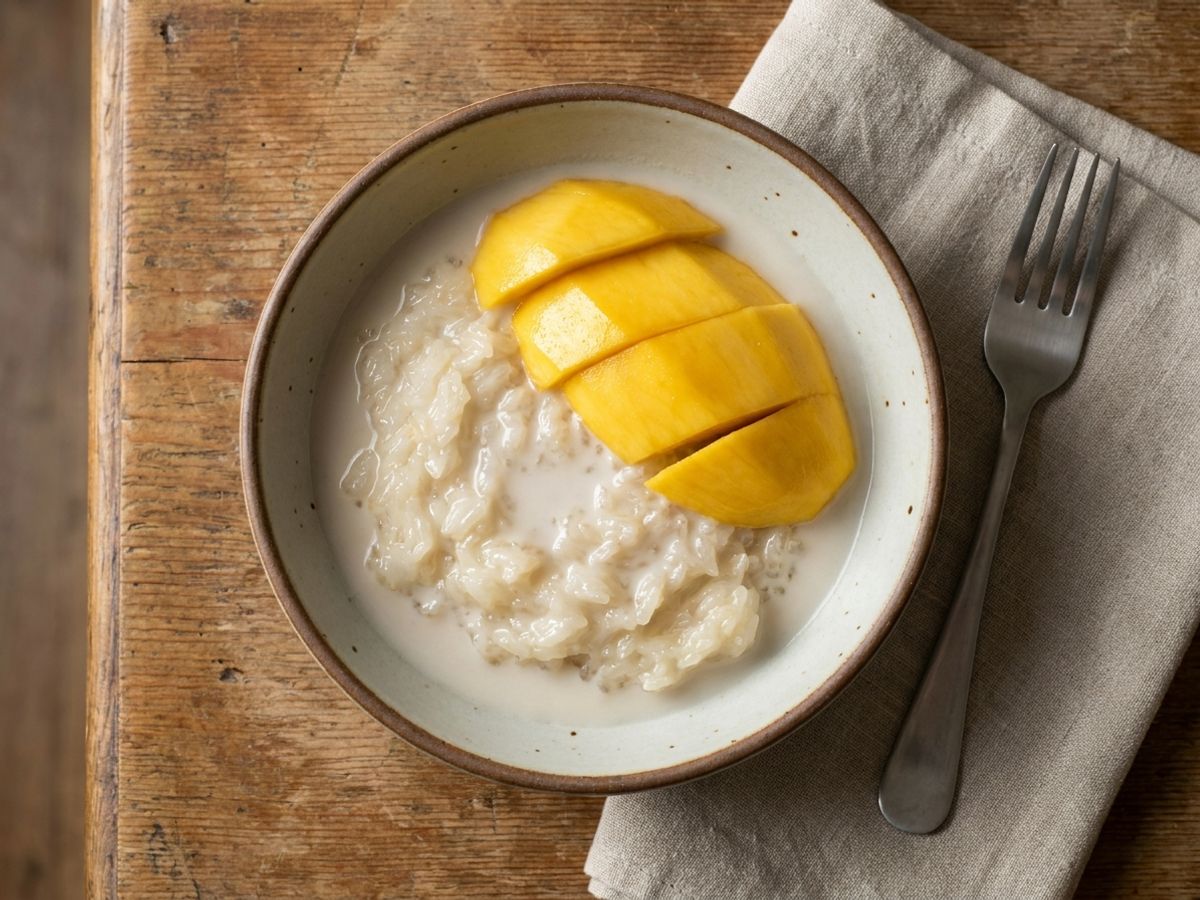
Low histamine mango sticky rice with glutinous rice in coconut milk and coconut sugar sauce, topped with fresh mango.
Ingredients
For the Rice
- 1 cup glutinous (sweet) rice, soaked at least 4 hours or overnight
- 1 1/4 cups water (for stovetop method)
For the Coconut Sauce
- 1 can (13.5 oz) full-fat coconut milk
- 3 tablespoons coconut sugar (or pure maple syrup)
- 1/4 to 1/2 teaspoon sea salt, to taste
For Serving
- 2 ripe fresh mangoes, peeled and sliced
Instructions
Soak and Cook the Rice
- Rinse the glutinous rice in a fine mesh strainer until the water runs clear.
- Soak the rice in cool water for at least 4 hours, or overnight for best texture.
- Drain the rice well.
- For a traditional chewy texture (recommended): line a steamer basket with cheesecloth or parchment, add the drained rice, and steam over boiling water for 25-30 minutes until tender and chewy.
- For a stovetop method: combine drained rice with 1 1/4 cups water in a heavy-bottomed saucepan. Bring to a boil, then reduce heat to very low, cover, and cook without stirring for 20 minutes. Turn off the heat and let it sit covered for another 10 minutes.
Make the Coconut Sauce
- While the rice cooks, shake the can of coconut milk well.
- In a small saucepan over medium-low heat, combine the coconut milk, coconut sugar, and salt.
- Stir gently until the sugar dissolves and the mixture is warm. Do not let it boil.
- Remove from heat. Set aside about 3 tablespoons of the sweetened sauce to drizzle on top later.
Combine and Rest
- Transfer the cooked rice to a bowl.
- Pour the rest of the warm sweetened coconut sauce over the rice and stir gently to coat.
- Cover and let the rice rest for 15-20 minutes. It will absorb the coconut milk and become glossy and rich.
Serve
- Peel fresh mango and slice into thin strips or small chunks.
- Spoon the sticky rice onto plates or into bowls.
- Top with fresh mango slices.
- Drizzle with the reserved sweetened coconut sauce.
Tips & Substitutions
- Use real glutinous rice. Look for "sweet rice" or "glutinous rice" at Asian grocery stores or online. Despite the name, it contains no gluten. Regular jasmine or long-grain rice will not give the same chewy texture.
- Soak time matters. A longer soak gives a more tender, even texture. If you only have an hour, soak in warm water and use the stovetop method.
- Sweetener swaps. Coconut sugar gives the most traditional flavor. Pure maple syrup also works and dissolves easily into the warm coconut milk.
- Pick a ripe mango. Choose mangoes that are just slightly soft to the touch and fragrant at the stem. Some people tolerate firm-ripe fruit better than very ripe, so avoid mangoes with brown spots or wrinkled skin.
- Check your coconut milk. Choose a brand with only coconut and water. Avoid guar gum, carrageenan, "natural flavors," or other additives if you are sensitive.
- Test your portion. If mango or coconut milk are new for you, start with a small serving and see how you feel before going back for more.
 Get the Histamine Recipes app
250+ low histamine recipes, every ingredient rated.


Why This Works
Glutinous rice. Generally considered low in histamine and well tolerated. Its naturally sticky, chewy texture is what makes this dessert distinct.
Coconut milk. Creates a rich, sweet base without dairy. Full-fat canned coconut milk gives the best flavor and texture.
Mango. Not an aged or fermented food and often tolerated, though individual responses vary. Fresh, properly ripe mango is naturally sweet and pairs well with the creamy rice. Freshness is key, so use mango the day you cut it.
Coconut sugar. A simple, less-processed sweetener with no additives that is often well tolerated. It gives a warm, caramel-like flavor that suits the dish.
No lime, no fermented toppings. Traditional versions often add lime zest or toasted seeds with sulfites. This version skips both to keep things gentle.
Storage
Best enjoyed fresh while the rice is warm and the mango is freshly sliced. If you have leftover rice, cool it quickly by spreading it thin and refrigerating within 1-2 hours. Store in an airtight container for up to 1 day and reheat gently with a splash of coconut milk. Slice fresh mango just before serving rather than storing it cut. Some people are sensitive to refrigerated rice dishes, so freezing single-serve portions may be better tolerated than refrigerating.
Not sure about an ingredient?
Histamine tolerance is personal, and most of working it out comes down to knowing where individual foods stand. Our low histamine food list rates 4,500+ foods and explains the reasoning behind each rating, including the foods whose level depends on how fresh they are or how they were stored. It is worth a look before you swap anything in this recipe.
Before you eat
A lot of people with histamine intolerance take a DAO enzyme supplement 15 to 30 minutes before a meal. DAO is the enzyme your body uses to break down the histamine in food, and taking it with meals supports that natural process. Curious how it works? See do DAO supplements actually work.
Affiliate link: if you buy through it, we may earn a commission at no extra cost to you. These statements have not been evaluated by the Food and Drug Administration. This product is not intended to diagnose, treat, cure, or prevent any disease.
For educational purposes only. Not medical advice. Consult a healthcare professional for personal guidance.
References
- How to Make Mango Sticky Rice at Home — Low Histamine Eats
- Easy Mango Low Histamine Ice Cream Recipe — MastCell360
- Is Coconut High Histamine? — Low Histamine Eats
- Histamine and histamine intolerance — Maintz & Novak (2007)
- Histamine Intolerance: The Current State of the Art — Comas-Basté et al. (2020)
- Biogenic Amines in Plant-Origin Foods: Are They Frequently Underestimated in Low-Histamine Diets? — Sánchez-Pérez et al. (2021)
- Diamine Oxidase Supplementation Improves Symptoms in Patients with Histamine Intolerance — Schnedl et al. (2019)
- Histamine Intolerance — A Comprehensive Review — Jochum (2024)