 Histamine Tracker
Lamb Skewers

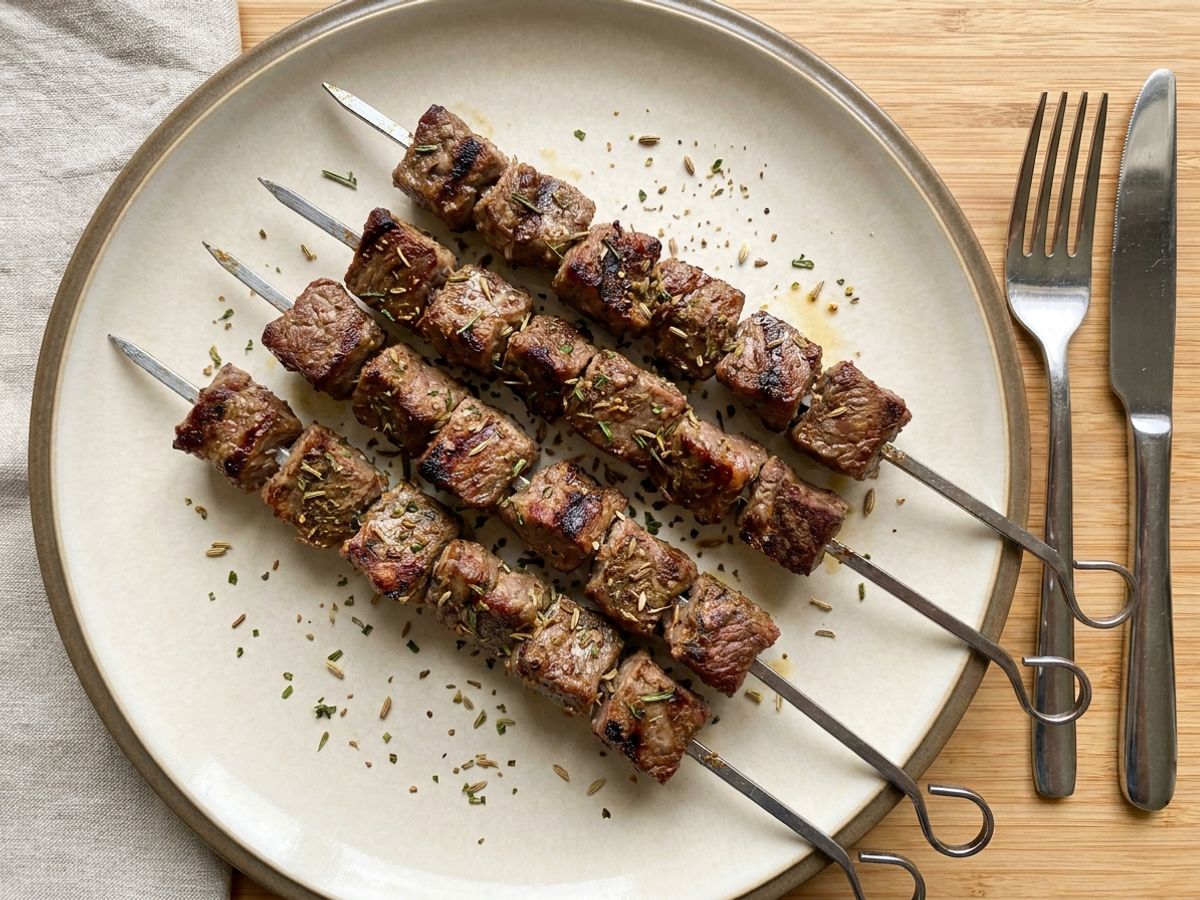
Low histamine grilled lamb skewers seasoned with olive oil, rosemary, cumin, and fennel seeds.
Ingredients
- 1 1/2 pounds fresh lamb shoulder, cut into 1-inch cubes
- 2 tablespoons olive oil
- 1 tablespoon fresh rosemary, finely chopped
- 1 teaspoon ground cumin
- 1/2 teaspoon fennel seeds, lightly crushed
- 3/4 teaspoon sea salt
- 1/4 teaspoon black pepper (optional)
Equipment
- 6 to 8 metal skewers, or wooden skewers soaked in water for 30 minutes
Instructions
Prep the Lamb
- Pat the lamb cubes dry with paper towels. Trim away any large pieces of hard fat or silver skin, but leave a little fat on for flavor.
- In a large bowl, combine the olive oil, rosemary, cumin, fennel, salt, and pepper if using.
- Add the lamb cubes and toss to coat every piece. Let sit at room temperature for 10 to 15 minutes while you heat your grill or pan.
Skewer
- Thread the lamb onto skewers, leaving a small gap between each cube so they cook evenly. Aim for 4 to 5 cubes per skewer.
Cook
Grill method:
- Preheat the grill to medium-high heat, around 450°F (230°C).
- Place the skewers on the grill and cook for 2 to 3 minutes per side, turning to brown all four sides. Total time is about 8 to 10 minutes for 1-inch cubes at medium. Larger cubes may need 10 to 14 minutes.
- Internal temperature: 145°F (63°C) for medium (USDA recommended).
Pan-sear method:
- Heat a heavy skillet or grill pan over medium-high heat for 2 minutes. Add a teaspoon of oil to the pan if it is not well seasoned.
- Add the skewers in a single layer. Sear undisturbed for 2 to 3 minutes per side, turning to brown all four sides. Total time is about 8 to 10 minutes.
- Internal temperature: 145°F (63°C) for medium.
Serve
- Transfer the skewers to a plate and let them rest for 3 minutes.
- Serve immediately with a simple side like rice or roasted vegetables.
Tips & Substitutions
- Buy fresh lamb shoulder same-day from a butcher. Freshness matters most for any meat on a low histamine diet. Avoid pre-packaged or "best by" cuts that have been sitting, and skip pre-seasoned or pre-marinated lamb (often contains vinegar, citrus, or spices of unknown age).
- If you cannot cook same-day, freeze immediately. Portion the lamb into meal-size bags and freeze right after you bring it home. Thaw in the fridge the night before cooking.
- Spices are individual. Start with rosemary and salt, then add cumin and fennel once you know your tolerance. Cumin in particular sits in a gray area for histamine intolerance and some sources flag it as a possible liberator.
- Swap fennel seeds for thyme if you do not have them. Both pair well with lamb and are often tolerated.
- Use two parallel skewers per kebab. This keeps the cubes from spinning when you turn them. Soak wooden skewers in water for 30 minutes first.
- Cut cubes evenly and use a meat thermometer. Pull the skewers at 140°F (60°C) and let them rest to 145°F (63°C).
 Get the Histamine Recipes app
250+ low histamine recipes, every ingredient rated.


Why This Works
Fresh lamb shoulder. Lamb is often well tolerated when very fresh and cooked promptly. Buy from a high-turnover butcher and cook or freeze the same day. Shoulder has more fat than loin, which keeps the cubes tender on the grill.
Rosemary. A fresh herb that is generally well tolerated and pairs naturally with lamb. It carries the dish without needing a marinade.
Cumin and fennel seeds. Whole and dried spices are often tolerated in small amounts, but response is highly individual. Cumin in particular sits in a gray area. Both add depth without relying on vinegar, citrus, or fermented condiments.
Olive oil. A stable, low histamine fat that works well at medium-high heat for grilling or searing. Avoid letting it smoke.
No marinade. Skipping vinegar-based or yogurt marinades avoids two common triggers and lets the lamb itself be the focus.
Storage
Best eaten right off the grill or out of the pan. Lamb is a protein, and leftovers accumulate histamine quickly. If you have to store some, cool the skewers in a shallow container, refrigerate within an hour, and eat within 24 hours. Some people do better with frozen leftovers than refrigerated, so freeze portions immediately after they cool if you want to keep them longer. Reheat gently to 165°F (74°C). Trust how you feel.
Not sure about an ingredient?
Histamine tolerance is personal, and most of working it out comes down to knowing where individual foods stand. Our low histamine food list rates 4,500+ foods and explains the reasoning behind each rating, including the foods whose level depends on how fresh they are or how they were stored. It is worth a look before you swap anything in this recipe.
Before you eat
A lot of people with histamine intolerance take a DAO enzyme supplement 15 to 30 minutes before a meal. DAO is the enzyme your body uses to break down the histamine in food, and taking it with meals supports that natural process. Curious how it works? See do DAO supplements actually work.
Affiliate link: if you buy through it, we may earn a commission at no extra cost to you. These statements have not been evaluated by the Food and Drug Administration. This product is not intended to diagnose, treat, cure, or prevent any disease.
For educational purposes only. Not medical advice. Consult a healthcare professional for personal guidance.
References
- Fish and Fishery Products Hazards and Controls Guidance (Chapter 7: Scombrotoxin Formation) — U.S. Food and Drug Administration (2022)
- 19 Low Histamine Spices & Herbs (and How To Use Them) — Low Histamine Eats
- Hydroxytyrosol and oleuropein of olive oil inhibit mast cell degranulation induced by immune and non-immune pathways — Persia et al. (2014), Phytomedicine
- Histamine and histamine intolerance — Maintz & Novak (2007)
- Histamine Intolerance: The Current State of the Art — Comas-Basté et al. (2020)
- Biogenic Amines in Plant-Origin Foods: Are They Frequently Underestimated in Low-Histamine Diets? — Sánchez-Pérez et al. (2021)
- Diamine Oxidase Supplementation Improves Symptoms in Patients with Histamine Intolerance — Schnedl et al. (2019)
- Histamine Intolerance — A Comprehensive Review — Jochum (2024)