 Histamine Tracker
Kale Chips

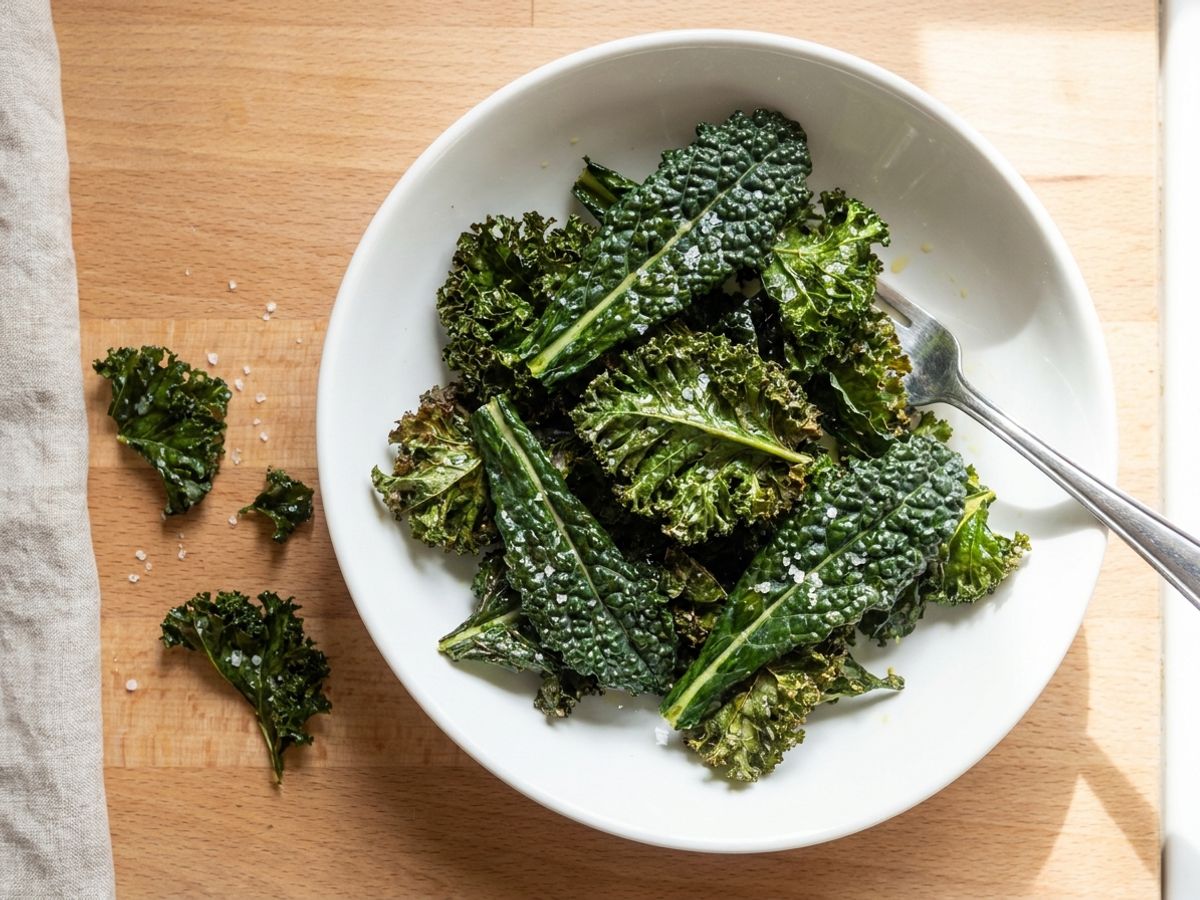
Low histamine baked kale chips with olive oil, sea salt, and garlic powder.
Ingredients
- 1 bunch fresh kale (lacinato or curly, about 6-8 ounces)
- 1 to 2 tablespoons olive oil, just enough to lightly coat
- 1/4 teaspoon sea salt
- 1/2 teaspoon garlic powder (optional, only if tolerated)
Instructions
Prep
- Preheat your oven to 300°F (150°C).
- Line two baking sheets with parchment paper.
- Wash the kale and dry it very thoroughly. Use a salad spinner, then pat with a clean towel. Any remaining water will steam the leaves instead of crisping them.
- Strip the leaves from the thick center stems and ribs (they stay chewy) and tear them into chip-sized pieces, roughly 2 inches across.
Season
- Place the torn leaves in a large bowl.
- Drizzle with olive oil. Use your hands to massage the oil into the leaves for about 30 seconds, until every piece is lightly coated and the kale softens slightly.
- Sprinkle with sea salt (and garlic powder if using). Toss again to distribute evenly.
Bake
- Spread the leaves in a single layer on the baking sheets. Do not overlap them, or they will steam instead of crisp.
- Bake for 12 minutes, then rotate the pans and check for doneness.
- Continue baking for another 8-13 minutes, watching carefully in the final minutes. The chips are done when they feel dry and crisp but are still bright to medium green. Brown chips have gone too far and will taste bitter.
- If some pieces finish early, pull them off the sheet and keep baking the rest.
Cool
Remove from the oven and let the chips cool on the baking sheets for 3-5 minutes. They crisp up further as they cool.
Tips & Substitutions
- Dry the kale completely. This is the single biggest factor for crispy chips. Wet leaves will always steam.
- Massage the oil in by hand. A quick massage helps the oil coat every nook and softens the leaves so they crisp evenly.
- Use lacinato (dinosaur) kale if oxalates are a concern. Curly kale is higher in oxalates, which is a separate sensitivity that some people with histamine intolerance also have.
- Swap olive oil for coconut oil if you prefer. Both work well at 300°F (150°C).
- Salt-only is the most reliable seasoning. A pinch of dried thyme or rosemary also works well in small amounts. Garlic powder is listed as optional because some people with histamine intolerance react to garlic.
- Serve with a dip. A small bowl of dairy-free ranch dressing on the side turns these into a more substantial snack.
 Get the Histamine Recipes app
250+ low histamine recipes, every ingredient rated.


Why This Works
Kale. Naturally low in histamine and generally well tolerated. It is a sturdy leafy green, which is a useful alternative to spinach (high in histamine and best avoided).
Olive oil. A stable cooking fat that is generally well tolerated. A light coating is enough to crisp the leaves at low heat. See why freshness matters when choosing oils, since rancidity can affect tolerance.
Sea salt. Plain salt is not a histamine concern. It draws moisture out of the leaves during baking, which helps them crisp.
Garlic powder (optional). Garlic can act as a histamine liberator for sensitive individuals, which is why it is listed as optional rather than core to the recipe. Many people tolerate small amounts of dried garlic, but a salt-only version is the safer default.
Storage
Best eaten fresh and warm from the oven, when they are crispiest. If you have leftovers, cool them completely, then store loosely covered at room temperature and eat within the same day. They lose their crunch quickly in any sealed or refrigerated container, so plan to make only what you will eat soon.
Not sure about an ingredient?
Histamine tolerance is personal, and most of working it out comes down to knowing where individual foods stand. Our low histamine food list rates 4,500+ foods and explains the reasoning behind each rating, including the foods whose level depends on how fresh they are or how they were stored. It is worth a look before you swap anything in this recipe.
Before you eat
A lot of people with histamine intolerance take a DAO enzyme supplement 15 to 30 minutes before a meal. DAO is the enzyme your body uses to break down the histamine in food, and taking it with meals supports that natural process. Curious how it works? See do DAO supplements actually work.
Affiliate link: if you buy through it, we may earn a commission at no extra cost to you. These statements have not been evaluated by the Food and Drug Administration. This product is not intended to diagnose, treat, cure, or prevent any disease.
For educational purposes only. Not medical advice. Consult a healthcare professional for personal guidance.
References
- Crispy Honey Garlic Kale Chips — Low Histamine Eats
- Crispy Garlic Ginger Kale (Is Kale Low Histamine?) — Low Histamine Eats
- Low Histamine Creamed Kale Recipe — Mast Cell 360
- Histamine and histamine intolerance — Maintz & Novak (2007)
- Histamine Intolerance: The Current State of the Art — Comas-Basté et al. (2020)
- Biogenic Amines in Plant-Origin Foods: Are They Frequently Underestimated in Low-Histamine Diets? — Sánchez-Pérez et al. (2021)
- Diamine Oxidase Supplementation Improves Symptoms in Patients with Histamine Intolerance — Schnedl et al. (2019)
- Histamine Intolerance — A Comprehensive Review — Jochum (2024)