 Histamine Tracker
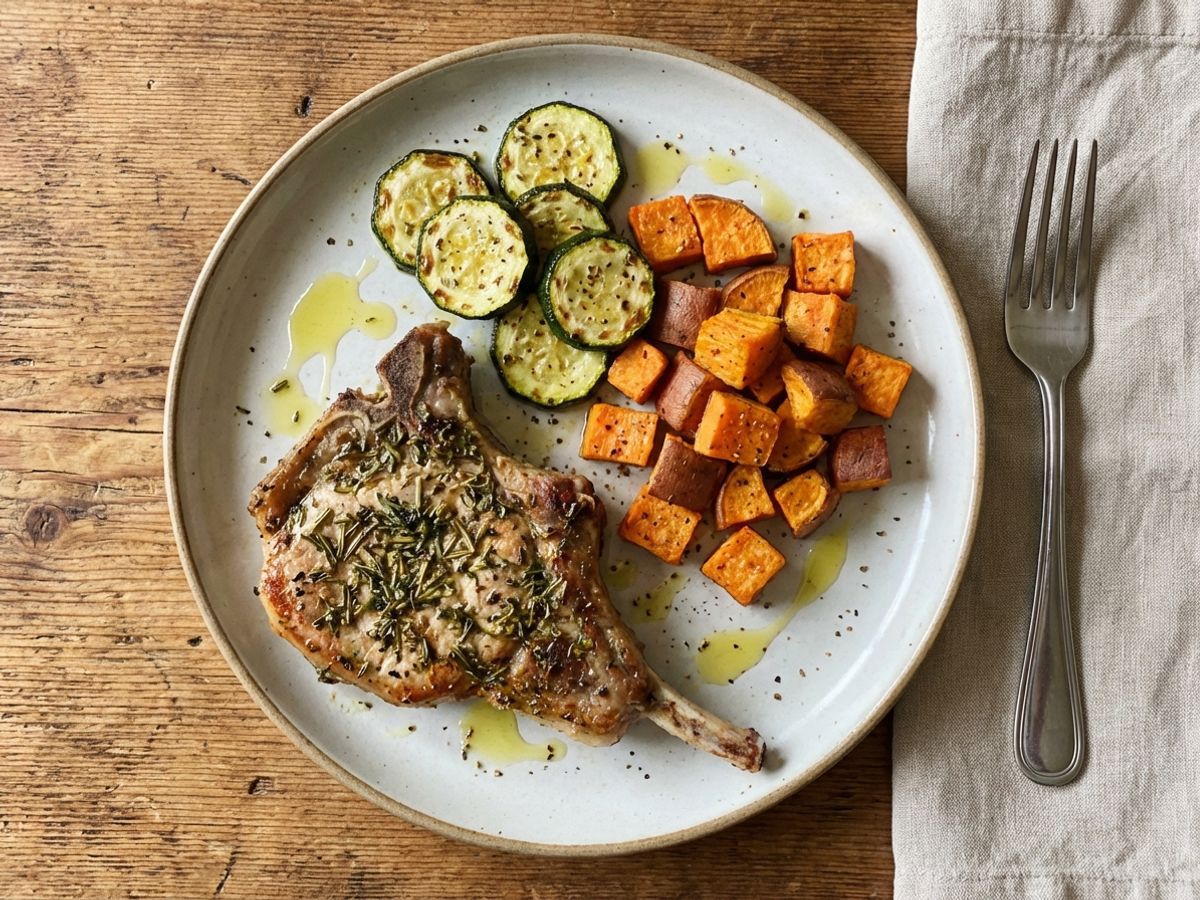
Herb-Crusted Pork Chops

Baked pork chops with rosemary and thyme.
Ingredients
Pork Chops
- 4 bone-in pork chops (about 1 inch thick, 2 pounds total)
- 2 tablespoons olive oil
- 2 tablespoons fresh rosemary, finely chopped
- 1 tablespoon fresh thyme leaves
- 2 cloves garlic, minced (optional)
- 1/2 teaspoon sea salt
- 1/4 teaspoon black pepper (optional)
Roasted Vegetables
- 1 pound zucchini, sliced into 1/2-inch rounds
- 1 large sweet potato, cubed
- 2 tablespoons olive oil
- 1/2 teaspoon sea salt
Instructions
Prep
- Preheat your oven to 375°F (190°C).
- Pat the pork chops dry with paper towels.
- In a small bowl, mix olive oil with rosemary, thyme, garlic if using, salt, and pepper if using.
- Rub the herb mixture over both sides of the pork chops.
Prepare the Vegetables
- Toss the zucchini and sweet potato with olive oil and salt.
- Spread on a baking sheet in a single layer.
Bake
- Place the pork chops on a separate baking sheet or in a baking dish.
- Put both the vegetables and pork chops in the oven at the same time.
- Bake for 25-30 minutes, turning the vegetables halfway through.
- The pork chops are done when they reach 145°F (63°C) internal temperature.
- The vegetables should be tender and lightly browned.
Serve
- Let the pork chops rest for 5 minutes.
- Divide the vegetables among plates and top with pork chops.
- Serve immediately.
Tips & Substitutions
- Use fresh pork chops that are not cured, smoked, or pre-marinated. Bone-in chops stay more moist during baking.
- Omit the garlic if it triggers symptoms. The rosemary and thyme carry plenty of flavor on their own.
- Add zucchini halfway through roasting if yours tends to get too soft. Sweet potato takes longer, so it benefits from the full roasting time.
- Swap the sweet potato for butternut squash or parsnips. Both roast well at 375°F (190°C) and pair nicely with pork.
- Use a meat thermometer. Pull the chops at 145°F (63°C) for juicy results. They will continue to rise a few degrees while resting.
Why This Works
Pork. Fresh, uncured pork is generally well tolerated. The key is avoiding processed versions like bacon, ham, or sausage, which are high in histamine due to curing and aging.
Rosemary and thyme. Fresh herbs are naturally low in histamine and add flavor without relying on fermented sauces or spice blends that may contain hidden triggers.
Sweet potato. Naturally low in histamine and generally well tolerated. A good source of fiber and micronutrients that support overall gut health.
Zucchini. A mild, low histamine vegetable that most people tolerate well. Cooking it briefly helps retain texture and nutrients.
Olive oil. A staple fat for low histamine cooking. It is stable at moderate roasting temperatures and generally well tolerated.
Storage
Best served fresh right out of the oven. If you have leftovers, cool quickly and refrigerate in an airtight container, or freeze portions right away. Eat refrigerated leftovers within 24 hours. Protein dishes accumulate histamine over time, and reheating does not reduce histamine, so freshness and quick storage matter most.
Not sure if an ingredient is safe? Histamine Tracker includes a database of 1,000+ foods with histamine ratings to help you cook with confidence.


For educational purposes only. Not medical advice. Consult a healthcare professional for personal guidance.
References
- Is Pork High in Histamine? — Casa de Sante
- Adding Flavor to Your Low Histamine Recipes — Through The Fibro Fog
- Are You Getting Enough Vegetables on a Low Histamine Diet? — Happy Without Histamine
- Histamine and histamine intolerance — Maintz & Novak (2007)
- Histamine Intolerance: The Current State of the Art — Comas-Basté et al. (2020)
- Biogenic Amines in Plant-Origin Foods: Are They Frequently Underestimated in Low-Histamine Diets? — Sánchez-Pérez et al. (2021)
- Diamine Oxidase Supplementation Improves Symptoms in Patients with Histamine Intolerance — Schnedl et al. (2019)
- Histamine Intolerance — A Comprehensive Review — Jochum (2024)