 Histamine Tracker
Ground Beef Stir-Fry

Ground beef and vegetables stir-fried with ginger.
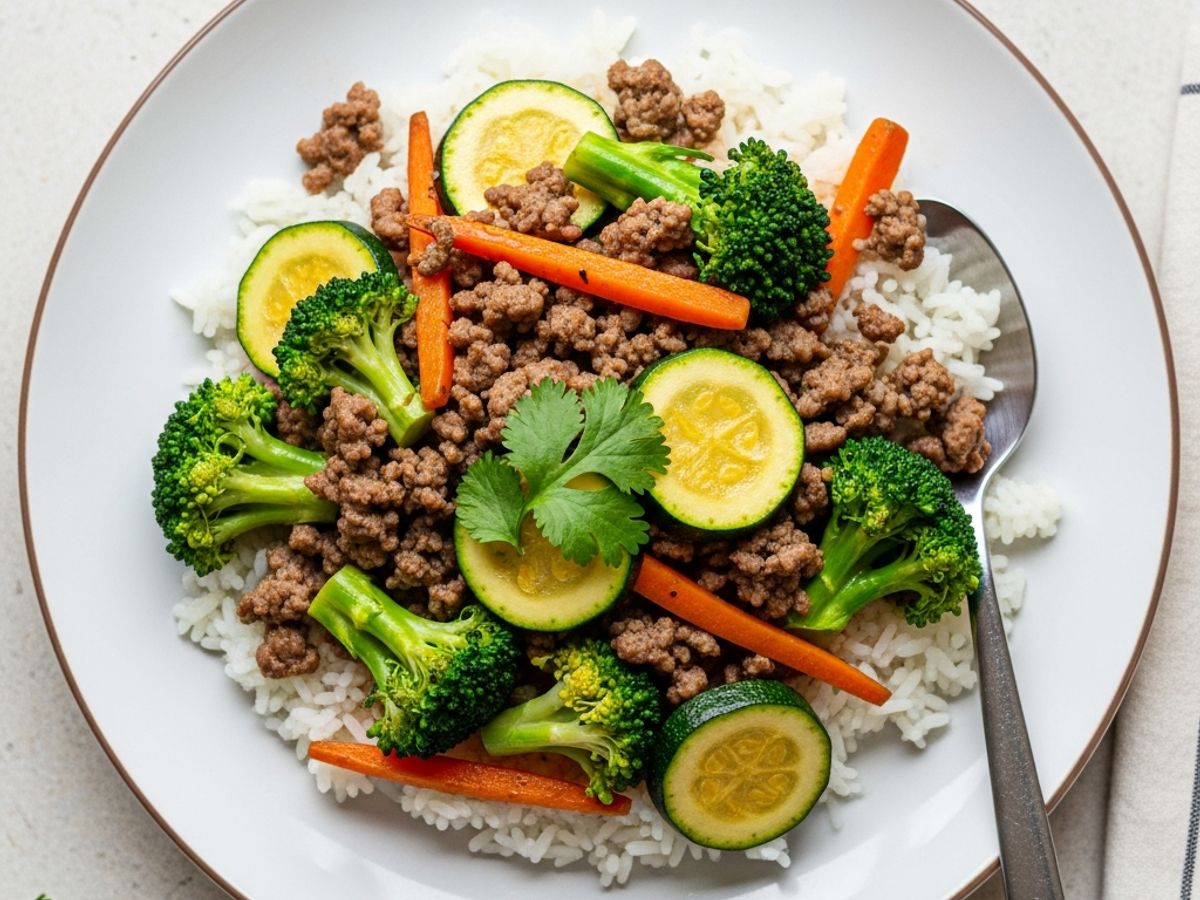
Ingredients
Beef
- 1 pound fresh ground beef
- 1 tablespoon coconut oil or avocado oil
- 1 tablespoon fresh ginger, minced
- 1/2 teaspoon sea salt
- 1/4 teaspoon black pepper (optional)
Vegetables
- 2 cups broccoli florets
- 2 medium carrots, sliced thin
- 1 medium zucchini, sliced into half-moons
- 1 tablespoon coconut oil or avocado oil
To Serve
- 3-4 cups cooked white rice
- Fresh cilantro for garnish (optional)
Instructions
Cook the Rice
- Cook rice according to package directions while preparing the stir-fry.
Cook the Beef
- Heat 1 tablespoon oil in a large wok or skillet over high heat.
- Add the ground beef, breaking it into small pieces with a spatula.
- Add the ginger, salt, and pepper if using.
- Cook for 5-6 minutes, stirring frequently, until the beef is browned and cooked through (160°F / 71°C internal temperature).
- Transfer the beef to a plate and set aside.
Cook the Vegetables
- Add 1 tablespoon oil to the same pan over high heat.
- Add the carrots and cook for 2 minutes, stirring constantly.
- Add the broccoli and zucchini. Continue stir-frying for 3-4 minutes until the vegetables are tender-crisp.
- Return the beef to the pan and toss everything together for 1 minute.
Serve
- Divide the rice among four bowls.
- Top with the beef and vegetable stir-fry.
- Garnish with fresh cilantro if using.
- Serve immediately.
Tips & Substitutions
- Use fresh ground beef. If your butcher can grind to order, even better. Fresh-ground has less histamine buildup.
- Keep the heat high for stir-frying. A wok works best, but any large skillet will do. High heat gives a better sear and keeps vegetables crisp.
- This skips soy sauce since it is fermented and high in histamine. Coconut aminos add more depth if you tolerate them.
- Ground turkey works as a substitute for the beef.
- Swap the vegetables freely. Sugar snap peas, bok choy, or bell peppers all work well in place of or alongside the broccoli and zucchini.
Why This Works
Fresh ground beef. When freshly ground and cooked immediately, beef is generally well tolerated. Freshness is the most important factor for keeping histamine levels low in ground meat.
Fresh ginger. Generally well tolerated and may support digestive comfort for some people. It adds warmth and depth that helps replace the flavor soy sauce would normally provide.
Broccoli and zucchini. Both are naturally low in histamine and commonly well tolerated. They cook quickly at high heat and retain their color and texture.
Carrots. Naturally low in histamine and add a touch of sweetness to the stir-fry. Generally well tolerated by most people.
White rice. One of the most commonly tolerated grains. It provides a neutral base that absorbs the ginger-scented juices from the stir-fry.
Storage
Best served immediately. Ground beef accumulates histamine quickly once cooked, so eat right after cooking when possible. If you must store leftovers, refrigerate within 30 minutes and eat within 24 hours. The vegetables and rice can be stored separately from the beef.
Not sure if an ingredient is safe? Histamine Tracker includes a database of 1,000+ foods with histamine ratings to help you cook with confidence.


For educational purposes only. Not medical advice. Consult a healthcare professional for personal guidance.
References
- Is Ginger High in Histamine? — Fact vs Fitness
- Low Histamine Meat Tips and Common Mistakes — MastCell360 (Beth O'Hara)
- Low Histamine Diet: Foods to Eat and Avoid — Wyndly
- Histamine and histamine intolerance — Maintz & Novak (2007)
- Histamine Intolerance: The Current State of the Art — Comas-Basté et al. (2020)
- Biogenic Amines in Plant-Origin Foods: Are They Frequently Underestimated in Low-Histamine Diets? — Sánchez-Pérez et al. (2021)
- Diamine Oxidase Supplementation Improves Symptoms in Patients with Histamine Intolerance — Schnedl et al. (2019)
- Histamine Intolerance — A Comprehensive Review — Jochum (2024)