 Histamine Tracker
Chicken & Sweet Potato Stew

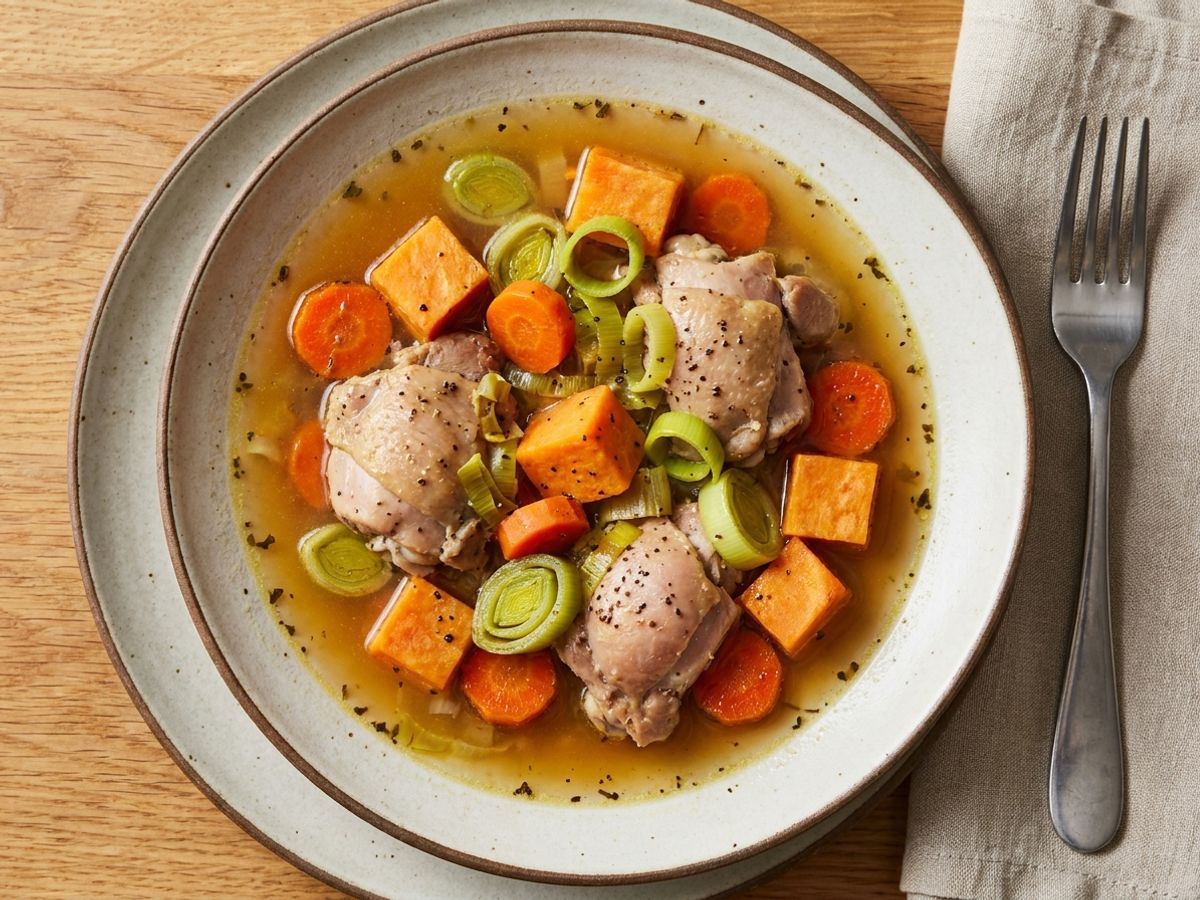
A low histamine stew with chicken thighs, sweet potato, carrots, parsnip, leek, and fresh herbs in chicken broth.
Ingredients
Stew Base
- 2 tablespoons olive oil
- 1 small leek, white and light green parts, halved lengthwise, rinsed well, then sliced (or 1/2 small yellow onion, diced)
- 2 celery stalks, diced
- 2 cloves garlic, minced (optional)
- 3 cups fresh chicken broth (homemade preferred, see Tips)
Protein
- 1 1/2 pounds boneless, skinless chicken thighs, cut into 1-inch pieces (very fresh, same-day if possible)
- 1/2 teaspoon sea salt, plus more to taste
- 1/4 teaspoon black pepper (optional)
Vegetables
- 1 medium sweet potato (about 12 ounces), peeled and cut into 3/4-inch cubes
- 2 medium carrots, peeled and sliced into 1/2-inch rounds
- 1 small parsnip, peeled and diced (optional)
Fresh Herbs
- 1 teaspoon fresh thyme leaves (or 1/2 teaspoon dried)
- 1 sprig fresh rosemary, leaves chopped
- 2 tablespoons fresh parsley, chopped (for finishing)
Instructions
Sear the Chicken
- Pat the chicken pieces dry with paper towels and season with salt and pepper if using.
- Heat 1 tablespoon olive oil in a large heavy pot or Dutch oven over medium-high heat.
- Add the chicken in a single layer (work in batches if needed to avoid crowding) and cook 2-3 minutes per side until lightly browned. You don't need to cook it through. Transfer to a plate.
Build the Stew
- Reduce heat to medium. Add the remaining 1 tablespoon olive oil to the pot.
- Add the leek and celery. Cook 4-5 minutes, stirring often, until soft.
- Add the garlic if using and cook 30 seconds until fragrant.
- Pour in the chicken broth and scrape up any browned bits from the bottom of the pot.
- Add the sweet potato, carrots, parsnip if using, thyme, and rosemary.
- Bring to a gentle boil, then reduce to a simmer.
Simmer and Finish
- Cover and simmer for 15 minutes, until the sweet potato is just starting to soften.
- Return the chicken and any juices to the pot.
- Continue simmering uncovered for 10-12 minutes, until the chicken is cooked through (internal temperature 165°F / 74°C) and the vegetables are tender.
- Taste and adjust salt.
- Stir in the fresh parsley just before serving.
Tips & Substitutions
- Buy chicken the same day you cook it. Freshness matters most for protein. Avoid chicken that has been sitting in the fridge for several days, even if it's within the sell-by date. If you can only buy ahead, freeze it right away and thaw the night before.
- Use fresh broth. Homemade chicken broth simmered for 1-2 hours and used the same day works best. Long-simmered bone broth can be higher in histamine. If using store-bought, check labels for yeast extract, "natural flavors," or other additives.
- No safe broth on hand? Use plain water with an extra pinch of salt and a little more thyme and rosemary. The stew will be lighter but still good.
- Skip the leek and garlic if onions or garlic are triggers for you. The stew still works with just celery as the aromatic base.
- Swap the parsnip for turnip or rutabaga if you prefer. All are generally considered low histamine root vegetables that hold their shape during simmering.
- Bone-in thighs work too. Add them whole during the simmer step, cook 25-30 minutes, then shred the meat off the bones before serving.
 Get the Histamine Recipes app
250+ low histamine recipes, every ingredient rated.


Why This Works
Fresh chicken thighs. Chicken is often well tolerated when very fresh and cooked the same day. Thighs stay tender during simmering better than breast meat.
Sweet potato. Generally considered low histamine and commonly tolerated. It adds natural sweetness and body to the stew without needing flour or cream.
Carrots and celery. Carrots are commonly tolerated and form a classic aromatic base alongside celery, which most people do well with but is worth omitting if it's a known trigger for you. They add flavor without the acidity of tomatoes.
Fresh thyme and rosemary. Fresh herbs are often well tolerated and let you build deep flavor without wine, vinegar, or premade seasoning blends.
Garlic (optional). Often used in low-histamine cooking, but some people find it irritating. Leave it out if it's a known trigger for you.
Storage
Best eaten fresh from the pot. As a protein-based dish, this stew accumulates histamine as it sits. If you need to store leftovers, cool quickly, refrigerate within 30 minutes, and eat within 24 hours. For longer storage, portion into single servings and freeze immediately after cooking. Some sensitive people react even to frozen leftovers, so notice how your body responds.
Not sure about an ingredient?
Histamine tolerance is personal, and most of working it out comes down to knowing where individual foods stand. Our low histamine food list rates 4,500+ foods and explains the reasoning behind each rating, including the foods whose level depends on how fresh they are or how they were stored. It is worth a look before you swap anything in this recipe.
Before you eat
A lot of people with histamine intolerance take a DAO enzyme supplement 15 to 30 minutes before a meal. DAO is the enzyme your body uses to break down the histamine in food, and taking it with meals supports that natural process. Curious how it works? See do DAO supplements actually work.
Affiliate link: if you buy through it, we may earn a commission at no extra cost to you. These statements have not been evaluated by the Food and Drug Administration. This product is not intended to diagnose, treat, cure, or prevent any disease.
For educational purposes only. Not medical advice. Consult a healthcare professional for personal guidance.
References
- Low Histamine Sweet Potato and Chicken Soup — Olivo Health and Nutrition
- Low Histamine Vegetable Stew — Low Histamine Eats
- Is Chicken High in Histamine? — Casa de Sante
- Histamine and histamine intolerance — Maintz & Novak (2007)
- Histamine Intolerance: The Current State of the Art — Comas-Basté et al. (2020)
- Biogenic Amines in Plant-Origin Foods: Are They Frequently Underestimated in Low-Histamine Diets? — Sánchez-Pérez et al. (2021)
- Diamine Oxidase Supplementation Improves Symptoms in Patients with Histamine Intolerance — Schnedl et al. (2019)
- Histamine Intolerance — A Comprehensive Review — Jochum (2024)