 Histamine Tracker
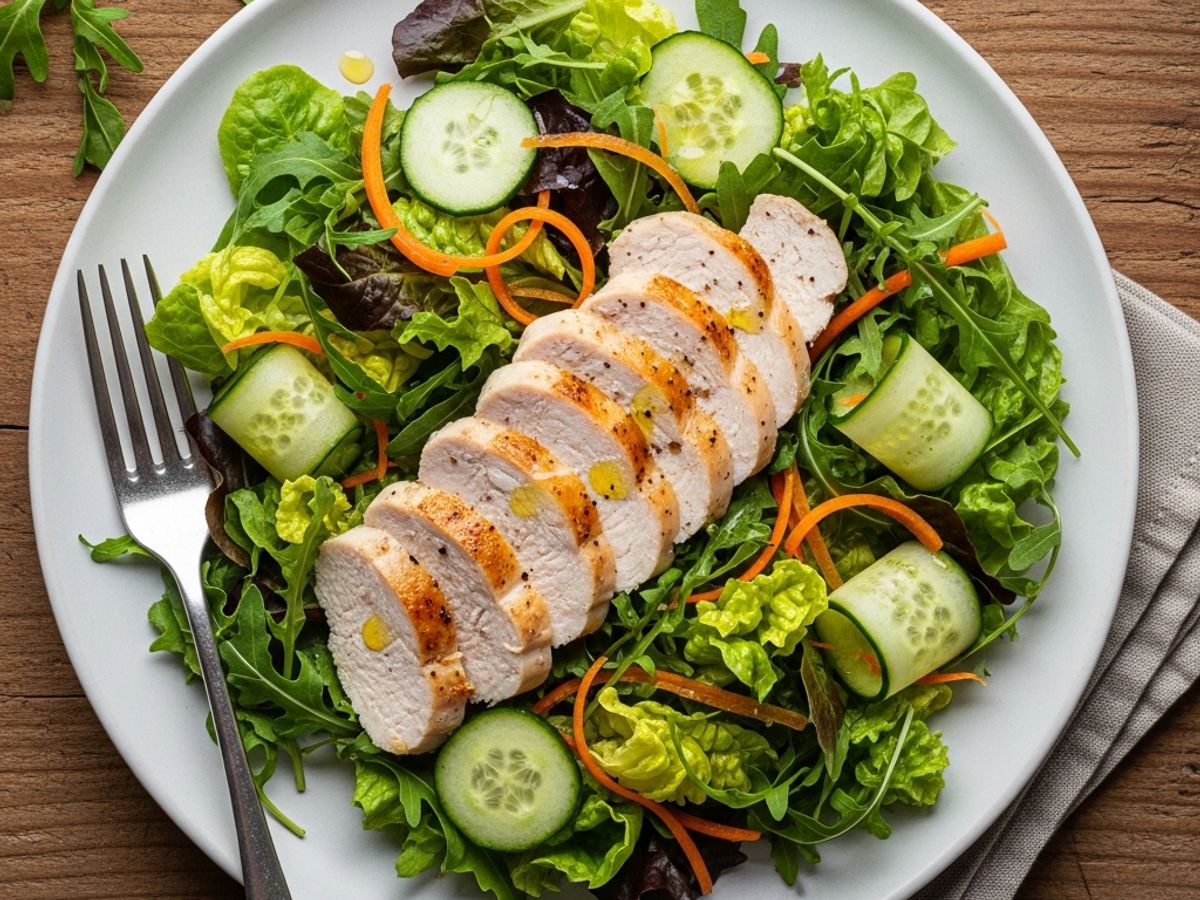
Chicken Salad Plate

Sliced chicken over mixed greens.
Ingredients
Chicken
- 2 boneless, skinless chicken breasts (about 6 ounces each)
- 1 tablespoon olive oil
- 1/4 teaspoon sea salt
- Fresh herbs (thyme, rosemary, or parsley)
Salad
- 4 cups mixed greens (butter lettuce, romaine, arugula)
- 1/2 cucumber, sliced
- 1 carrot, shredded or sliced thin
Dressing
- 2 tablespoons olive oil
- 1/2 teaspoon sea salt
Instructions
Cook the Chicken
- Pat chicken dry with paper towels. Season with salt.
- Heat olive oil in a skillet over medium-high heat.
- Add chicken and cook for 6-7 minutes per side until internal temperature reaches 165°F (74°C).
- Let rest for 5 minutes before slicing.
Assemble
- Divide mixed greens between plates.
- Add cucumber slices and shredded carrot.
- Slice chicken and arrange on top.
- Drizzle with olive oil and sprinkle with salt.
- Serve immediately.
Tips & Substitutions
- Use fresh chicken. Buy same-day from a trusted source for the lowest histamine load.
- Warm chicken over cold greens creates a nice contrast. Slice the chicken while it is still warm for the best texture.
- Olive oil and salt keep the dressing simple. Skip vinegar, which is fermented and high in histamine.
- Fresh-cooked turkey or eggs work instead of chicken if you want to switch up the protein. If using fish, choose very fresh or frozen-at-sea options and cook immediately, as fish is a common histamine trigger when not extremely fresh.
- If using pre-bagged mixed greens, choose a mix without spinach, which is a common histamine trigger.
- Add fresh herbs to the dressing for more flavor. A tablespoon of chopped parsley or dill stirred into the olive oil works well.
Why This Works
Fresh chicken. Cooked and served immediately, chicken is generally well tolerated. Pan-searing is a quick method that minimizes the time between cooking and eating.
Mixed greens. Butter lettuce and romaine are naturally low in histamine. Note that arugula is tolerated by most people, but individual response can vary.
Cucumber. Very low in histamine and high in water content. A reliable salad vegetable for most people with histamine intolerance.
Carrots. Naturally low in histamine and add color and crunch. Generally well tolerated whether raw or cooked.
Olive oil. A simple, well-tolerated dressing base that replaces vinaigrettes containing vinegar, which is fermented and can be a trigger.
Storage
Best eaten right away while the chicken is warm and the greens are crisp. This is not a dish that stores well. If you have leftover chicken, refrigerate it within 30 minutes and use within 24 hours on a fresh plate of greens, since histamine can build up in cooked protein over time.
Not sure if an ingredient is safe? Histamine Tracker includes a database of 1,000+ foods with histamine ratings to help you cook with confidence.


For educational purposes only. Not medical advice. Consult a healthcare professional for personal guidance.
References
- 3 Types of Tasty Low-Histamine Vegetables to Brighten Up Your Plate — Histamine Doctor
- Is Olive Oil High in Histamine — Casa de Sante
- Low Histamine Diet: Foods to Eat and Avoid — Wyndly
- Histamine and histamine intolerance — Maintz & Novak (2007)
- Histamine Intolerance: The Current State of the Art — Comas-Basté et al. (2020)
- Biogenic Amines in Plant-Origin Foods: Are They Frequently Underestimated in Low-Histamine Diets? — Sánchez-Pérez et al. (2021)
- Diamine Oxidase Supplementation Improves Symptoms in Patients with Histamine Intolerance — Schnedl et al. (2019)
- Histamine Intolerance — A Comprehensive Review — Jochum (2024)