 Histamine Tracker
Chicken Broth

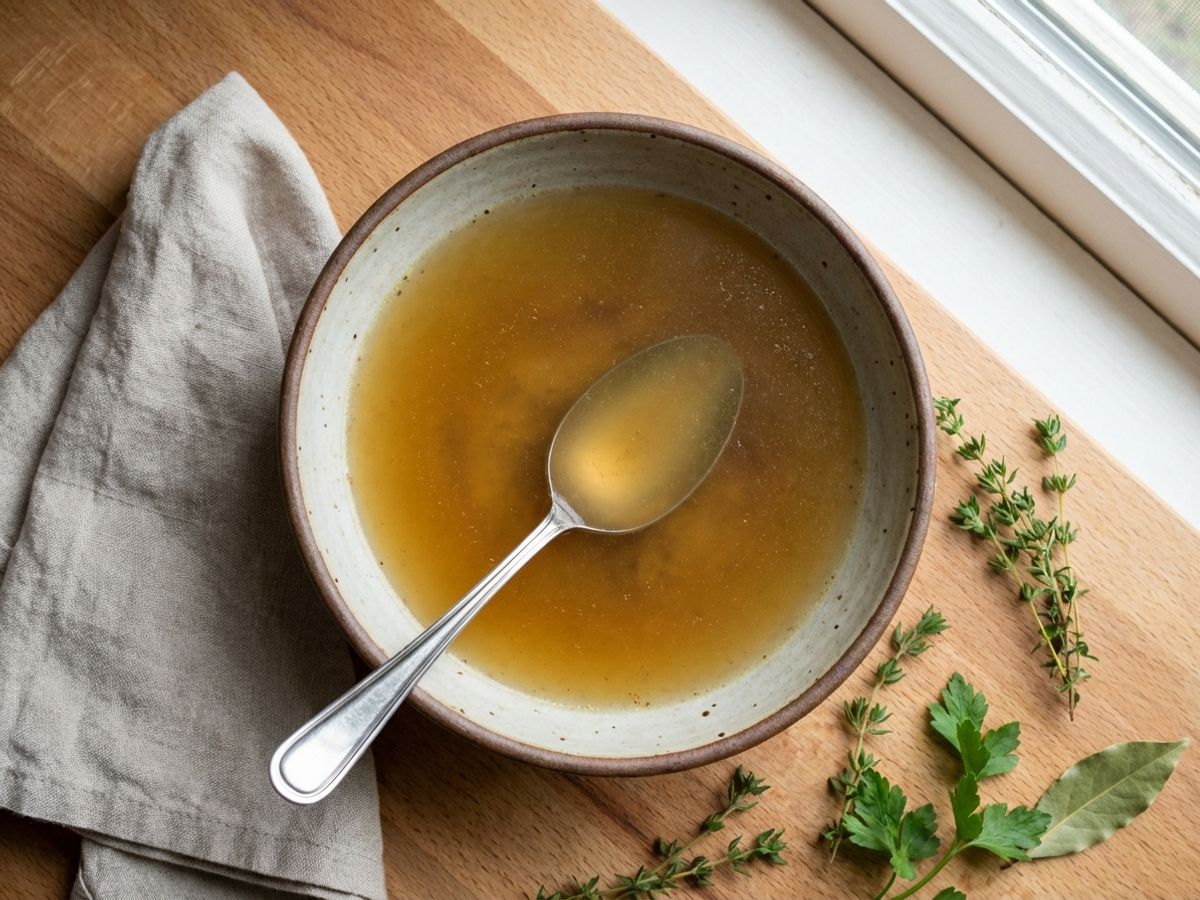
A simple broth made with fresh chicken. Keep this in the freezer for soups, rice, or sipping when you need something warm.
Ingredients
- 1 lb (450g) fresh boneless chicken thighs or breasts, cut into chunks
- 8 cups filtered water
- 2 stalks celery, roughly chopped
- 2 medium carrots, peeled and roughly chopped
- 1 small onion, quartered (optional)
- 2 cloves garlic, smashed (optional)
- 1 teaspoon salt
- 4-5 sprigs fresh thyme
- 4-5 sprigs fresh parsley
- 1 sprig fresh rosemary
- 1 bay leaf
Instructions
Prepare
- Cut the fresh chicken into 2-inch chunks. Smaller pieces release flavor faster.
- Roughly chop the celery and carrots. No need to be precise.
- If using onion and garlic, quarter the onion and smash the garlic cloves.
Cook
- Add chicken, vegetables, salt, and herbs to a large pot.
- Pour in the filtered water and bring to a boil over high heat.
- Once boiling, reduce heat to low and simmer for 25-30 minutes.
- Skim off any foam that rises to the surface during cooking.
Strain and Store
- Remove from heat.
- Strain the broth through a fine-mesh sieve into a clean pot or large bowl.
- Discard the solids or save the chicken for another use.
- Cool rapidly by placing the container in an ice bath or dividing into shallow containers. Do not let it sit at room temperature.
- For lowest histamine, use immediately or freeze right away.
Tips & Substitutions
- Use meat, not bones. This recipe uses fresh chicken pieces for a quick 30-minute broth. Bone broths require long simmering, which can increase histamine levels.
- Skip the onion and garlic if they bother you. The broth still has plenty of flavor from the herbs and vegetables.
- Use the freshest chicken possible. Buy it the day you cook, or use chicken you froze immediately after purchasing.
- Cool rapidly. Place the pot in an ice bath or divide into shallow containers. Do not leave broth sitting at room temperature.
- Swap chicken thighs for breasts depending on what you have. Thighs add a richer flavor, while breasts keep it lighter.
Why This Works
Fresh chicken. Using fresh meat and a short simmer time keeps histamine levels lower than traditional bone broth, which simmers for hours and allows histamine to accumulate.
Carrots and celery. Both are naturally low in histamine and generally well tolerated. They add flavor and body to the broth.
Fresh herbs. Thyme, parsley, and rosemary are commonly tolerated and add depth without relying on dried spices, which may bother some people depending on age and storage.
Onion and garlic (optional). Both contain quercetin, a compound sometimes discussed in mast cell research. However, they can also act as histamine liberators for some people, which is why they are optional.
Storage
Use immediately for lowest histamine levels, or freeze right away in individual portions. Protein-based broths are especially prone to histamine buildup during storage, so avoid refrigerating for more than 24 hours. Frozen broth keeps well for up to 3 months. This works as a base for chicken soup or cooking rice.
Not sure if an ingredient is safe? Histamine Tracker includes a database of 1,000+ foods with histamine ratings to help you cook with confidence.


For educational purposes only. Not medical advice. Consult a healthcare professional for personal guidance.
References
- Meat Broth Recipe: Low Histamine Bone Broth Alternative — Mast Cell 360
- 5 Steps to Reduce Histamine in Leftover Foods — Fact vs Fitness
- 19 Low Histamine Spices & Herbs (and How To Use Them) — Low Histamine Eats
- Histamine and histamine intolerance — Maintz & Novak (2007)
- Histamine Intolerance: The Current State of the Art — Comas-Basté et al. (2020)
- Biogenic Amines in Plant-Origin Foods: Are They Frequently Underestimated in Low-Histamine Diets? — Sánchez-Pérez et al. (2021)
- Diamine Oxidase Supplementation Improves Symptoms in Patients with Histamine Intolerance — Schnedl et al. (2019)
- Histamine Intolerance — A Comprehensive Review — Jochum (2024)