 Histamine Tracker
Chicken and Rice

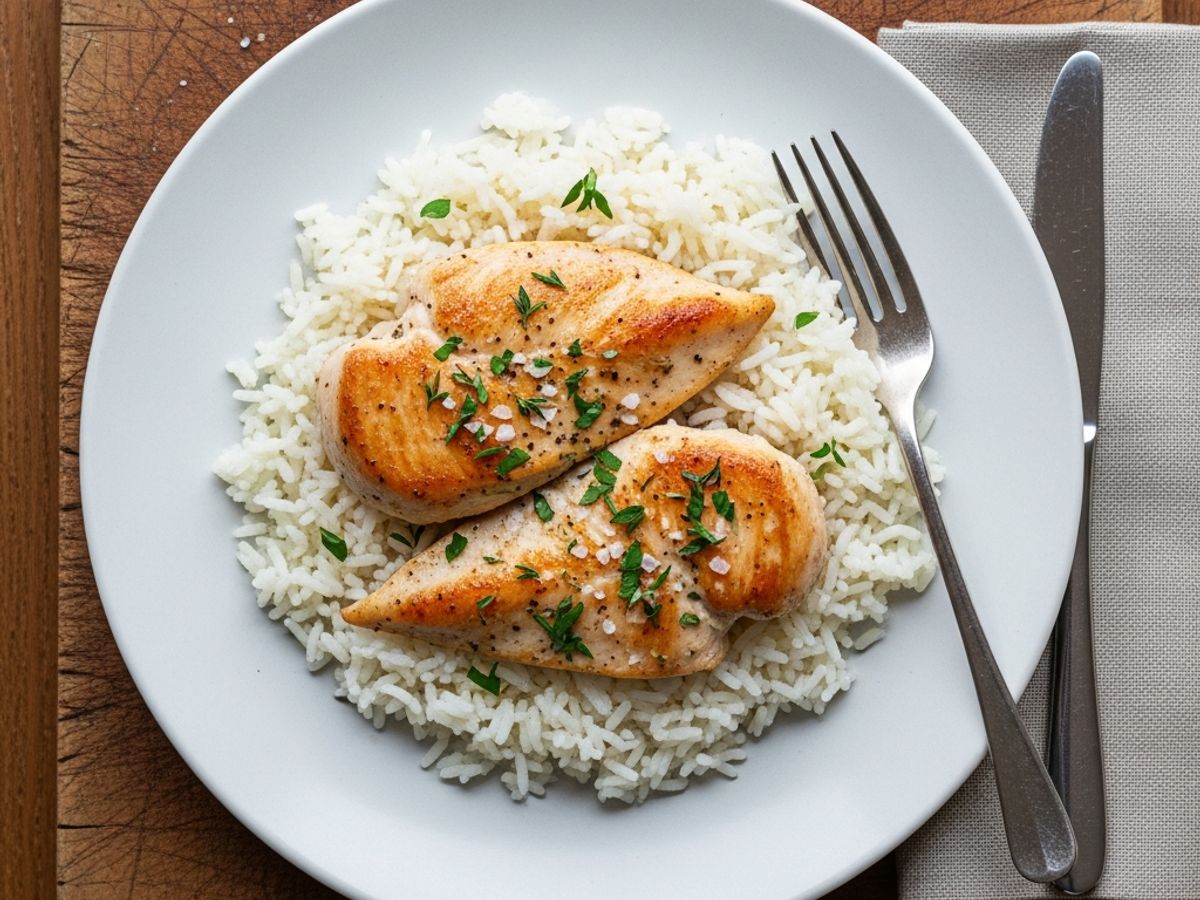
Pan-seared chicken breast over white rice.
Ingredients
Chicken
- 2 boneless, skinless chicken breasts (about 6 ounces each)
- 1 tablespoon olive oil
- 1/2 teaspoon sea salt
- 1/4 teaspoon black pepper (optional)
- Fresh thyme or parsley for garnish (optional)
Rice
- 1 cup long-grain white rice
- 1 1/2 cups water
- 1/4 teaspoon sea salt
Instructions
Cook the Rice
- Rinse the rice under cold water until the water runs clear.
- Combine rice, water, and salt in a saucepan. Bring to a boil.
- Reduce heat to low, cover, and simmer for 18 minutes.
- Remove from heat and let sit covered for 5 minutes. Fluff with a fork.
Cook the Chicken
- While the rice cooks, pound the chicken breasts to an even thickness (about 3/4 inch).
- Season both sides with salt and pepper if using.
- Heat olive oil in a skillet over medium-high heat.
- Add the chicken and cook without moving for 5-6 minutes until golden brown on the bottom.
- Flip and cook another 5-6 minutes until the internal temperature reaches 165°F (74°C).
- Let rest for 5 minutes before slicing.
Serve
- Divide the rice between plates.
- Slice the chicken and arrange over the rice.
- Garnish with fresh herbs if desired. Serve immediately.
Tips & Substitutions
- Pound the chicken evenly. This ensures both the thin and thick parts cook at the same rate. Aim for about 3/4-inch thickness.
- Don't move the chicken. Let it sit undisturbed in the pan until it has a golden crust on the bottom, then flip once.
- Swap the cut. Thighs work instead of breasts. Cook until they reach 165°F (74°C) internal temperature.
- Add a vegetable. Steamed broccoli, roasted carrots, or sauteed zucchini round this out into a more complete plate.
- Use fresh chicken. Cook it the same day you buy it. If you can't cook it that day, freeze it immediately and thaw just before cooking.
Why This Works
Chicken (fresh). Fresh chicken is naturally low in histamine and one of the most commonly tolerated proteins. Freshness is key because histamine levels rise as meat ages.
White rice. One of the safest starches for people with histamine intolerance. Freshly cooked white rice is generally considered low histamine and easy to digest.
Olive oil. Cold-pressed olive oil is commonly tolerated and a safe cooking fat for pan-searing.
Fresh herbs (optional). Thyme and parsley are generally well tolerated and add flavor without histamine risk.
Storage
Best eaten fresh. If you have leftovers, refrigerate within one hour and eat within 24 hours. Chicken accumulates histamine over time, so freeze any portions you won't eat the next day. The rice can be stored separately for up to 2 days.
Not sure if an ingredient is safe? Histamine Tracker includes a database of 1,000+ foods with histamine ratings to help you cook with confidence.


For educational purposes only. Not medical advice. Consult a healthcare professional for personal guidance.
References
- 5 High-Histamine Meats to Avoid with Histamine Intolerance — Histamine Doctor
- Low Histamine Diet: Foods to Eat and Avoid — Wyndly
- Is Olive Oil High Histamine? — Histamine Doctor
- Histamine and histamine intolerance — Maintz & Novak (2007)
- Histamine Intolerance: The Current State of the Art — Comas-Basté et al. (2020)
- Biogenic Amines in Plant-Origin Foods: Are They Frequently Underestimated in Low-Histamine Diets? — Sánchez-Pérez et al. (2021)
- Diamine Oxidase Supplementation Improves Symptoms in Patients with Histamine Intolerance — Schnedl et al. (2019)
- Histamine Intolerance — A Comprehensive Review — Jochum (2024)