 Histamine Tracker
Cassava Flour Tortillas

These homemade tortillas are simple to make and work great for taco night.
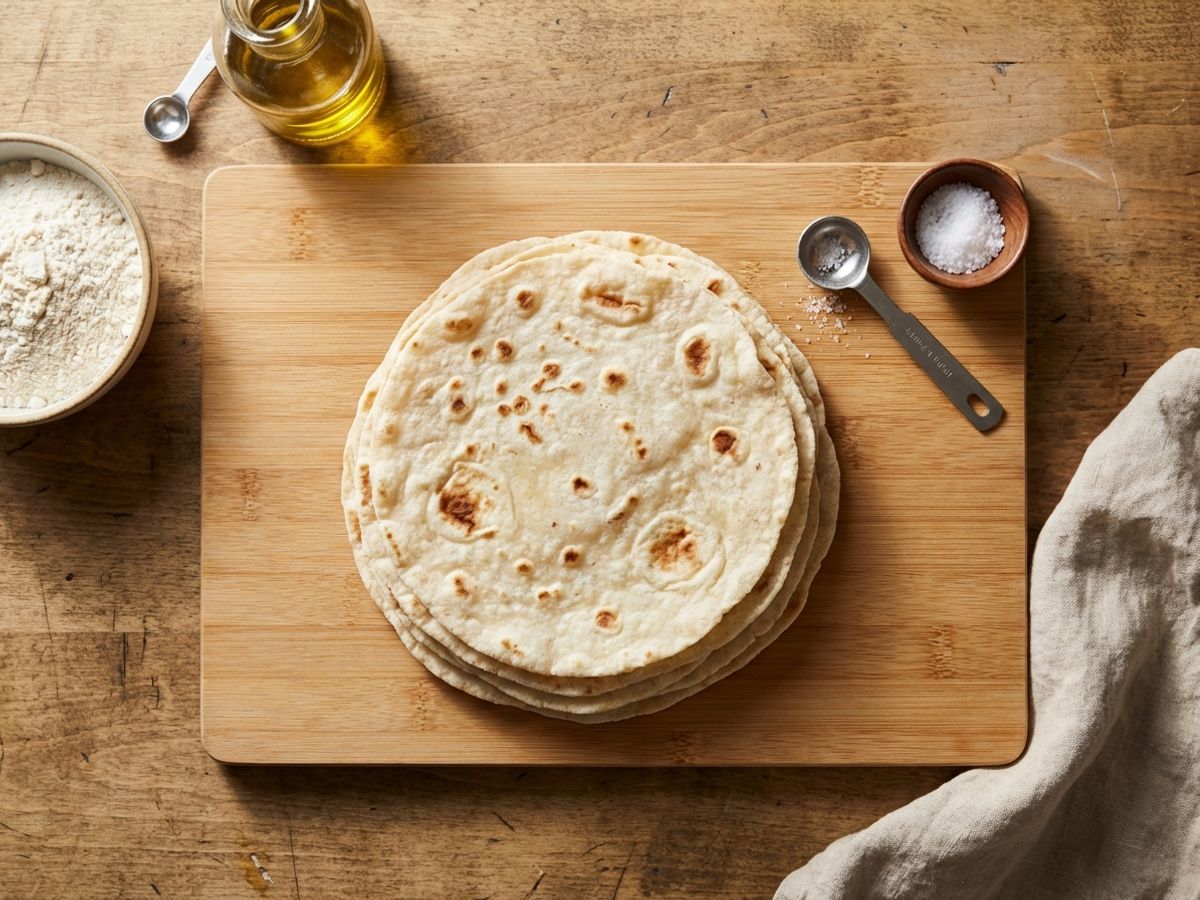
Ingredients
- 3 cups cassava flour
- 1 teaspoon sea salt
- 3 tablespoons olive oil
- 2 to 2 1/2 cups warm filtered water (adjust as needed)
Instructions
Make the Dough
- In a large bowl, whisk together the cassava flour and salt.
- Add the olive oil and mix until the flour looks crumbly.
- Pour in the warm water gradually, stirring as you go.
- Mix until a smooth dough forms. The dough should hold together without being sticky.
- If the dough is dusty or crumbly, add water 1 tablespoon at a time. If it sticks to your hands, add more flour.
Press the Tortillas
- Divide the dough into 13 equal portions, about the size of a golf ball.
- Roll each portion into a smooth ball.
- Place a ball between two sheets of parchment paper.
- Press flat using a tortilla press, or roll with a rolling pin until very thin, about 1/16 inch thick.
Cook
- Heat a ceramic non-stick skillet over medium-low heat. No oil is needed if using ceramic.
- Carefully peel the tortilla from the parchment and place it in the skillet.
- Cook for 60-90 seconds until the edges look dry and the bottom has light brown spots.
- Flip and cook another 60-90 seconds on the other side.
- Transfer to a plate and cover with a clean towel to keep warm while you cook the rest.
Tips & Substitutions
- Water amount varies with humidity. Start with 2 cups and add more a tablespoon at a time. The dough should hold together without being sticky.
- Roll thin for pliable tortillas. If they are getting stiff, they may be too thick or cooking too long. Aim for about 1/16 inch.
- A tortilla press speeds things up. If you make these regularly, a press gives more consistent results than a rolling pin.
- Stack under a towel. Keep cooked tortillas under a clean towel to trap steam and keep them soft and warm.
- Swap olive oil for coconut oil if you prefer a more neutral flavor, or use avocado oil if you tolerate it.
Why This Works
Cassava flour. Naturally gluten-free and low in histamine. It creates a pliable dough similar to wheat tortillas without the gluten that many with histamine intolerance are also sensitive to.
Olive oil. Generally well tolerated and adds a mild richness to the dough. It helps keep the tortillas flexible after cooking.
Minimal ingredients. With just flour, oil, salt, and water, there is very little that could trigger a reaction. Fewer ingredients means fewer variables to troubleshoot.
Storage
Best eaten fresh and warm right after cooking. If you have leftovers, store in an airtight container at room temperature for up to 1 day, then reheat briefly in a dry skillet. You can also freeze cooked tortillas between sheets of parchment paper for up to 2 weeks. Histamine buildup is lower risk than with meat or fish leftovers, but sensitive individuals may still prefer eating them fresh or freezing promptly.
Not sure if an ingredient is safe? Histamine Tracker includes a database of 1,000+ foods with histamine ratings to help you cook with confidence.


For educational purposes only. Not medical advice. Consult a healthcare professional for personal guidance.
References
- Low Histamine Cassava Tortillas — Mast Cell 360
- Is Cassava Flour High In Histamine — Casa de Sante
- Is Olive Oil High Histamine? — Histamine Doctor
- Histamine and histamine intolerance — Maintz & Novak (2007)
- Histamine Intolerance: The Current State of the Art — Comas-Basté et al. (2020)
- Biogenic Amines in Plant-Origin Foods: Are They Frequently Underestimated in Low-Histamine Diets? — Sánchez-Pérez et al. (2021)
- Diamine Oxidase Supplementation Improves Symptoms in Patients with Histamine Intolerance — Schnedl et al. (2019)
- Histamine Intolerance — A Comprehensive Review — Jochum (2024)