 Histamine Tracker
Carrot Ginger Soup

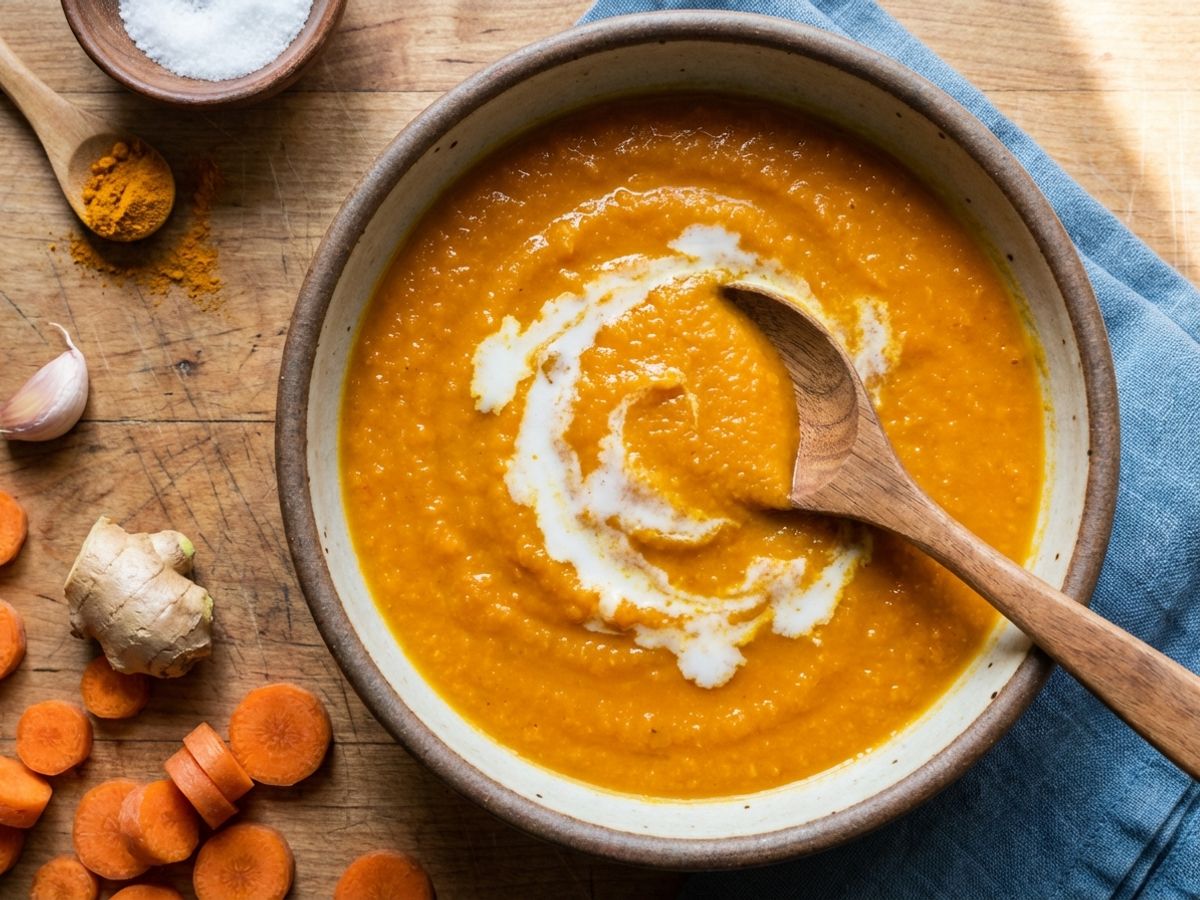
Blended carrot soup with fresh ginger and coconut milk.
Ingredients
- 2 pounds carrots, peeled and chopped into 1-inch pieces
- 2 tablespoons coconut oil or olive oil
- 1 medium onion, diced
- 3 cloves garlic, minced
- 3 tablespoons fresh ginger, grated
- 1/2 teaspoon ground turmeric
- 4 cups vegetable or chicken broth
- 1 can (13.5 oz) full-fat coconut milk
- 1 teaspoon sea salt, or to taste
Instructions
Prep
- Peel and chop carrots into 1-inch pieces.
- Dice the onion and mince the garlic.
- Grate fresh ginger using a microplane or fine grater.
Cook
- Warm oil in a large pot over medium heat.
- Add onion and cook until soft and translucent, about 5 minutes.
- Add garlic and ginger. Stir for 1-2 minutes until fragrant.
- Stir in turmeric and cook for 30 seconds.
- Add carrots and broth. Stir to combine.
- Bring to a boil, then reduce heat to medium-low. Cover and simmer for 20-25 minutes until carrots are fork-tender.
Blend
- Remove pot from heat.
- Stir in coconut milk.
- Use an immersion blender to blend until smooth. Alternatively, carefully transfer to a regular blender in batches, leaving the lid slightly vented to release steam.
- Taste and adjust salt as needed.
Serve
- Ladle into bowls.
- Optional: top with a drizzle of coconut milk, fresh herbs, or pumpkin seeds.
Tips & Substitutions
- Use fresh ginger, not dried. Fresh ginger has a brighter flavor and is generally better tolerated. If 3 tablespoons is too strong, start with 1 tablespoon and add more to taste.
- Onion and garlic are optional. They can be histamine liberators for some people. Skip them or reduce the amount based on your tolerance.
- An immersion blender makes this easy. If using a regular blender, leave the lid slightly vented and blend in batches to avoid steam buildup.
- Swap coconut milk for hemp milk if coconut is a trigger. The soup will be slightly thinner but still smooth.
- Use fresh broth or substitute water with extra salt if you don't have a broth you trust.
Why This Works
Carrots. Naturally low in histamine and generally well tolerated. They hold up well to cooking and blend into a smooth, naturally sweet base.
Fresh ginger. Generally well tolerated and commonly used in low histamine cooking. Some people find it soothing for digestion, though individual response varies.
Turmeric. Generally well tolerated in small amounts. It adds warm flavor and color without histamine concerns for most people.
Coconut milk. A dairy-free alternative that adds creaminess. Check your coconut milk label for additives like guar gum or carrageenan, which some people react to.
Onion and garlic. These contain small amounts of quercetin, a compound sometimes discussed in mast cell research, though individual response varies. They can also act as histamine liberators for sensitive individuals.
Storage
Best eaten fresh the day it's made. If you need to store it, refrigerate in an airtight container and eat within 24 hours. You can also freeze individual portions immediately after cooling. Generally lower risk than meat or fish leftovers, but still best cooled quickly and stored briefly.
Not sure if an ingredient is safe? Histamine Tracker includes a database of 1,000+ foods with histamine ratings to help you cook with confidence.


For educational purposes only. Not medical advice. Consult a healthcare professional for personal guidance.
References
- 43+ Low Histamine Vegetables to Add to Your Diet — Low Histamine Eats
- 7 Best Foods for Histamine Intolerance — Healing Histamine
- Is Coconut High Histamine? — Low Histamine Eats
- Histamine and histamine intolerance — Maintz & Novak (2007)
- Histamine Intolerance: The Current State of the Art — Comas-Basté et al. (2020)
- Biogenic Amines in Plant-Origin Foods: Are They Frequently Underestimated in Low-Histamine Diets? — Sánchez-Pérez et al. (2021)
- Diamine Oxidase Supplementation Improves Symptoms in Patients with Histamine Intolerance — Schnedl et al. (2019)
- Histamine Intolerance — A Comprehensive Review — Jochum (2024)