 Histamine Tracker
Butternut Squash Soup

Creamy butternut squash soup with ginger.
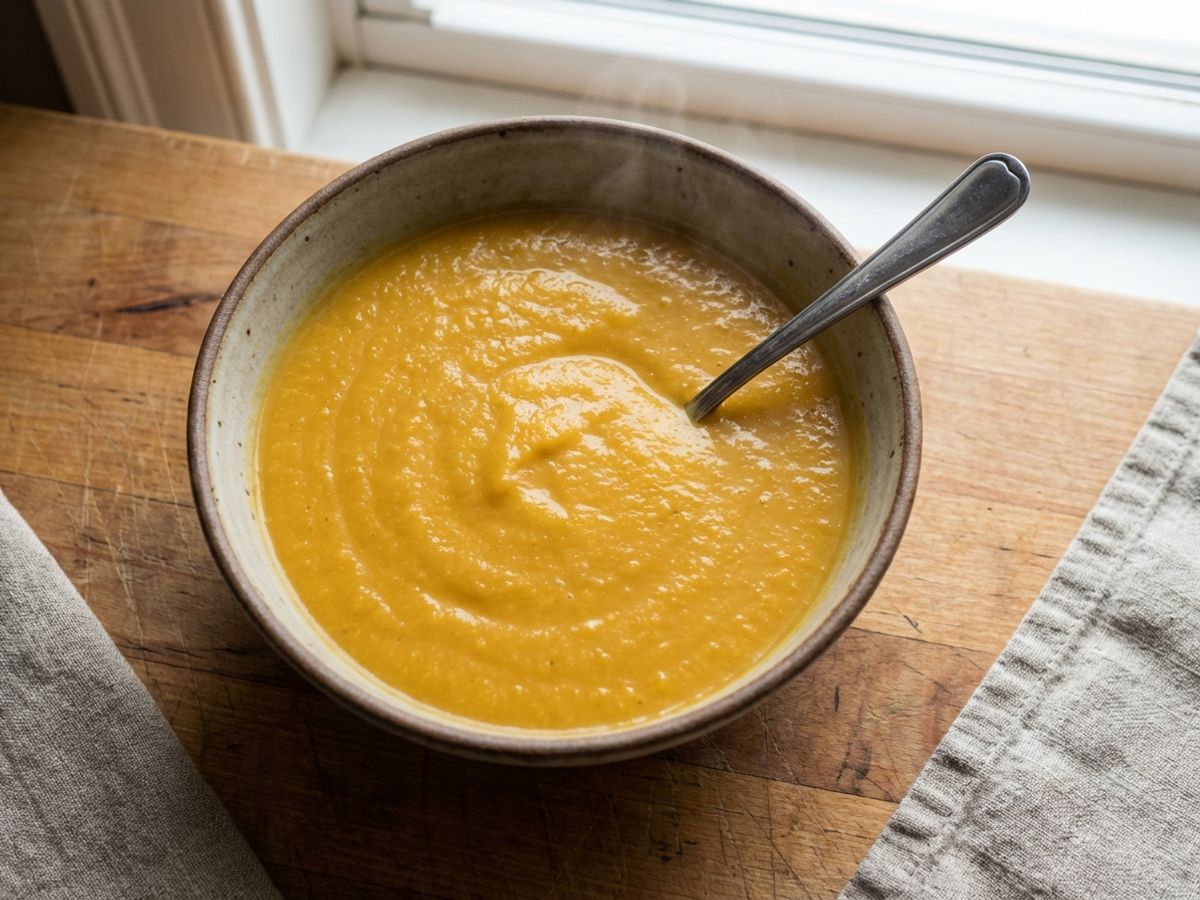
Ingredients
- 1 medium butternut squash (about 2-2.5 lbs), peeled and cubed
- 2 tablespoons coconut oil or olive oil
- 1 medium onion, diced
- 1-3 cloves garlic, minced (to taste)
- 1 tablespoon fresh ginger, grated
- 4 cups vegetable broth
- 1 can (13.5 oz) full-fat coconut milk
- 1 teaspoon sea salt, or to taste
- 1/2 teaspoon fresh thyme leaves (or 1/4 teaspoon dried)
Instructions
Prep
- Peel and cube butternut squash into 1-inch pieces.
- Dice the onion and mince the garlic.
- Grate fresh ginger using a microplane or fine grater.
Roast (Optional)
For deeper flavor, roast the squash first:
- Preheat oven to 400°F (200°C).
- Toss squash cubes with 1 tablespoon oil and a pinch of salt.
- Spread in a single layer on a baking sheet.
- Roast for 25-30 minutes until edges begin to caramelize.
If skipping roasting, proceed directly to the stovetop method below.
Cook
- Warm remaining oil in a large pot over medium heat.
- Add onion and cook until soft and translucent, about 5 minutes.
- Add garlic and ginger. Stir for 1-2 minutes until fragrant.
- Add squash (raw or roasted), thyme, and broth.
- Bring to a boil, then reduce heat. Cover and simmer for 20-25 minutes until squash is completely tender.
Blend
- Remove pot from heat.
- Stir in coconut milk.
- Use an immersion blender to blend until smooth. Alternatively, carefully transfer to a regular blender in batches, leaving the lid slightly vented to release steam.
- Taste and adjust salt as needed.
Serve
- Ladle into bowls.
- Optional: drizzle with a swirl of coconut milk, a few thyme leaves, or a sprinkle of nigella seeds.
Tips & Substitutions
- Roasting is optional but deepens the flavor. If you skip roasting, the soup will still be creamy and delicious, just with a milder taste.
- Hard to peel? Microwave the whole squash for 2-3 minutes first to soften the skin before cutting.
- Onion and garlic are optional. They can be histamine liberators for some people. Skip them or reduce the amount based on your tolerance.
- Swap the coconut milk for hemp milk if you react to coconut. The soup will be thinner but still smooth.
- Use fresh broth or water with extra salt if you don't have a broth you trust.
Why This Works
Butternut squash. Naturally low in histamine and generally well tolerated. Its natural sweetness means you don't need any added sugar or problematic flavor enhancers.
Coconut milk. A dairy-free alternative that adds richness without the histamine concerns of aged dairy. Check the label for additives like guar gum or carrageenan.
Fresh ginger. Generally well tolerated and commonly used in low histamine cooking. Some people find it soothing for digestion, though individual response varies.
Onion and garlic. These contain small amounts of quercetin, a compound sometimes discussed in mast cell research, though individual response varies. They can also act as histamine liberators for sensitive individuals, so use them based on your tolerance.
Thyme. A fresh herb that is generally well tolerated. Dried herbs are also an option, though freshness and storage conditions can affect tolerance.
Storage
Best eaten fresh the day it's made. If you need to store it, refrigerate in an airtight container and eat within 24 hours. You can also freeze portions immediately after cooling for longer storage, though some people are sensitive to reheated soups, especially protein-containing dishes.
Not sure if an ingredient is safe? Histamine Tracker includes a database of 1,000+ foods with histamine ratings to help you cook with confidence.


For educational purposes only. Not medical advice. Consult a healthcare professional for personal guidance.
References
- Is Butternut Squash Low Histamine? You'd Better Believe It Is! — Fact vs Fitness
- Is Coconut High Histamine? — Low Histamine Eats
- 7 Best Foods for Histamine Intolerance — Healing Histamine
- Histamine and histamine intolerance — Maintz & Novak (2007)
- Histamine Intolerance: The Current State of the Art — Comas-Basté et al. (2020)
- Biogenic Amines in Plant-Origin Foods: Are They Frequently Underestimated in Low-Histamine Diets? — Sánchez-Pérez et al. (2021)
- Diamine Oxidase Supplementation Improves Symptoms in Patients with Histamine Intolerance — Schnedl et al. (2019)
- Histamine Intolerance — A Comprehensive Review — Jochum (2024)