 Histamine Tracker
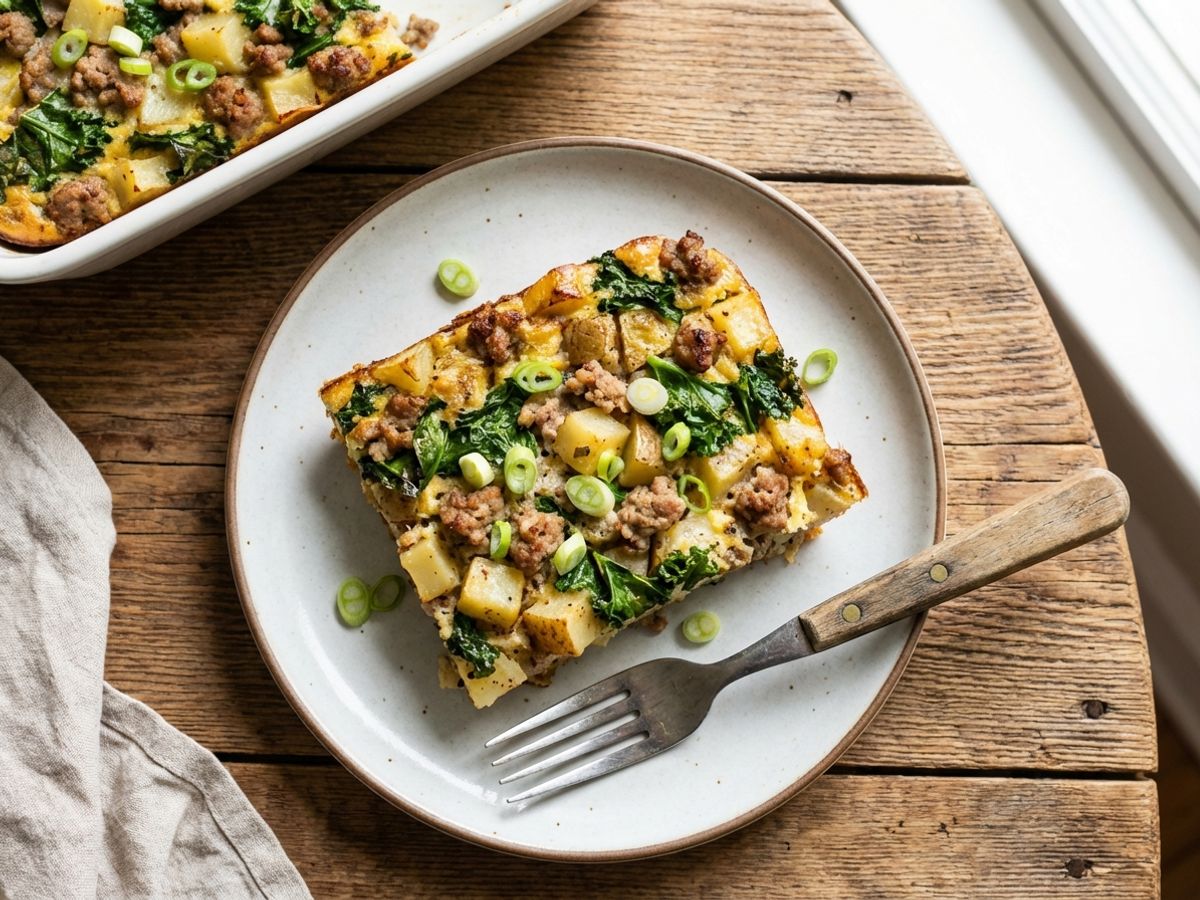
Breakfast Casserole

Eggs, turkey sausage, potatoes, and greens in one dish.
Ingredients
For the Turkey "Sausage"
- 8 oz fresh ground turkey
- 1 tablespoon olive oil
- 1 tablespoon fresh sage, chopped (or 1 teaspoon dried)
- 1 teaspoon fresh thyme, chopped (or 1/2 teaspoon dried)
- 1/4 teaspoon sea salt
For the Vegetables
- 2 cups potatoes, peeled and diced into 1/2-inch cubes (about 2 medium)
- 1 tablespoon olive oil
- 1/4 teaspoon sea salt
- 2 cups kale or chard, stems removed and leaves chopped
- 2 green onions, green parts only, sliced (optional)
For the Eggs
- 6 large eggs
- 2 tablespoons coconut milk
- 1/4 teaspoon sea salt
Instructions
Prep
- Preheat your oven to 375°F (190°C).
- Grease a 9x13 inch baking dish with olive oil.
Cook the Potatoes
- Heat 1 tablespoon olive oil in a large skillet over medium-high heat.
- Add the diced potatoes and 1/4 teaspoon salt.
- Cook for 10-12 minutes, stirring occasionally, until the potatoes are tender and lightly golden.
- Add the kale and green onions if using. Cook 2-3 minutes until the kale wilts.
- Transfer the vegetables to the prepared baking dish.
Cook the Turkey
- In the same skillet, heat 1 tablespoon olive oil over medium heat.
- Add the ground turkey, sage, thyme, and 1/4 teaspoon salt.
- Break up the turkey with a spatula and cook for 5-6 minutes until browned and cooked through.
- Add the turkey to the baking dish with the vegetables and stir to combine.
Add the Eggs
- In a bowl, whisk together the eggs, coconut milk, and 1/4 teaspoon salt.
- Pour the egg mixture over the vegetables and turkey in the baking dish.
- Gently stir to distribute everything evenly.
Bake
- Bake for 20-25 minutes until the eggs are set and the top is lightly golden.
- Let cool for 5 minutes before serving.
Tips & Substitutions
- Buy fresh ground turkey or freeze immediately. Freshness is key for keeping histamine levels low in ground meat.
- Sweet potato works instead of regular potato. Both are well tolerated. Sweet potato adds a natural sweetness.
- Skip the green onions if they bother you. Chives or extra fresh herbs work as a replacement.
- Use a 9x13 glass baking dish for even cooking. Metal pans work but may cook faster on the edges.
- Ground chicken is a good swap for turkey. The sage and thyme seasoning works with either protein.
Why This Works
Fresh ground turkey. Homemade seasoned turkey avoids the additives and preservatives in store-bought sausage, which can be high in histamine. Use it the same day you buy it.
Potatoes. Naturally low in histamine and generally well tolerated. They provide a filling starch base for the casserole.
Kale or chard. Low histamine greens that are commonly tolerated. They replace spinach, which is a common trigger for people with histamine intolerance.
Eggs. Eggs contain no histamine themselves, though egg whites can trigger reactions in some people. Use extra yolks if you are sensitive.
Fresh herbs. Sage and thyme are generally well tolerated and provide flavor without processed seasoning blends that may contain problematic additives.
Storage
For meal prep, cool quickly and freeze individual portions within 1-2 hours of baking. Reheat from frozen at 350°F (175°C) for 15-20 minutes. Reheating from frozen is better than storing in the fridge for days, as histamine builds in protein-containing leftovers over time.
Not sure if an ingredient is safe? Histamine Tracker includes a database of 1,000+ foods with histamine ratings to help you cook with confidence.


For educational purposes only. Not medical advice. Consult a healthcare professional for personal guidance.
References
- 5 High-Histamine Meats to Avoid with Histamine Intolerance — Histamine Doctor
- A Quick Introduction to the Low Histamine Diet — Cleveland Clinic
- 3 Types of Tasty Low-Histamine Vegetables to Brighten Up Your Plate — Histamine Doctor
- Histamine and histamine intolerance — Maintz & Novak (2007)
- Histamine Intolerance: The Current State of the Art — Comas-Basté et al. (2020)
- Biogenic Amines in Plant-Origin Foods: Are They Frequently Underestimated in Low-Histamine Diets? — Sánchez-Pérez et al. (2021)
- Diamine Oxidase Supplementation Improves Symptoms in Patients with Histamine Intolerance — Schnedl et al. (2019)
- Histamine Intolerance — A Comprehensive Review — Jochum (2024)