 Histamine Tracker
Blueberry Crisp

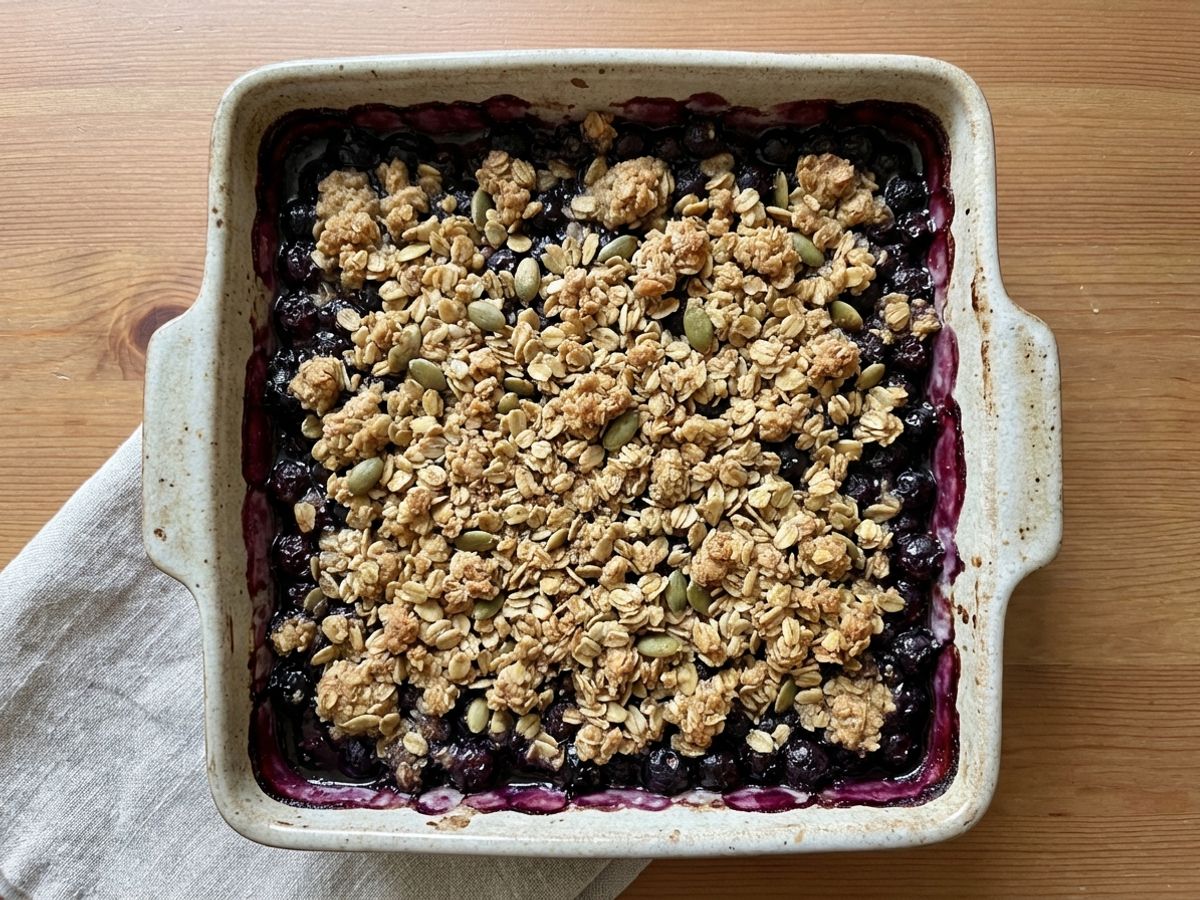
A cozy dessert with juicy blueberries and a crispy oat topping. Simple to make and perfect for using up fresh berries.
Ingredients
Filling
- 4 cups fresh blueberries
- 2 tablespoons tapioca starch (or arrowroot)
- 2 tablespoons maple syrup
- Pinch of salt
Topping
- 1 cup gluten-free rolled oats (certified gluten-free)
- 1/3 cup coconut oil, melted
- 3 tablespoons maple syrup
- 1/4 teaspoon cardamom
- 1/4 teaspoon salt
- 2 tablespoons pumpkin seeds (optional)
Instructions
Prep
- Preheat oven to 350°F (175°C).
- Lightly grease an 8x8-inch baking dish with coconut oil.
Make the Filling
- Add blueberries to the baking dish.
- Sprinkle tapioca starch evenly over the berries.
- Drizzle with maple syrup and add a pinch of salt.
- Gently toss to coat the berries evenly.
Make the Topping
- In a bowl, combine rolled oats, cardamom, and salt.
- Pour in melted coconut oil and maple syrup.
- Stir until the oats are evenly coated.
- Add pumpkin seeds if using and mix to combine.
Bake
- Spread the oat topping evenly over the blueberries.
- Bake for 35-40 minutes until the filling is bubbling and the topping is golden brown.
- Let cool for 10 minutes before serving.
Tips & Substitutions
- Freeze fresh blueberries yourself. If using frozen, freeze fresh berries the same day you buy them. Do not thaw before baking.
- Cardamom instead of cinnamon. Cinnamon tolerance varies widely among people with histamine intolerance. Cardamom is generally better tolerated and adds a warm, slightly sweet flavor.
- If you tolerate cinnamon. You can use 1/2 teaspoon cinnamon in place of or in addition to the cardamom.
- Coconut oil creates the crispiest topping. Butter is not suitable for everyone with histamine intolerance since it's aged, but you can substitute with grass-fed butter if you tolerate dairy.
- Very juicy berries? Add an extra teaspoon of tapioca starch to help the filling set.
- Certified gluten-free oats. Use purity protocol oats if you have celiac disease or severe gluten sensitivity.
- Arrowroot works too. If you don't have tapioca starch, arrowroot is interchangeable.
Why This Works
Blueberries. Low in histamine and generally well tolerated. Blueberries are rich in antioxidants and are one of the safer fruits for people with histamine intolerance.
Oats. Naturally gluten-free, though cross-contamination is common. Tolerated by many with histamine intolerance, though some people do react due to avenin sensitivity or storage issues.
Coconut oil. A dairy-free alternative to butter that creates a crispy, golden topping. Well tolerated by most.
Cardamom. A warming spice that adds depth without the histamine concerns some people have with cinnamon.
Maple syrup. A natural sweetener that works well for most people with histamine intolerance. Use sparingly, as the blueberries provide natural sweetness.
Storage
Best served warm from the oven. For better tolerance, cool quickly and freeze individual portions rather than refrigerating. Can be stored in the refrigerator for up to 2 days if needed. Reheat portions in a 350°F (175°C) oven for 10-15 minutes. The topping will soften when stored but crisps up again when reheated. Some people are sensitive to leftovers, so pay attention to your own tolerance.
Not sure if an ingredient is safe? Histamine Tracker includes a database of 1,000+ foods with histamine ratings to help you cook with confidence.


For educational purposes only. Not medical advice. Consult a healthcare professional for personal guidance.
References
- 20 Low Histamine Fruits and Berries (With Recipes) — Through The Fibro Fog
- Are Steel Cut Oats High in Histamine? — Casa de Sante
- Is Coconut High Histamine? — Low Histamine Eats
- Histamine and histamine intolerance — Maintz & Novak (2007)
- Histamine Intolerance: The Current State of the Art — Comas-Basté et al. (2020)
- Biogenic Amines in Plant-Origin Foods: Are They Frequently Underestimated in Low-Histamine Diets? — Sánchez-Pérez et al. (2021)
- Diamine Oxidase Supplementation Improves Symptoms in Patients with Histamine Intolerance — Schnedl et al. (2019)
- Histamine Intolerance — A Comprehensive Review — Jochum (2024)