 Histamine Tracker
Bison & Buttery Peas

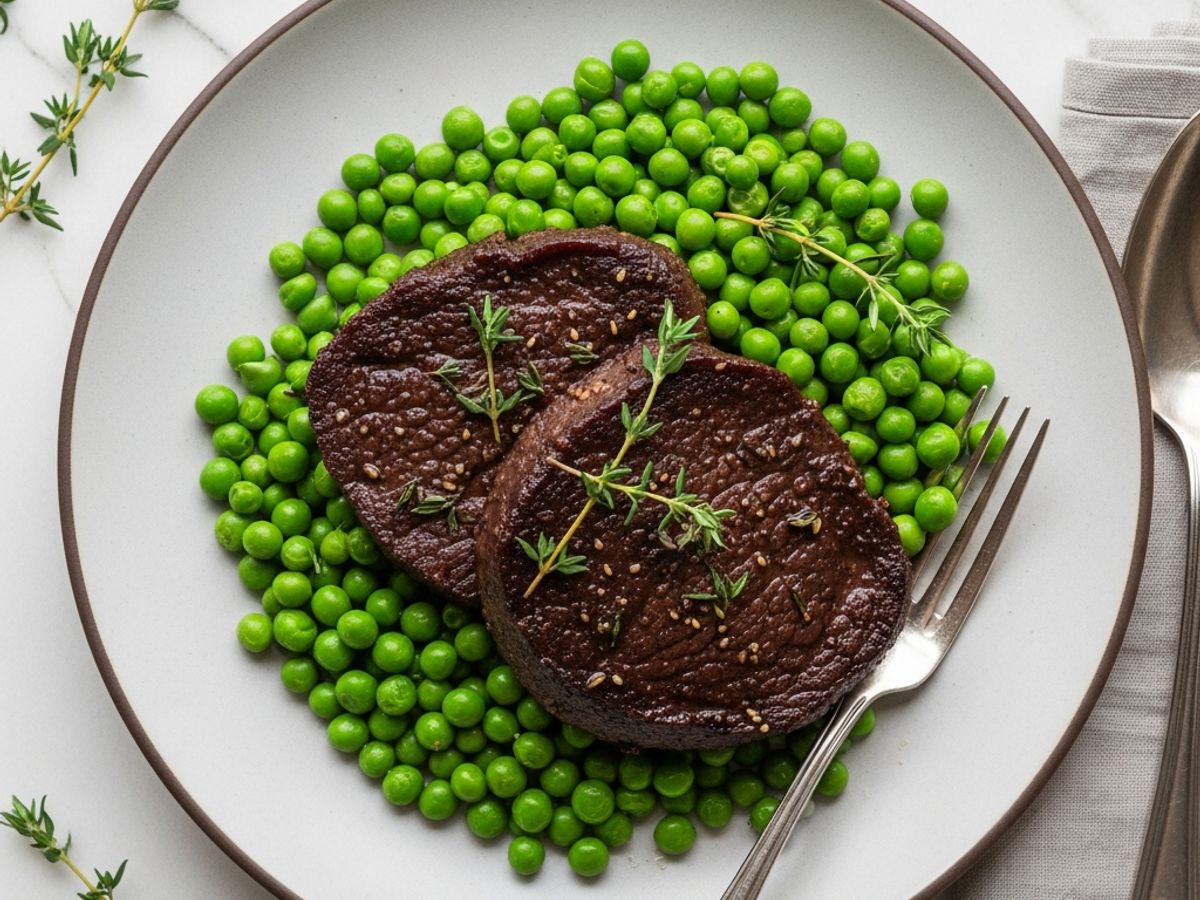
Pan-seared bison steak with buttery peas.
Ingredients
Bison
- 2 bison steaks (about 6 ounces each, ribeye or strip)
- 1 tablespoon olive oil
- 1/2 teaspoon sea salt
- 1/4 teaspoon black pepper (optional)
- 1 tablespoon butter (optional)
- 2 sprigs fresh thyme
Buttery Peas
- 2 cups fresh or frozen peas
- 2 tablespoons butter
- 1/4 teaspoon sea salt
- 1 teaspoon fresh thyme leaves
Instructions
Prep
- Remove the bison steaks from the refrigerator 15-20 minutes before cooking to take the chill off for more even cooking. Do not leave out longer than 30 minutes.
- Pat the steaks dry with paper towels.
- Season both sides with salt and pepper if using.
Cook the Bison
- Heat olive oil in a cast iron or heavy skillet over medium-high heat until shimmering.
- Add the bison steaks and cook without moving for 3-4 minutes until a deep brown crust forms.
- Flip and cook for another 2-3 minutes for medium-rare (125-130°F / 52-54°C internal temperature).
- In the last minute, add 1 tablespoon butter and thyme sprigs to the pan. Baste the steaks with the melted butter.
- Transfer to a plate and let rest for 5 minutes.
Make the Buttery Peas
- While the steaks rest, melt 2 tablespoons butter in a saucepan over medium heat.
- Add the peas and cook for 3-4 minutes until heated through and bright green.
- Season with salt and fresh thyme. Toss to combine.
Serve
- Divide the peas between two plates.
- Slice the bison steaks if desired and place on top of or alongside the peas.
- Drizzle any resting juices over the steaks.
- Serve immediately.
Tips & Substitutions
- Use fresh bison. Bison is typically not aged as long as beef, which can make it a better choice for histamine intolerance.
- Don't overcook. Bison is lean and cooks faster than beef. Aim for medium-rare to medium for the best texture.
- A cast iron skillet works best. It holds heat evenly and gives the steaks a better sear. Stainless steel also works.
- Fresh grass-fed beef works as a substitute if bison is unavailable.
- Use olive oil instead of butter to make this fully dairy-free. You can also skip the basting step entirely.
Why This Works
Bison. Generally well tolerated and typically less aged than beef. It provides a good protein source without the extended aging that can increase histamine levels.
Peas. Naturally low in histamine and commonly well tolerated. Fresh or home-frozen peas are a reliable vegetable choice.
Fresh thyme. Fresh herbs are generally well tolerated and add flavor without the histamine concerns that can come with long-stored dried spices.
Butter (optional). Fresh butter is lower in histamine than aged dairy products. If you're sensitive to dairy, olive oil is a safe swap.
Olive oil. A staple fat that is generally well tolerated by most people with histamine intolerance.
Storage
Best served immediately for the freshest flavor and lowest histamine load. Protein dishes like bison accumulate histamine as they sit, so eat right after cooking when possible. If you must save leftovers, cool quickly and freeze in portions rather than refrigerating, since histamine continues to build even in the fridge. Thaw and reheat once.
Not sure if an ingredient is safe? Histamine Tracker includes a database of 1,000+ foods with histamine ratings to help you cook with confidence.


For educational purposes only. Not medical advice. Consult a healthcare professional for personal guidance.
References
- Is Bison High In Histamine — Casa de Sante
- Is Butter High in Histamine? — Snuggy Mom
- Is Thyme High In Histamine — Casa de Sante
- Histamine and histamine intolerance — Maintz & Novak (2007)
- Histamine Intolerance: The Current State of the Art — Comas-Basté et al. (2020)
- Biogenic Amines in Plant-Origin Foods: Are They Frequently Underestimated in Low-Histamine Diets? — Sánchez-Pérez et al. (2021)
- Diamine Oxidase Supplementation Improves Symptoms in Patients with Histamine Intolerance — Schnedl et al. (2019)
- Histamine Intolerance — A Comprehensive Review — Jochum (2024)