 Histamine Tracker
BBQ Sauce

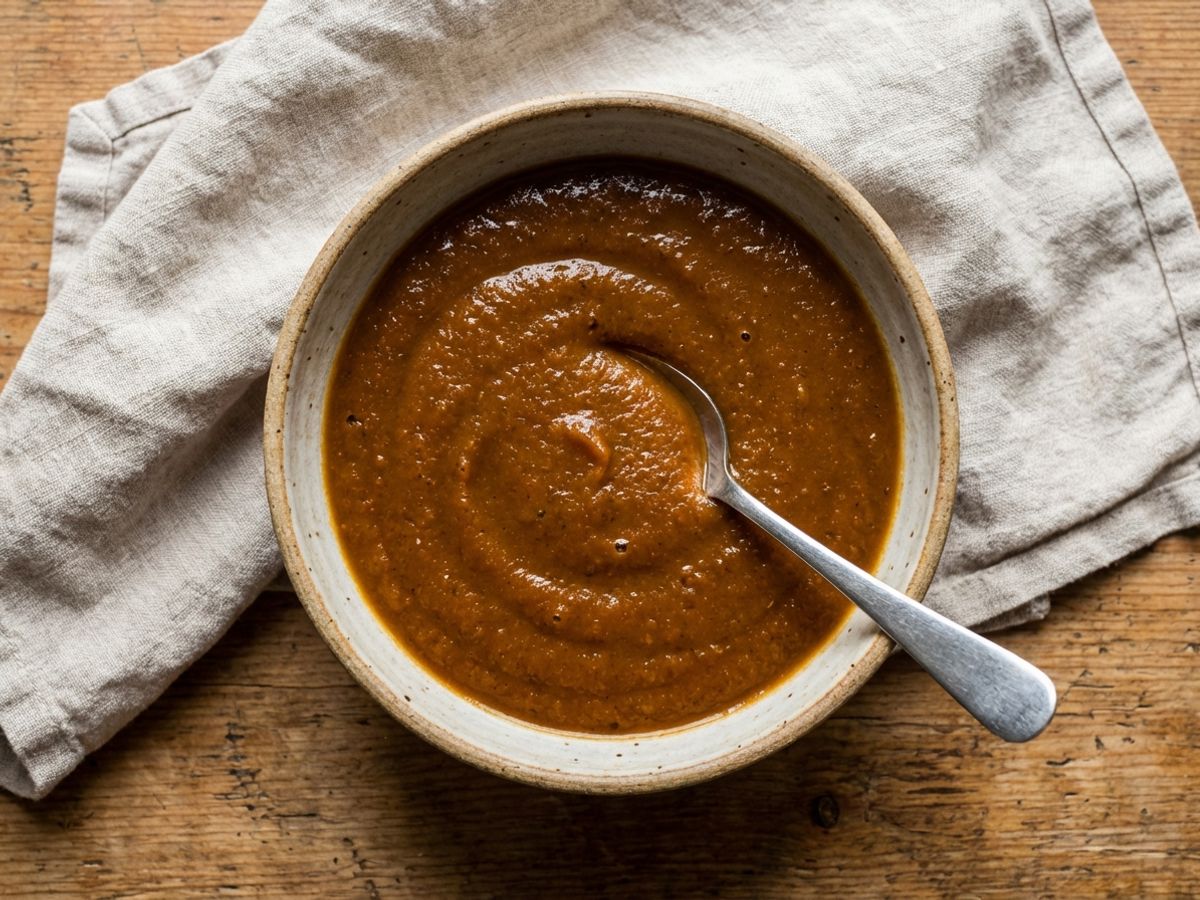
A tomato-free BBQ sauce that tastes like the real thing.
Ingredients
- 1 1/2 cups butternut squash, peeled and cubed
- 1/3 cup unsweetened applesauce
- 3 tablespoons molasses
- 2 tablespoons coconut aminos
- 1 tablespoon maple syrup
- 1 1/2 teaspoons liquid smoke
- 1 teaspoon onion powder
- 1/2 teaspoon ground ginger
- 1/2 teaspoon garlic powder
- 1/4 teaspoon sea salt
- 1/4 cup water (as needed for blending)
Instructions
Cook the Squash
- Place the butternut squash cubes in a pot and cover with water.
- Bring to a boil, then reduce heat and simmer for 15-20 minutes until fork-tender.
- Drain well and let cool slightly.
Blend the Sauce
- Add the cooked squash to a blender.
- Add the applesauce, molasses, coconut aminos, maple syrup, liquid smoke, onion powder, ginger, garlic powder, and salt.
- Blend until completely smooth. Add water 1 tablespoon at a time if needed to reach your desired consistency.
Simmer
- Pour the blended sauce into a small saucepan over medium-low heat.
- Simmer for 5-10 minutes, stirring occasionally, to let the flavors meld and the sauce thicken slightly.
- Taste and adjust salt or maple syrup as needed.
Tips & Substitutions
- Choose liquid smoke carefully. Look for brands with only water and smoke condensate. Avoid any with added flavors or preservatives.
- Use single-ingredient applesauce. Check the label for just apples and water. No added sugars or citric acid.
- Skip the onion and garlic powders if they bother you. The sauce still has plenty of flavor from the molasses and liquid smoke.
- Simmer longer for a thicker sauce. If you prefer a thicker consistency, cook the blended sauce for an extra 5-10 minutes, stirring often.
- Swap maple syrup for honey if you tolerate it, or adjust the amount to control sweetness.
Why This Works
Butternut squash. Naturally low in histamine and generally well tolerated. It provides the body and color that would normally come from tomatoes.
Applesauce. Adds natural sweetness and a mild tang without relying on vinegar or citrus, which can be problematic for some people.
Coconut aminos. A common soy-free alternative to soy sauce. Since soy sauce is fermented and high in histamine, coconut aminos are a commonly used swap. Some brands may involve fermentation or aging, so choose one with minimal ingredients and test your tolerance.
Molasses. Generally well tolerated and adds depth. Individual tolerance varies, so start with a smaller amount if you are unsure.
Freshness matters. Using fresh ingredients and making sauces from scratch avoids the preservatives and additives found in store-bought BBQ sauces.
Storage
Best used fresh or within 2-3 days refrigerated in a sealed glass jar. For longer storage, freeze in ice cube trays or small portions and thaw only what you need. This is generally lower risk than meat or fish leftovers, but any cooked food can become more problematic the longer it sits. Freshness still matters for best tolerance.
Not sure if an ingredient is safe? Histamine Tracker includes a database of 1,000+ foods with histamine ratings to help you cook with confidence.


For educational purposes only. Not medical advice. Consult a healthcare professional for personal guidance.
References
- Is Butternut Squash High In Histamine — Casa de Sante
- Are Coconut Aminos High In Histamine — Casa de Sante
- 35+ Low Histamine Sauces & Condiments — Low Histamine Eats
- Histamine and histamine intolerance — Maintz & Novak (2007)
- Histamine Intolerance: The Current State of the Art — Comas-Basté et al. (2020)
- Biogenic Amines in Plant-Origin Foods: Are They Frequently Underestimated in Low-Histamine Diets? — Sánchez-Pérez et al. (2021)
- Diamine Oxidase Supplementation Improves Symptoms in Patients with Histamine Intolerance — Schnedl et al. (2019)
- Histamine Intolerance — A Comprehensive Review — Jochum (2024)