 Histamine Tracker
Crispy Baked Chicken Thighs

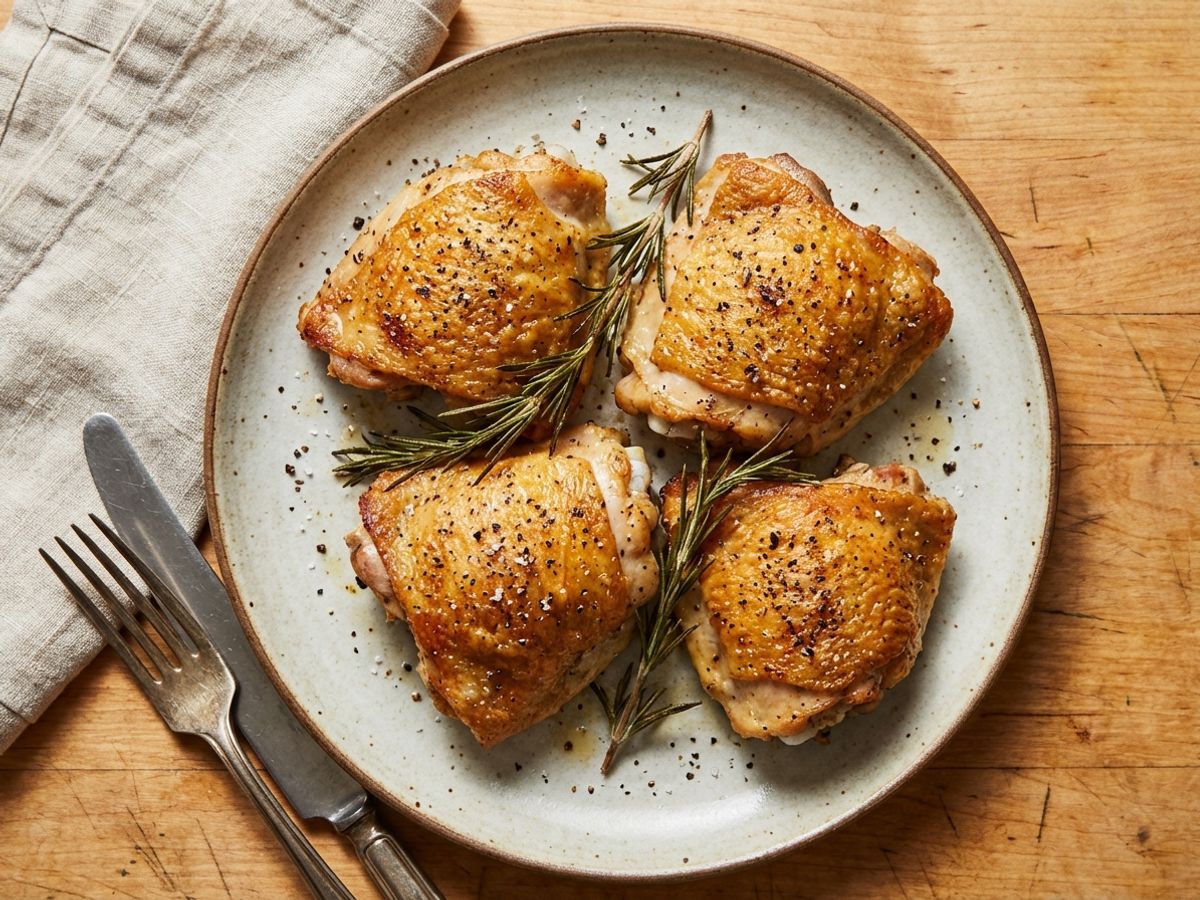
Baked chicken thighs with crispy skin.
Ingredients
- 4 bone-in, skin-on chicken thighs (about 2 lbs total)
- 1 tablespoon olive oil
- 1 teaspoon salt
- 1/4 teaspoon black pepper
- 4 sprigs fresh rosemary
Instructions
Prep
- Remove chicken from the refrigerator 20 minutes before cooking to bring it closer to room temperature.
- Preheat oven to 425°F (220°C).
- Pat the chicken thighs completely dry with paper towels on all sides. This is the most important step for crispy skin.
- Rub the olive oil over the skin, then season generously with salt and pepper.
Bake
- Place a wire rack on a rimmed baking sheet. If you don't have a rack, line the baking sheet with parchment paper.
- Arrange the chicken thighs skin-side up on the rack, leaving space between them.
- Place the rosemary sprigs on top of or beside the thighs (not underneath, where they can burn).
- Bake for 35-40 minutes until the skin is golden brown and crispy, and the internal temperature reaches at least 165°F (74°C). Thighs are often juiciest around 170-175°F (77-79°C).
- For extra crispy skin, broil on high for 2-3 minutes at the end. Watch carefully to avoid burning.
Rest
- Let the chicken rest for 5 minutes before serving.
- Serve with the roasted rosemary sprigs.
Tips & Substitutions
- Pat the skin completely dry. This is the single most important step for crispy skin. Use paper towels and press firmly on all sides.
- No wire rack? The chicken is still good on a parchment-lined sheet. The bottom won't be as crispy, but it works.
- Swap the herbs. Fresh thyme, sage, or oregano all work instead of rosemary. Use whatever you have on hand.
- Make it a one-pan meal. Scatter diced potatoes or carrots around the chicken on the baking sheet. Add 10 minutes to the cooking time.
- Use a meat thermometer. The chicken is safe at 165°F (74°C), but thighs are often juiciest around 170-175°F (77-79°C). A thermometer takes the guesswork out of doneness.
Why This Works
Chicken (fresh). Fresh chicken is naturally low in histamine and generally well tolerated. Freshness matters, so cook it the same day you buy it or freeze immediately.
Olive oil. Cold-pressed olive oil is commonly tolerated and a safe cooking fat for most people with histamine intolerance.
Rosemary. Fresh herbs are generally well tolerated. Rosemary also contains small amounts of rosmarinic acid, a compound sometimes discussed in mast cell research, though individual response varies.
Salt and pepper. Both are considered safe for most people. Black pepper may bother a small number of sensitive individuals, so adjust to your tolerance.
Storage
Best eaten fresh from the oven. If you have leftovers, refrigerate within one hour and eat within 24 hours. Protein dishes accumulate histamine over time, so freeze any portions you won't eat the next day.
Not sure if an ingredient is safe? Histamine Tracker includes a database of 1,000+ foods with histamine ratings to help you cook with confidence.


For educational purposes only. Not medical advice. Consult a healthcare professional for personal guidance.
References
- The Best Low Histamine Meat and Seafood Options — MastCell360 (Beth O'Hara)
- Is Rosemary High In Histamine — Casa de Sante
- Low Histamine Oils (and How to Use Them) — Through The Fibro Fog
- Histamine and histamine intolerance — Maintz & Novak (2007)
- Histamine Intolerance: The Current State of the Art — Comas-Basté et al. (2020)
- Biogenic Amines in Plant-Origin Foods: Are They Frequently Underestimated in Low-Histamine Diets? — Sánchez-Pérez et al. (2021)
- Diamine Oxidase Supplementation Improves Symptoms in Patients with Histamine Intolerance — Schnedl et al. (2019)
- Histamine Intolerance — A Comprehensive Review — Jochum (2024)