

The Histamine Bucket Theory Explained
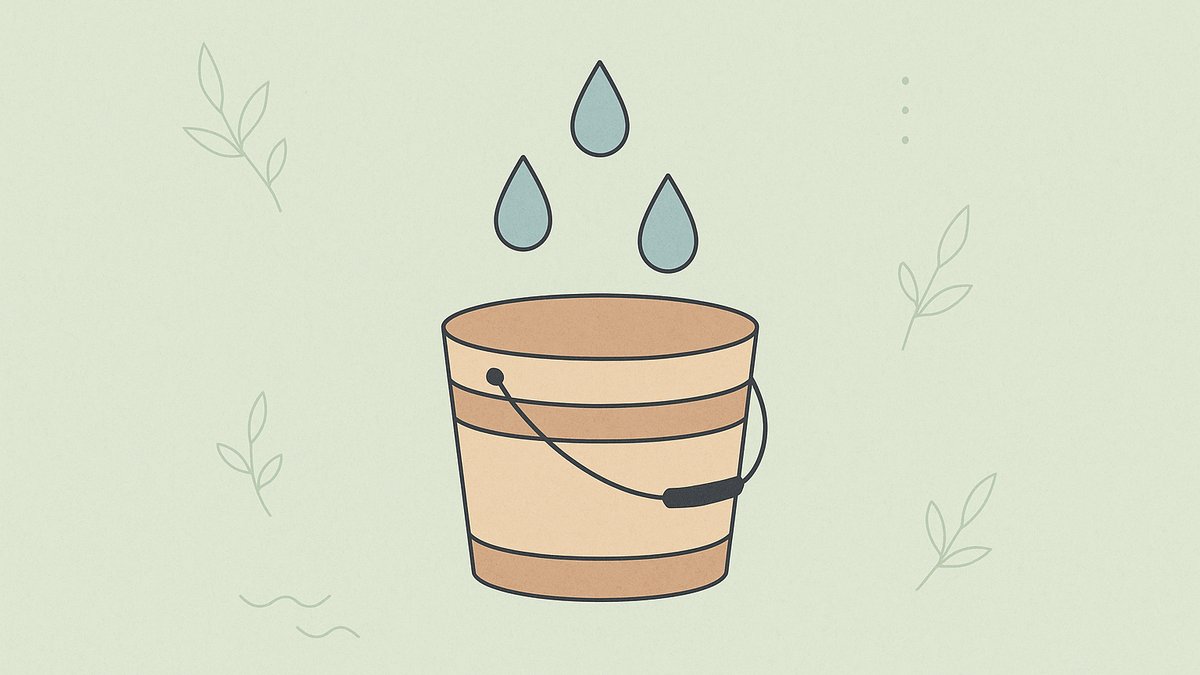
If you have histamine intolerance, you've probably had this experience. Monday you eat a piece of cheese and feel fine. Thursday you eat the same cheese, from the same block, and get a headache, flushing, and a racing heart within the hour. Nothing about the cheese changed. So what happened?
The bucket theory is the clearest way I've found to explain this. It's not a formal medical model. It's a metaphor that came out of the patient community, and it maps pretty well onto what the research actually says about histamine load and enzyme capacity. Once you get it, the "random" reactions stop feeling random.
Why your reactions feel random (and they're not)
Imagine you have a bucket inside you. Histamine pours into it from lots of different taps. Your body also has a drain at the bottom, and that drain empties the bucket at a certain rate. As long as the drain can keep up with what's pouring in, the bucket stays below the rim and you feel fine.
When more pours in than the drain can handle, the bucket fills up. When it overflows, you get symptoms. Headaches, hives, flushing, gut issues, anxiety, insomnia, whatever your particular flavor happens to be.
The key insight is that the bucket doesn't reset every time you eat. It's a running total. What you ate yesterday, how you slept last night, your stress level this morning, the heat of the room, where you are in your cycle, whether you took a new medication, all of that is already in the bucket before you pick up your fork.
So when you eat cheese on Monday and feel fine, the bucket had headroom. When you eat the same cheese on Thursday and react, the bucket was already near the rim. The food is rarely the whole story. Your bucket level before the food is the other half.
What fills the bucket
Lots of things pour histamine in, and most of them have nothing to do with what you ate for lunch.
- Dietary histamine. Fermented and aged foods, older leftovers, certain fish and cheeses. This is what most food lists focus on.
- Histamine liberators. Foods that don't necessarily contain much histamine but are commonly reported to set off reactions in sensitive people. Strawberries, citrus, chocolate, shellfish, tomatoes often show up on these lists. The mechanism isn't fully settled, but plenty of people notice patterns. See what histamine liberators are for more.
- Freshness and storage. Histamine can build up in fish and other protein foods when they sit too long or aren't kept cold enough. A salmon fillet that's two days old can pour more in than the same fillet cooked fresh. This is why freshness often matters more than the food list.
- Stress. Emotional stress can set off histamine on its own, even without food. A tense morning can raise your level before breakfast.
- Heat. Hot weather, hot showers, saunas. Heat can trigger mast cell release for some people.
- Exercise. Intense exercise can also trigger release. Gentle movement usually doesn't.
- Hormones. Hormones and histamine affect each other. Many people notice worse symptoms in the days before their period or during perimenopause. See histamine intolerance and hormones.
- Sleep debt. Poor sleep raises inflammation and leaves the bucket higher before the day even starts.
- Infections. Even a minor cold can push your immune system to release more histamine.
- Medications. Certain specific medications (some NSAIDs, some antibiotics, some antidepressants) have been linked to DAO interference or histamine release. It's not entire drug classes, it's specific drugs. If you take daily medication and your symptoms shifted around starting it, this is worth looking into with your provider.
- Gut issues. DAO is produced in the gut lining. If your gut is inflamed, you often make less of it.
- Nutrient status. DAO is a copper-containing enzyme, so copper status matters for its activity. Vitamin B6 and vitamin C are also discussed in the histamine conversation, though more broadly around histamine handling than as strict DAO cofactors.
Notice how few of these are "food." Most of the tap is plumbed into the rest of your life.
 Get the free Beginner's Guide to Histamine Intolerance
Learn what histamine intolerance is, which foods to watch, and how to start finding your personal triggers. Plus practical tips and new recipes by email.
What drains the bucket
The drain matters just as much as the taps. If you can get more flowing out, you can tolerate more flowing in.
- DAO activity. Diamine oxidase is the main enzyme that breaks down histamine from food in your gut. It's the primary drain on the dietary side.
- Other clearance pathways. Your body also breaks down histamine that's been released internally, though this happens through different pathways than DAO and is less well understood.
- Lower incoming load. You can't speed up the drain much, but you can turn down some of the taps. Eating lower-histamine meals for a stretch gives the drain time to catch up.
- Calming your stress response. Anything that lowers stress tends to lower the histamine side too. Slow breathing, gentle walks, sleep, time outside, whatever actually works for you.
- DAO supplementation. Taking a DAO supplement before meals may help break down dietary histamine in the gut for some people. The research is limited but promising.
- Potential mast cell support. Compounds like quercetin and vitamin C are among the supplements people commonly use for histamine intolerance. The clinical evidence is modest, but some people find they help. Worth discussing with a provider rather than stacking supplements on your own.
The drain isn't broken for most people. It's just overwhelmed.
Why the same food causes different reactions
This is where the metaphor really earns its keep. Let me walk through a scenario.
Say your "symptom threshold" is the rim of the bucket. On a calm Monday, you wake up well rested, you had an easy weekend, you're not premenstrual, the weather is mild. Your baseline level is maybe 20 percent of the bucket. You have a piece of aged cheese that adds 40 percent. You're at 60 percent. Plenty of room. You feel fine.
Now it's Thursday. You slept badly three nights in a row. You had a tense meeting this morning. It's hot out. You're close to your period. Your baseline is 80 percent before you even sit down. You eat the exact same piece of cheese, which adds the exact same 40 percent. You're at 120 percent. The bucket overflows. Headache, flushing, racing heart.
The cheese didn't change. Your headroom did.
This explains a few things that confuse people:
- "I ate it once and was fine, why does it bother me now?" Your bucket was lower when you ate it. That's real data, but it's not a guarantee.
- "Everything triggers me today." The bucket was full before breakfast. Almost anything will push it over the edge when you're already at the rim.
- "I tolerated a lot more on vacation." Relaxation, better sleep, and less stress fill the bucket less to start with. Your baseline was lower, so there was more room.
- "My reactions got worse during perimenopause." Hormonal shifts added a persistent tap you didn't have before.
It's about total load, not individual foods
This is the part that changed how I think about eating with histamine intolerance. The question isn't "is this food safe." The question is "what is my total load right now, and how much headroom do I have."
A single food can cause a reaction, especially if it's very high in histamine. But most "mystery" reactions aren't about one food. They're about an overflowing bucket. The food is what pushed it over, but it's rarely the whole reason it overflowed.
That's also why food lists can be misleading. A good list tells you which taps pour fastest. It can't tell you what else is already in your bucket. It can't see your sleep, your cycle, your stress, your gut, the weather. Two people with the same intolerance can eat the same meal on the same day and have completely different experiences, because their buckets aren't at the same level.
This is also why tracking patterns beats memorizing lists. When you log food, symptoms, sleep, stress, and cycle together, the bucket becomes visible. You start seeing which combinations fill it fastest and which conditions give you the most room.
Practical strategies to lower your load
If the goal is keeping the bucket below the rim, you have two levers. Turn down the taps, or give the drain more time.
- Eat fresh. Cook and eat in one sitting when you can. Histamine builds up in stored proteins, so older leftovers often pour more in than the same food eaten fresh.
- Stretch the drain. If you've had a high-histamine meal, give your body time before the next one. Back-to-back triggers stack fast.
- Watch the non-food taps. Sleep, stress, and heat are often the biggest hidden fillers. If you're tanking on foods you used to tolerate, check those first.
- Plan around your cycle. If you notice worse symptoms at certain points in your cycle, eating more conservatively during that window can keep you under the rim.
- Lower the baseline during flares. If the bucket feels full for days, pulling back on higher-histamine foods and liberators for a stretch can give the drain time to catch up.
- Don't over-restrict out of fear. The stress of an overly strict diet fills the bucket too. A narrow, anxious diet can backfire. The goal is managing load, not eliminating everything.
- Track what actually matters. Food alone won't show you the pattern. Food plus sleep plus stress plus cycle plus symptoms, over a few weeks, will.
A word on the theory's limits
The bucket theory is a metaphor, not a diagnosis. It's not in medical textbooks. No lab can measure your bucket level directly. DAO blood tests exist, but they're imperfect and don't capture everything going on.
What the theory does get right, and what the research supports, is the idea of cumulative load. Your body is dealing with histamine from food, from internal release, and from cofactors that affect enzyme capacity. Symptoms appear when intake outpaces clearance. That part is well established. The bucket is just an easy way to picture it.
It's also worth remembering that histamine intolerance isn't a formal diagnosis the way celiac disease is. Most people figure it out by paying attention. That process takes time, and the bucket metaphor is useful mostly because it gives you a framework for making sense of inconsistent results.
If your symptoms are severe, unpredictable, or not responding to dietary changes, it's worth looking deeper. Mast cell conditions, gut infections, hormonal issues, and other overlapping problems can all raise your baseline in ways that food alone won't fix. A good provider who takes histamine seriously is worth finding.
The takeaway
Your reactions aren't random. They look random because you're only watching one variable, usually the last food you ate. Once you start watching the whole bucket, the picture changes.
You don't need a perfect food list. You need to understand your own load. What fills your bucket fastest, what drains it best, and what conditions give you the most headroom. Everyone's bucket is a little different. Ours get bigger over time as we learn what we can and can't handle together.
The reaction that felt like it came out of nowhere had a cause. It just wasn't the cause you were looking for.
Get the free Beginner's Guide to Histamine Intolerance
Learn what histamine intolerance is, which foods to watch, and how to start finding your personal triggers. Plus practical tips and new recipes by email.
Related articles

For educational purposes only. Not medical advice. Consult a healthcare professional for personal guidance.
References
- Histamine and histamine intolerance — Maintz & Novak (2007)
- Histamine Intolerance: The Current State of the Art — Comas-Basté et al. (2020)
- Diamine Oxidase Supplementation Improves Symptoms in Patients with Histamine Intolerance — Schnedl et al. (2019)